 New added
Qutub Minar
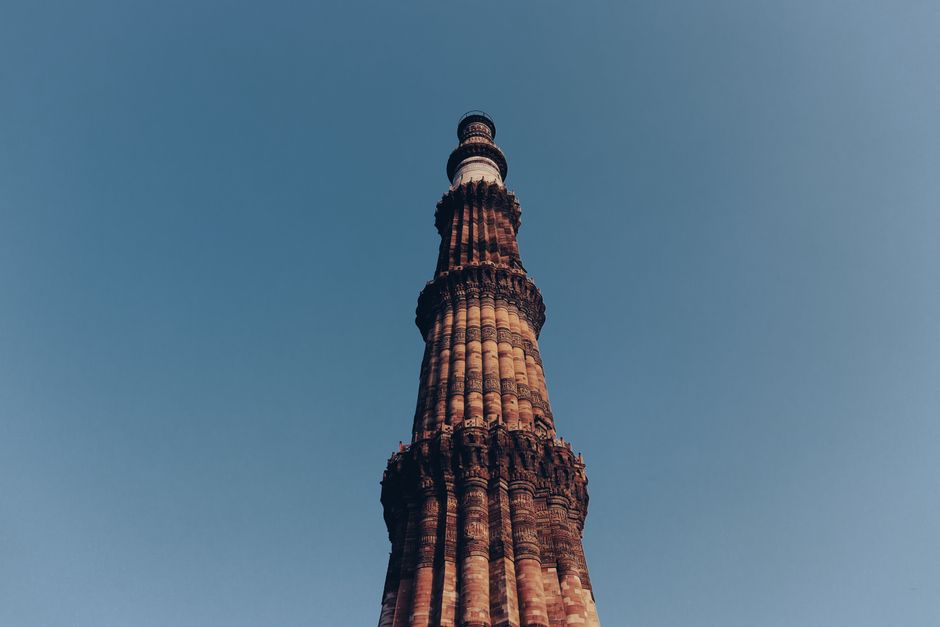
Commissioned in 1199 by Qutb-ud-din Aibak to celebrate the founding of the Delhi Sultanate, the Qutub Minar soars 72.5 meters into the Mehrauli skyline as a masterpiece of early Indo-Islamic architecture. Expanded by his successor Shams-ud-din Iltutmish and repaired by Firoz Shah Tughlaq in 1368, the five-tiered victory tower tapers dramatically from a 14.3-meter base to a slender summit. Its lower storeys feature alternating angular and rounded flutings carved from deep-red and buff sandstone, while the uppermost tiers are faced with contrasting white marble. Ribbons of chiseled Arabic calligraphy, quoting verses from the Quran, weave across the masonry beneath richly ornamented, stalactite-bracketed balconies that once carried the muezzin's call. Standing in the courtyard of the adjacent Quwwat-ul-Islam Mosque, travelers crane their necks to watch the minaret’s terracotta hues shift beneath the Delhi sun, tracing shadows across thousands of interlocking geometric reliefs. Walking through the surrounding ruins, visitors navigate breezy stone cloisters built from ornate, repurposed temple colonnades before encountering the famous fourth-century Gupta Iron Pillar, which stands mysteriously corrosion-free in the open air. The experience offers a palpable immersion into medieval statecraft, where the scent of warm stone, the rustle of green parrots darting between carved niches, and the sheer scale of Sultanate ambition combine to anchor travelers directly in India’s layered past.