 New added
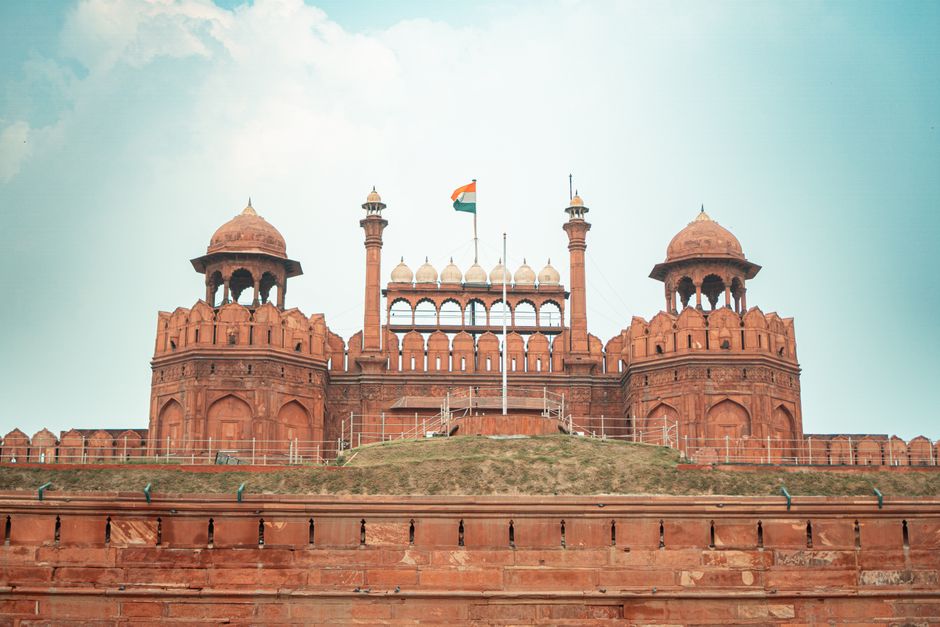
Red Fort
Commissioned in 1638 by Emperor Shah Jahan to anchor his newly founded capital of Shahjahanabad, the Red Fort (*Lal Qila*) represents the zenith of Mughal architectural grandeur, blending Persian, Timurid, and Hindu traditions. Passing beneath the monumental Lahori Gate, travelers leave the sensory clamor of Old Delhi to enter the Chhatta Chowk, a vaulted 17th-century covered bazaar where court jewelers and silk merchants once traded. The complex then unfolds into an expansive sanctuary of symmetry: massive 75-foot-high octagonal ramparts of blood-red sandstone give way to formal *charbagh* quadrangle gardens, punctuated by scalloped arches, slender minarets, and delicate white marble pavilions. Within the imperial enclosure, the open-sided Diwan-i-Aam (Hall of Public Audience) reveals columns of carved sandstone, while the nearby Diwan-i-Khas (Hall of Private Audience) showcases intricate *pietra dura* floral stonework that once framed the legendary Peacock Throne. Visitors tracing the dry marble channels of the *Nahr-i-Bihisht* (Stream of Paradise) can visualize the water network that once cooled the royal apartments directly beside the Yamuna River. Standing amidst these colonnades, one feels the profound historical weight of the site, which witnessed the climactic end of the Mughal dynasty in 1857, British military occupation, and India's declaration of independence, celebrated annually from its ramparts.