 New added
Itsukushima Shrine
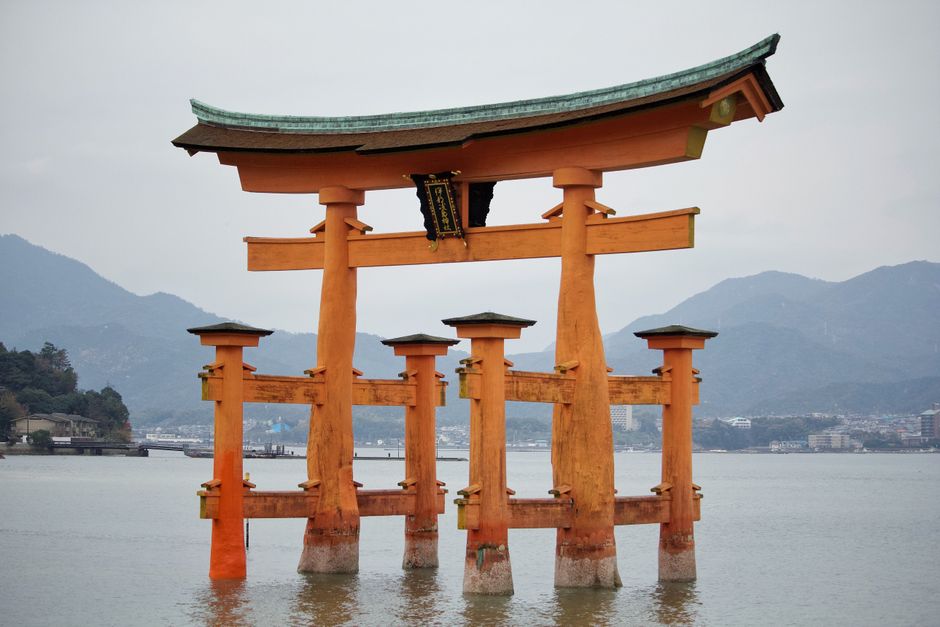
Rising directly from the tidal flats of Miyajima in Hiroshima Bay, Itsukushima Shrine owes its aquatic grandeur to the 12th-century warlord Taira no Kiyomori, who dramatically reconstructed the ancient 6th-century precinct in 1168. Kiyomori commissioned the sanctuary in the aristocratic *shinden-zukuri* architectural style typically reserved for Heian-court palaces, transforming traditional Shinto worship into a floating theater. Brilliant vermilion-lacquered corridors sweep across the water on submerged pilings, capped by elegant cypress-bark roofs that frame the verdant backdrop of Mount Misen. Its defining icon—the massive camphor-wood *o-torii* gate towering over fifty feet high—stands unanchored in the bay, held in place against the ocean swell solely by its own sixty-ton weight and ingenious interior ballast stones. Visiting Itsukushima is dictated entirely by the rhythmic breathing of the Seto Inland Sea. At high tide, seawater floods the inlet, engulfing the foundations so that the prayer halls, arched bridges, and Japan’s oldest surviving open-air Noh stage appear weightless upon the waves. Walking the red galleries, you feel the soft give of wooden floorboards beneath your feet, spaced with narrow gaps that allow surging tides to pass without lifting the planks. When the water ebbs, the seascape dramatically transforms into glistening sand flats, allowing you to walk directly to the feet of the towering vermilion gate, where the sharp mineral scent of brine fills the air and barnacle-encrusted timbers reveal the raw power of the ocean it defies.