 New added
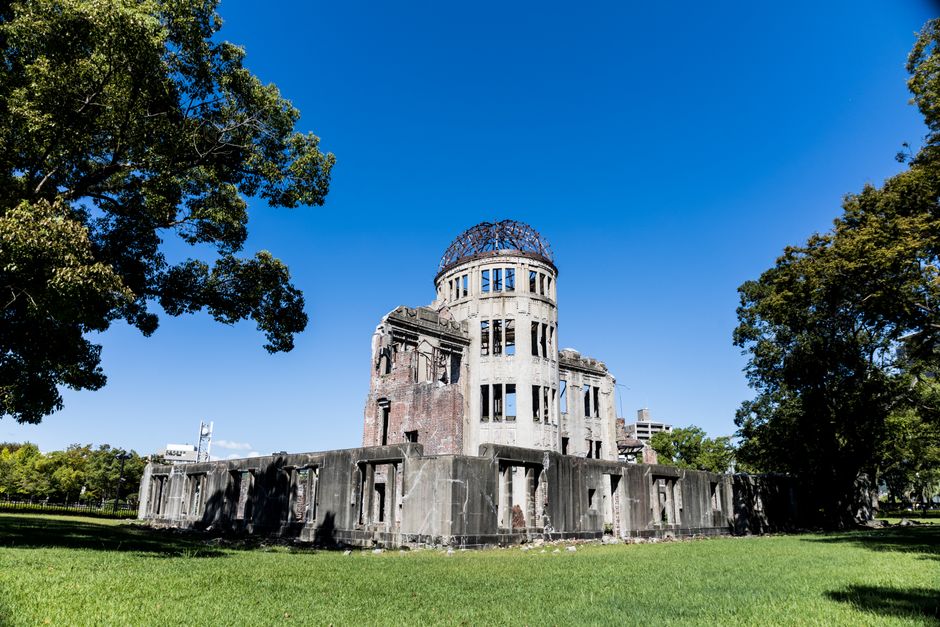
Atomic Bomb Dome
Designed in 1915 by Czech architect Jan Letzel, the former Hiroshima Prefectural Industrial Promotion Hall once stood as a bold European Secessionist landmark crowned by a distinctive green copper cupola. That changed irreversibly on August 6, 1945, at 8:15 AM, when the first wartime atomic bomb detonated nearly overhead, just 160 meters away. Because the downward pressure of the blast hit the structure almost vertically, its central core miraculously resisted total pulverization. Today, preserved in its immediate post-blast state as the Genbaku Dome, the ruin features warped iron ribbing where the cupola once rested, framed by fractured red-and-brown brickwork and cavernous, hollowed-out window bays stripped clean of glass. Standing along the willow-lined banks of the Motoyasu River, visitors confront an arresting stillness that cuts through the hum of modern Hiroshima. Viewing the monument from the perimeter fence, you peer into the exposed heart of the ruin, where heaps of crushed masonry, rusted steel, and scorched plaster remain exactly as they fell decades ago. Sunlight filters through the bare skeletal dome, casting geometric shadows across the debris, while in the evening, understated floodlights illuminate the jagged profile against the dark water. It is a haunting, tactile encounter with the dawn of the nuclear age, demanding quiet contemplation before one crosses the T-shaped Aioi Bridge into Peace Memorial Park.