 New added
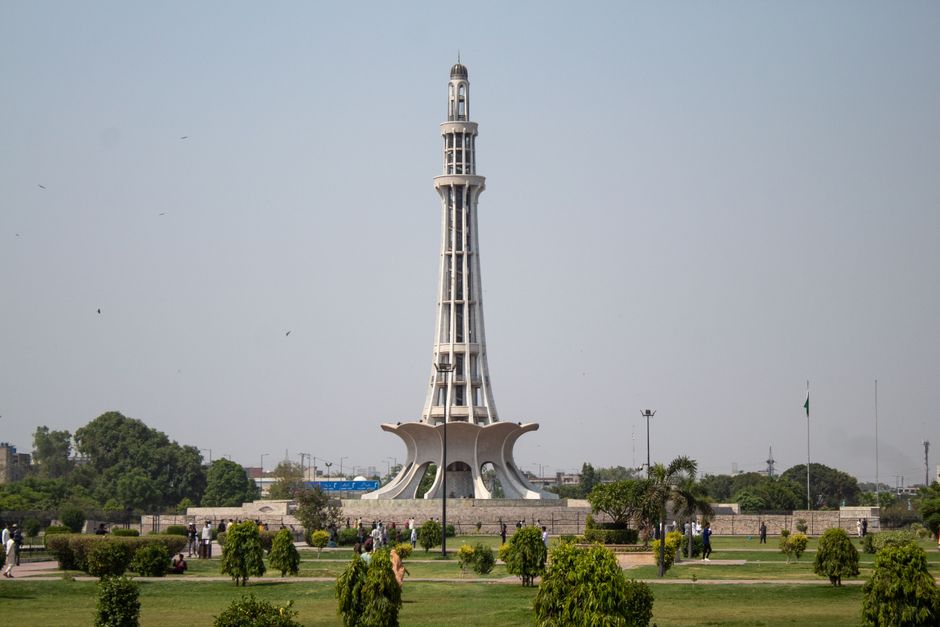
Minar-e-Pakistan
Rising seventy meters above the lawns of Greater Iqbal Park, Minar-e-Pakistan marks the exact ground where the All-India Muslim League passed the historic Lahore Resolution on March 23, 1940. Commissioned in the 1960s and designed by Russian-born architect Nasreddin Murat-Khan, the monument fuses Mughal aesthetics with mid-century modernism. Its distinctive petal-shaped base unfolds like a blooming flower, constructed in four ascending tiers of stone that physically narrate Pakistan's independence movement: starting from rough, unhewn Taxila stone symbolizing early struggle, transitioning through hammer-dressed blocks, and culminating in polished white marble representing hard-won triumph. Standing beneath the soaring, fluted tower, visitors are enveloped by quiet solemnity amid the city's hum. The curved lower buttresses reveal intricate calligraphic panels crafted from white marble, bearing the ninety-nine names of Allah, poetic verses by Allama Iqbal, and pivotal excerpts from Quaid-e-Azam Muhammad Ali Jinnah’s speeches. Craning your neck upward, the tapering concrete ribs stretch toward an open dome and metallic crescent spire. As twilight settles, radiant floodlights illuminate the monument's pale stone, casting reflections across adjacent water pools while the historic silhouettes of the nearby Badshahi Mosque and Lahore Fort linger on the warm evening horizon.