 New added
Badshahi Mosque
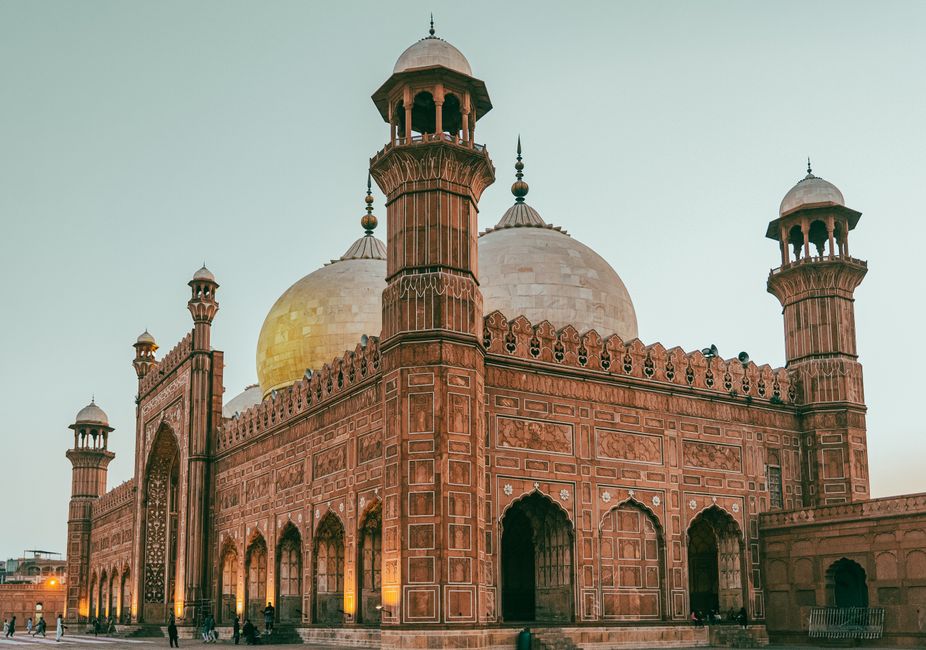
Commissioned in 1671 by the sixth Mughal Emperor, Aurangzeb Alamgir, and completed in 1673, the Badshahi Mosque represents the monumental zenith of late Mughal architecture. Anchoring the western periphery of Lahore’s historic Walled City, opposite the Alamgiri Gate of the Lahore Fort, the complex was sculpted from fiery red sandstone transported from Rajasthan, accented with intricate white marble inlay. Four towering octagonal minarets, each soaring 177 feet, frame an expansive 276,000-square-foot paved courtyard engineered to hold 100,000 worshippers. Rising above the cavernous main prayer hall are three bulbous, brilliant-white marble domes, beneath which visitors find arched alcoves embellished with delicate stucco tracery, Persian-influenced calligraphic motifs, and stylized floral frescoes. Ascending the grand flight of twenty-two red sandstone steps from Hazuri Bagh, travelers cross through the monumental vaulted entrance and immediately confront the humbling vastness of the sanctuary. Walking barefoot across the smooth flagstones, visitors feel the daytime heat radiating from the brickwork as flocks of pigeons wheel beneath the arched arcades. At dusk, the setting sun sets the sandstone ablaze in shades of burnished copper while the marble domes gleam like polished pearl against the fading light. When the evening call to prayer reverberates across the immense courtyard, its acoustics envelop the space in a resonant, centuries-old cadence that bridges imperial history with living religious tradition.