 New added
Little Venice
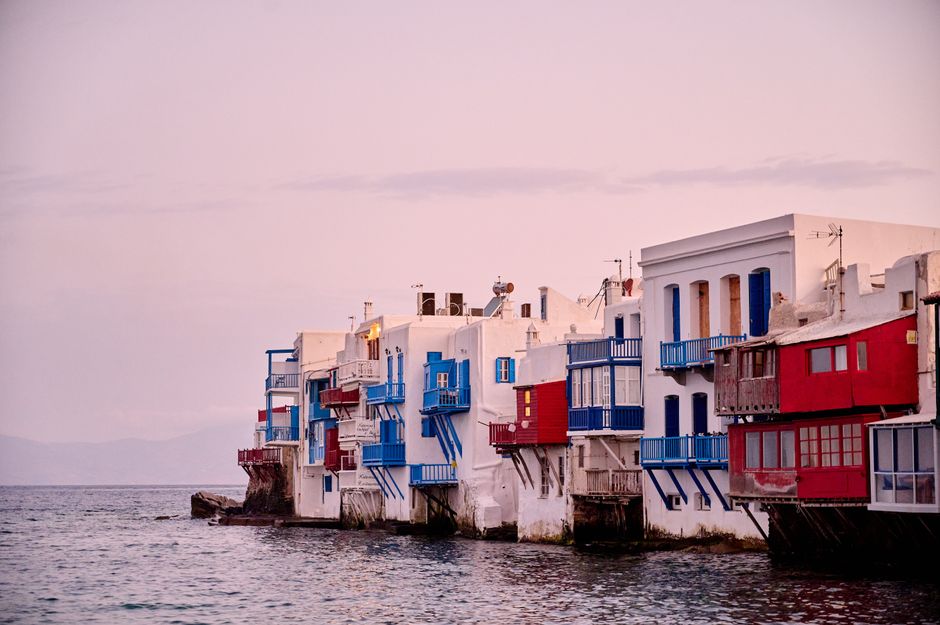
Constructed during the mid-to-late 18th century by prosperous sea captains and merchants, the waterfront enclave of Alefkandra—known internationally as Little Venice—anchors Mykonos Town in maritime defiance. These two- and three-story stone mansions fuse indigenous Cycladic cubic forms with Venetian coastal vernacular, their whitewashed facades dropping sheer into the churning Aegean Sea. Cantilevered wooden loggias and overhanging balconies, coated in vibrant shades of scarlet, cobalt, and weathered verdigris, thrust outward directly over the tideline. Behind these colorful facades lie remnants of a clandestine past: basement chambers fitted with reinforced sea-level hatches that once permitted mariners and corsairs to haul smuggled cargo and privateer plunder straight from rowboats into domestic cellars under cover of darkness. Standing along the slick, granite-paved edge, travelers immediately feel the visceral force of the elements as surging waves shatter against the submerged foundations, sending bursts of briny spray across the flagstones. The rhythmic crash of the sea reverberates against timber floorboards, competing with the hum of conversation and the scent of anise from converted tavernas below. To the immediate southwest, the view frames the iconic whitewashed contours and thatched caps of the 16th-century Kato Mili windmills lining the coastal ridge. At twilight, the blinding Cycladic light softens, drenching the wave-battered wood and stone in burnished amber and violet reflections.