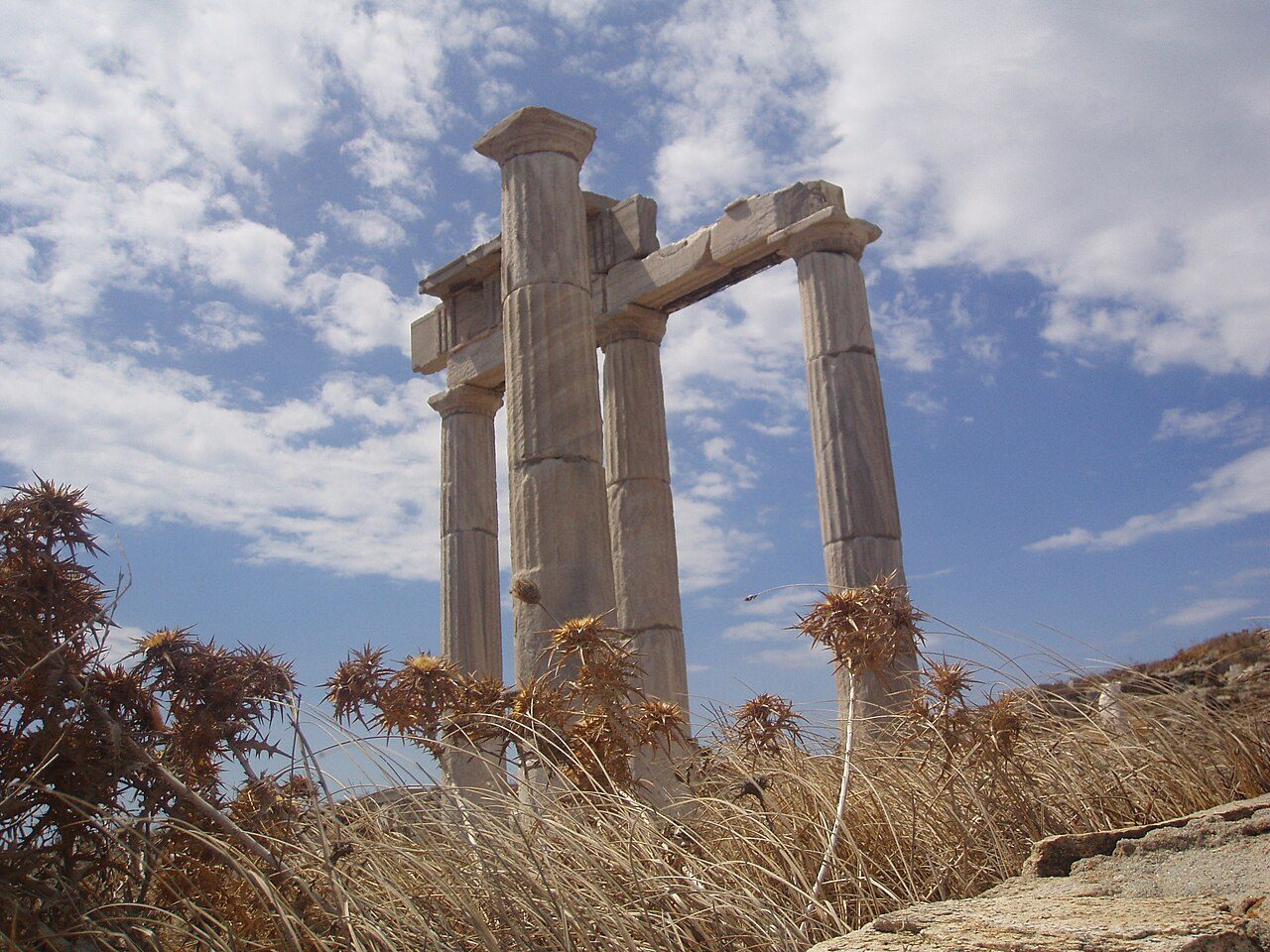
Delos Island
Revered in antiquity as the sanctuary where Leto gave birth to the twin gods Apollo and Artemis, this sun-scorched granite outcrop evolved from a Panhellenic shrine into the Aegean’s wealthiest cosmopolitan emporium. Following the Persian Wars, the island served as the administrative headquarters and treasury for the Delian League in 478 BCE. Later declared a duty-free port by the Roman Senate in 166 BCE, Delos swelled with merchants, financiers, and palatial estates until its catastrophic sacking by Mithridates VI of Pontus in 88 BCE left it abandoned to the elements. Walking through the unroofed, labyrinthine avenues today reveals an intact Hellenistic urban blueprint bleached bone-white against the cerulean sea. Along the Sacred Way, the weather-worn, seventh-century BCE Naxian marble felines of the Terrace of the Lions crouch on high pedestals in perpetual, snarling vigil. Farther south in the affluent Theater Quarter, grand courtyards preserve vivid tessellated mosaics—most notably a garlanded Dionysus astride a tiger within the House of Masks—framed by the stumps of Doric peristyle columns. Scrambling up the rough granite steps to the 112-meter summit of Mount Kynthos, visitors face the unrelenting roar of the Aegean *meltemi* wind while gazing out over the Cyclades, the ring of islands named for the eternal circle they form around this sacred ruin.