 New added
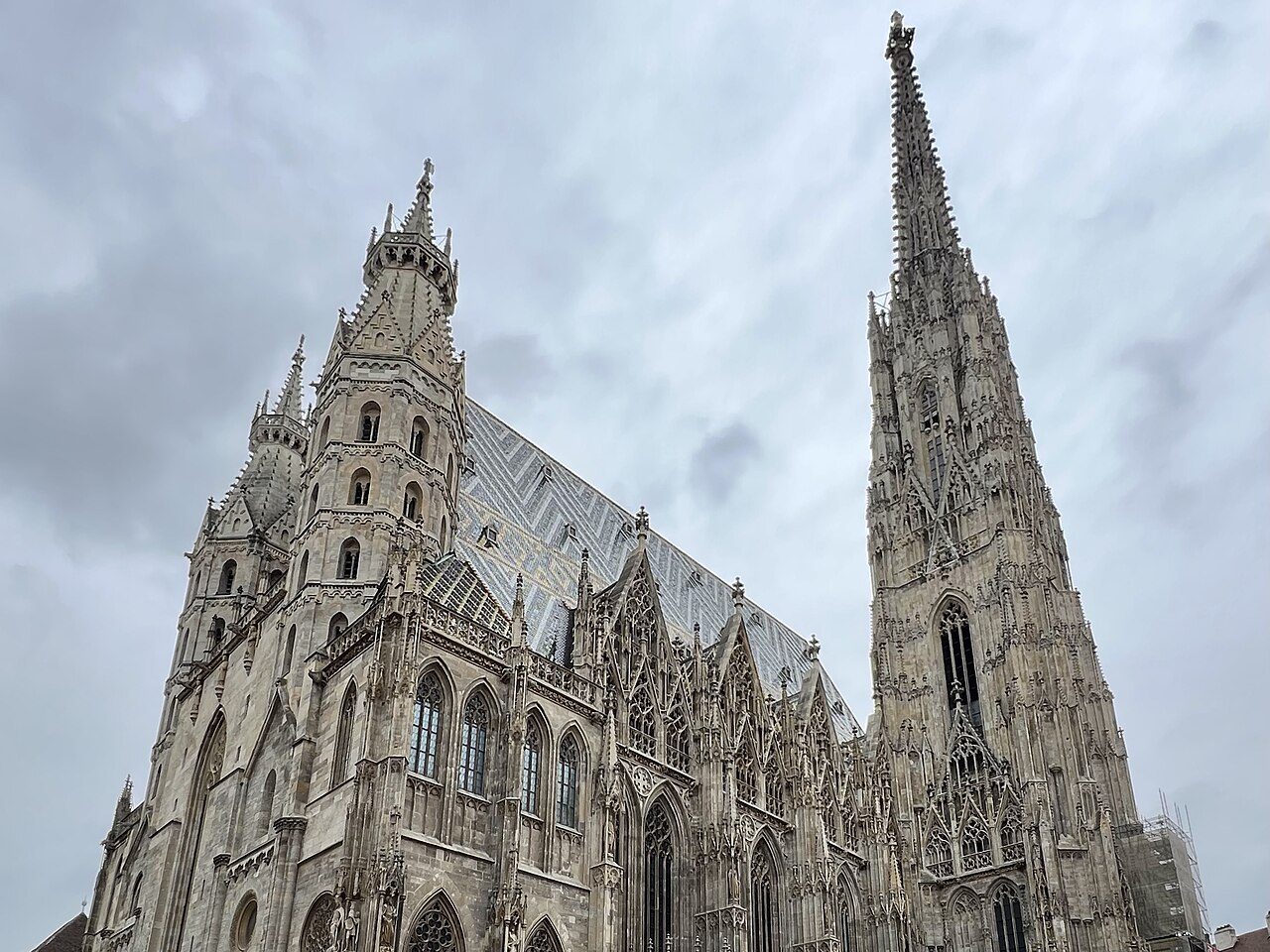
St. Stephen's Cathedral
Rising from the cobbled heart of Vienna, St. Stephen’s Cathedral—reverently dubbed *Steffl* by locals—stands as an enduring monument of High Gothic ambition and imperial resilience. While its Romanesque Giant’s Gate dates to the 13th century, Duke Rudolf IV laid the cornerstone for the soaring Gothic overhaul in 1359. Overhead, the cathedral’s defining feature is its steep, kaleidoscopic roof: a brilliant canopy of 230,000 glazed ceramic tiles arranged into geometric chevron bands and the imposing Habsburg double-headed eagle. Piercing the skyline at 136 meters, the needle-sharp South Tower bears witness to centuries of turmoil, having survived Ottoman cannon fire during the 1683 siege and the devastating inferno that consumed the original roof beams in April 1945. Stepping across the threshold, the cavernous nave envelops visitors in a profound chill scented with centuries of beeswax and frankincense. Slanted shafts of ruby and cobalt light pierce the twilight, illuminating the intricately carved sandstone pulpit where medieval master mason Anton Pilgram sculpted his own self-portrait peeking out from beneath the stairs. Deep beneath the flagstones, the subterranean catacombs harbor the preserved internal organs of Habsburg monarchs alongside thousands of plague victims' bones. Whether listening to the resonant hum of the great Pummerin bell or craning your neck toward the ribbed vaulting, the sheer verticality of the stone commands an immediate, spine-tingling reverence.