 New added
Medina Azahara
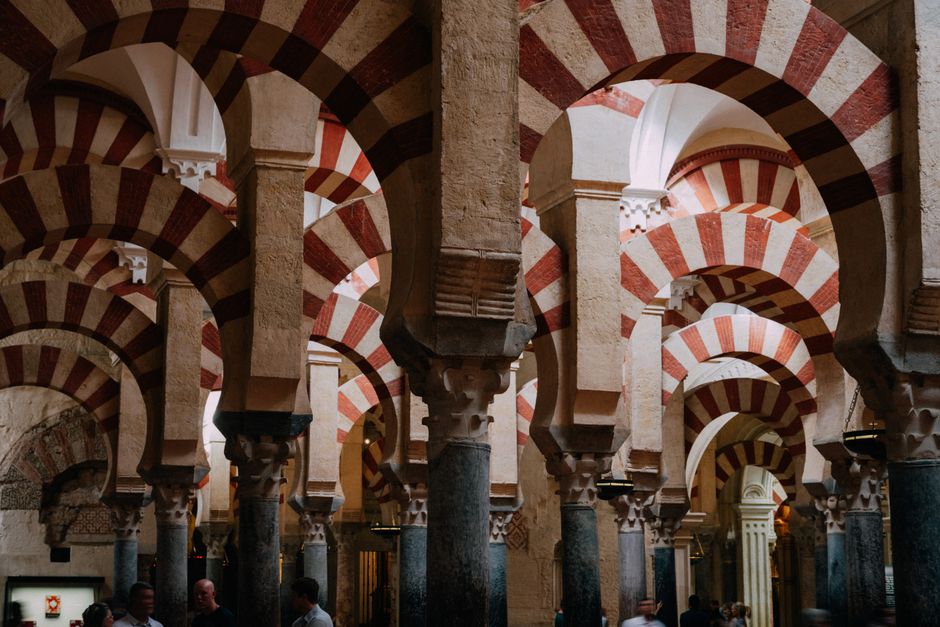
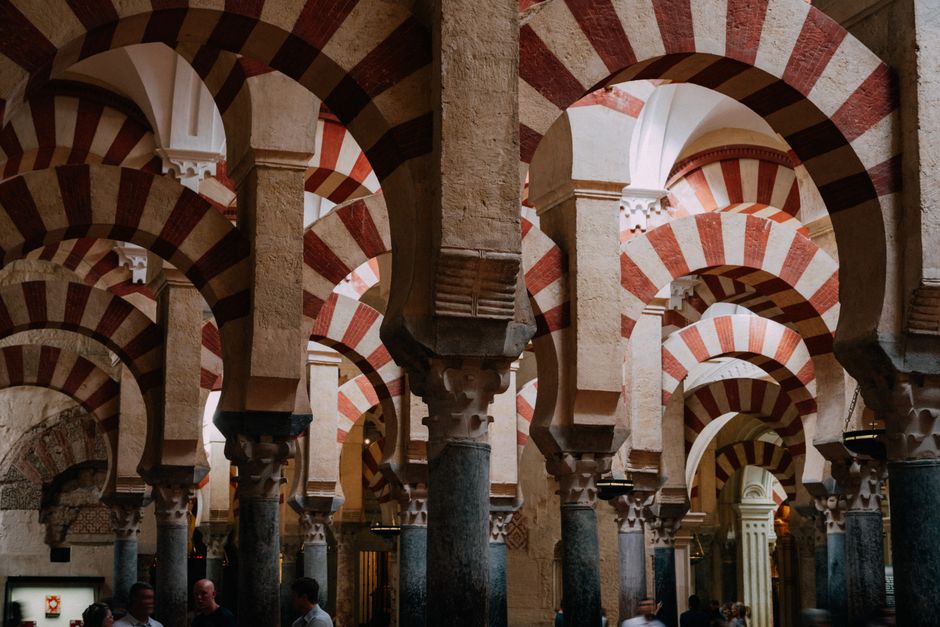
Commissioned in 936 CE by Caliph Abd al-Rahman III, this gleaming palatial city rose along the rugged foothills of the Sierra Morena as a defiant proclamation of Umayyad supremacy against rival caliphates in Baghdad and Cairo. Though pillaged and burned by Berber mercenaries barely eighty years later, the sprawling stone complex remains a triumph of 10th-century Hispano-Islamic urban planning. Engineered across three descending stepped terraces, the settlement rigidly segregated medieval court hierarchy: the caliph’s private redoubts crowned the uppermost heights, official reception quarters occupied the middle tier, and market quarters alongside the congregational mosque spilled into the valley floor below. Standing amid the restored limestone colonnades, visitors step directly into the court's ceremonial core at the Salón Rico, the sovereign reception hall. Sunlight cuts through forest-like rows of horseshoe arches alternating in red sandstone and pale calcarenite voussoirs, illuminating wall reliefs carved so deeply with acanthus leaves and palmettes—*ataurique* work—that the stone mimics petrified lace. Walking the cracked flagstones alongside drained reflecting pools and sunken parterres, one feels the dry Andalusian breeze carrying scents of wild olive and rockrose, while the vast, silent panorama toward the Guadalquivir basin evokes the ephemeral majesty of an empire carved out of marble and clay.