 New added
Mezquita
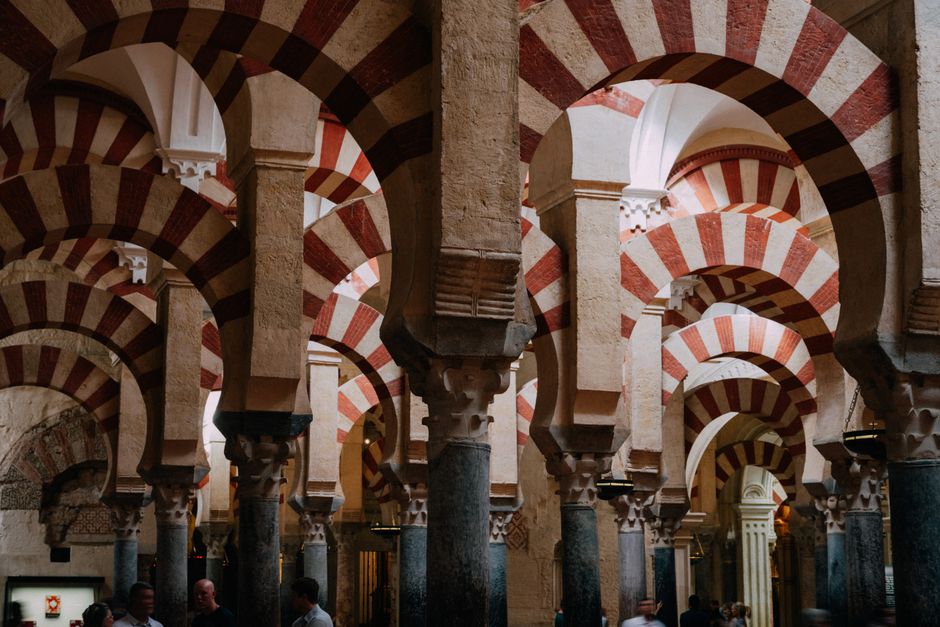
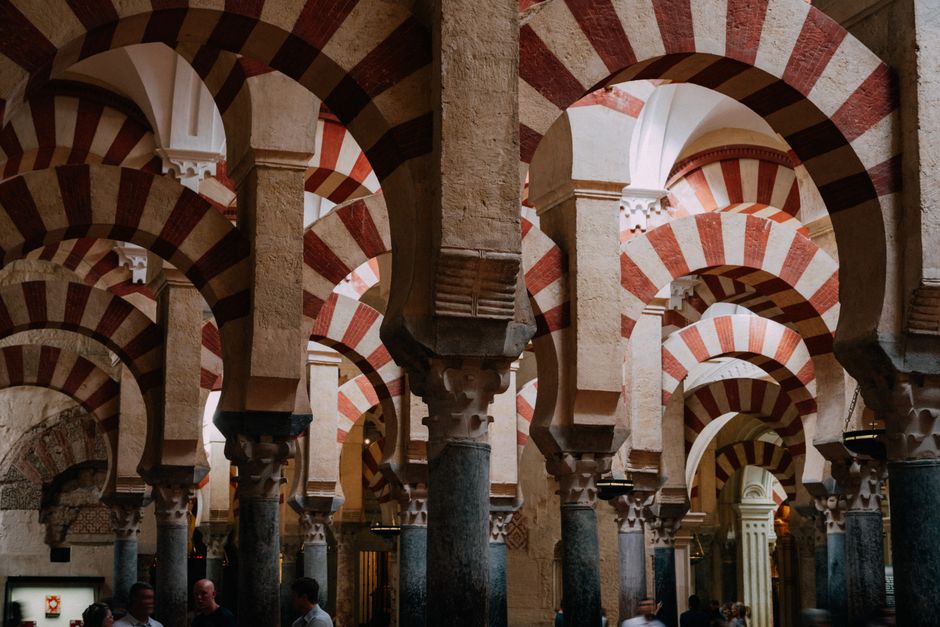
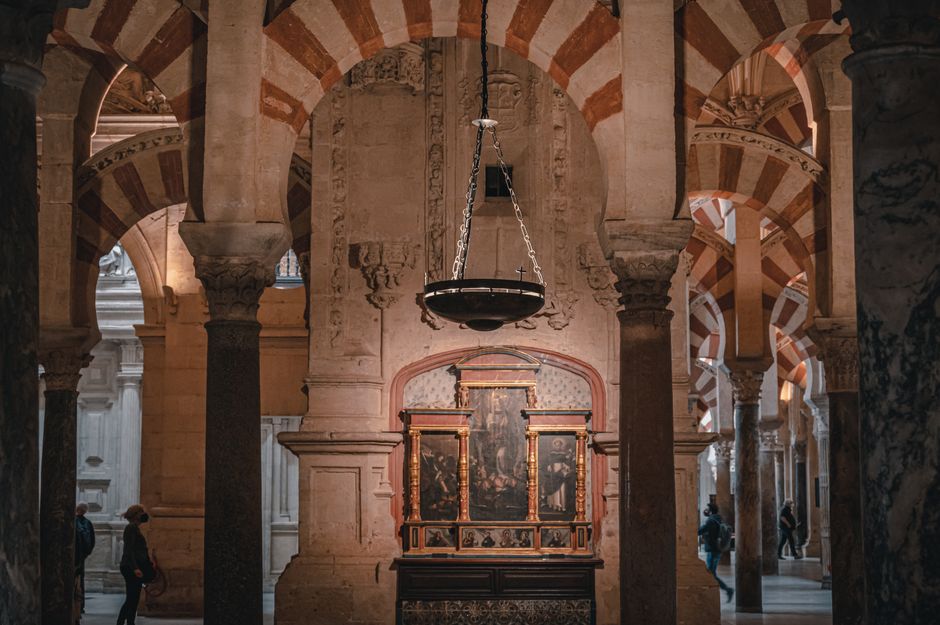
Step past the scented bitter-orange trees of the Patio de los Naranjos into a twilight forest of 856 jasper, onyx, and marble columns salvaged from Roman and Visigothic ruins. Founded in 785 by the Umayyad emir Abd al-Rahman I and expanded over two centuries, the sanctuary envelops visitors beneath endless tiers of alternating red brick and white limestone horseshoe arches. Deep within the hypostyle hall, the tenth-century *mihrab* commissioned by Caliph Al-Hakam II gleams beneath an octagonal ribbed dome, its gilded calligraphy and Byzantine glass tesserae catching filtered Andalusian sunlight to create an illusion of infinite, quiet grandeur. Wandering toward the center, this rhythmic Islamic geometry yields to a startling architectural collision: a towering 16th-century Renaissance and Baroque cathedral planted squarely inside the mosque. Following the Christian Reconquista of 1236, canon architects erected a soaring transept featuring intricate Gothic rib-vaulting and elaborately carved mahogany choir stalls—an intervention that famously prompted Holy Roman Emperor Charles V to lament altering what was unique in the world. Standing beneath the dizzying vault, you feel the tangible weight of Spain’s complex tapestry, where cold flagstones, lingering traces of altar incense, and centuries of layered devotions suspend the modern world entirely.