
 New added
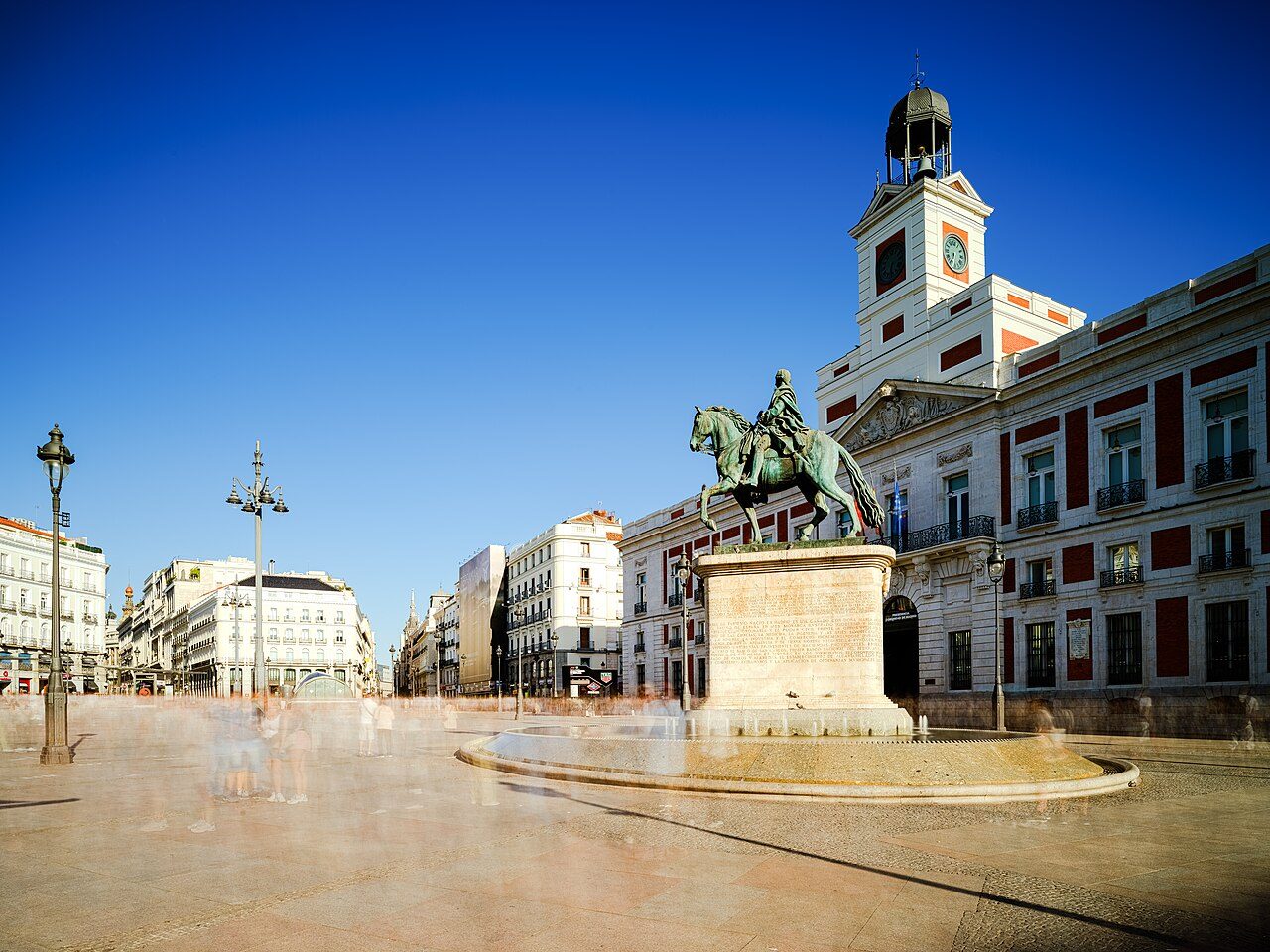
Puerta del Sol
Originating as a 15th-century eastern gate aligned with the dawn, Madrid’s crescent-shaped civic core is anchored by the neoclassical Real Casa de Correos, designed by French architect Jaime Marquet in 1768. Its red-brick and white-limestone facade supports the 1866 clock tower whose dual chimes orchestrate Spain’s traditional New Year's Eve grape-eating ritual. Across these paving stones, history pivoted dramatically during the bloody Dos de Mayo uprising of 1808 against Napoleonic forces. Today, that turbulent past is presided over by an imposing nine-ton bronze equestrian statue of King Carlos III, the Enlightenment monarch who transformed the surrounding medieval alleyways into an organized capital. Stepping into the wide, pedestrianized expanse, travelers immediately encounter the brass and granite *Kilómetro Cero* plaque embedded beneath their feet—the radial starting point for Spain’s six national highways. Just across the plaza stands Antonio Navarro Santafé’s 1967 bronze sculpture of the Bear and the Strawberry Tree (*El Oso y el Madroño*), Madrid’s heraldic symbol, its dark patina worn smooth by visitors touching its paws for good fortune. The space hums with sensory intensity: street musicians echo off curved 19th-century building facades, the scent of hot chocolate drifts from nearby alleys, and the historic ruby-red Tío Pepe neon sign glows high above the rooftops, washing the bustling square in vivid color as twilight settles.
More in Madrid
Photo credits (5)
- Matt Joseph, CC BY-SA 4.0, via Wikimedia Commons
- Gerda Arendt, CC0, via Wikimedia Commons
- Nicolas Vigier, CC0, via Wikimedia Commons
- Boaventuravinicius, CC BY-SA 3.0, via Wikimedia Commons
- Sharon Mollerus from Minneapolis, United States, CC BY 4.0, via Wikimedia Commons