
 New added
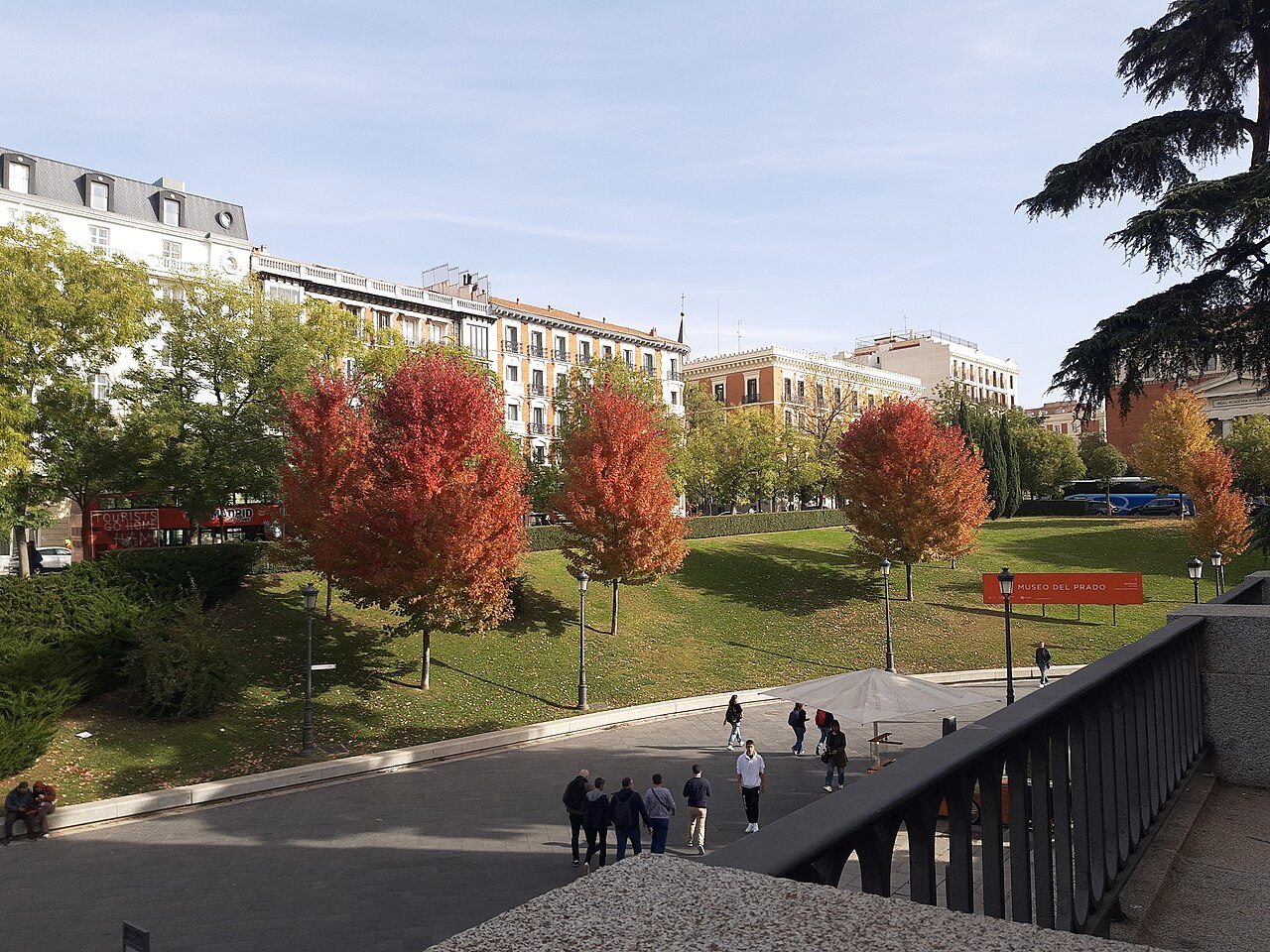
Prado Museum
Commissioned in 1785 by King Charles III and envisioned by architect Juan de Villanueva, this Neoclassical monument of warm red brick and Guadarrama granite was originally conceived as a cabinet of natural sciences. Damaged during the Napoleonic occupation, the structure was rehabilitated and inaugurated in 1819 under King Ferdinand VII to showcase the vast holdings of the Spanish Habsburg and Bourbon monarchs. Today, its stately western façade, dominated by a towering hexastyle Doric portico and statues dedicated to Velázquez and Goya, anchors the tree-lined boulevard of Madrid’s UNESCO-listed Paseo del Prado. Inside, cool marble thresholds yield to hushed, skylit galleries where visitors are confronted by the psychological depth of European imperial painting. Travelers stand mesmerized before Diego Velázquez’s *Las Meninas* in Room XII, drawn into its complex interplay of mirrors, shadows, and royal perspective, before descending into the muted, shadowy rooms holding Francisco de Goya’s harrowing *Black Paintings*, transferred directly from the walls of his farmhouse. Across polished herringbone parquetry, the intricate, surreal bestiary of Hieronymus Bosch’s *The Garden of Earthly Delights* demands minute inspection. The museum atmosphere hums with solemn reverence, smelling faintly of aged varnish and floor wax, immersing onlookers in the raw drama and unvarnished mortality of Spanish court history.
More in Madrid
Photo credits (5)
- Gerda Arendt, CC0, via Wikimedia Commons
- Nicolas Vigier, CC0, via Wikimedia Commons
- Boaventuravinicius, CC BY-SA 3.0, via Wikimedia Commons
- Matt Joseph, CC BY-SA 4.0, via Wikimedia Commons
- Sharon Mollerus from Minneapolis, United States, CC BY 4.0, via Wikimedia Commons