 New added
Pantheon
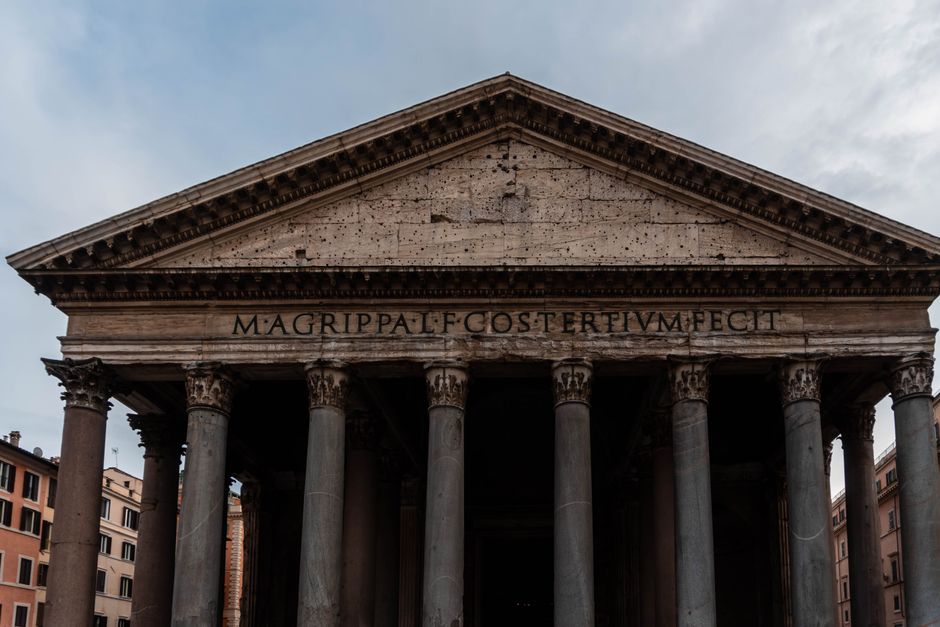
Commissioned originally by Marcus Agrippa and rebuilt in its surviving form by Emperor Hadrian around 125 CE, the Pantheon stands as classical antiquity’s most intact structural triumph. Its colossal portico, anchored by sixteen monolithic gray and rose granite columns hauled from Egyptian quarries, leads into a sweeping rotunda engineered with mathematical purity. Consecrated in 609 CE as the Basilica of St. Mary and the Martyrs—a transition that shielded it from the quarrying that stripped the Roman Forum—the monument is crowned by an unreinforced concrete dome spanning an exact 43.3 meters in both height and diameter, its weight lightened by five tiers of deeply recessed geometric coffers. Stepping past the monumental ancient bronze portals, you are enveloped by an echoing stillness that defies the bustling piazza outside. All eyes are immediately pulled upward to the nine-meter-wide oculus, the building's sole light source, which casts a sharp, dramatic beam of Roman sun across the preserved Roman paving of porphyry, granite, and gilded marble. On stormy afternoons, rain mist cascades through this open eye, draining silently through twenty-two discreet floor perforations. Circling the cool, shadowy perimeter reveals the Renaissance tomb of Raphael, nestled alongside Italian monarchs beneath a vault that has stood unbroken for nineteen centuries.