 New added
Hohenzollern Bridge
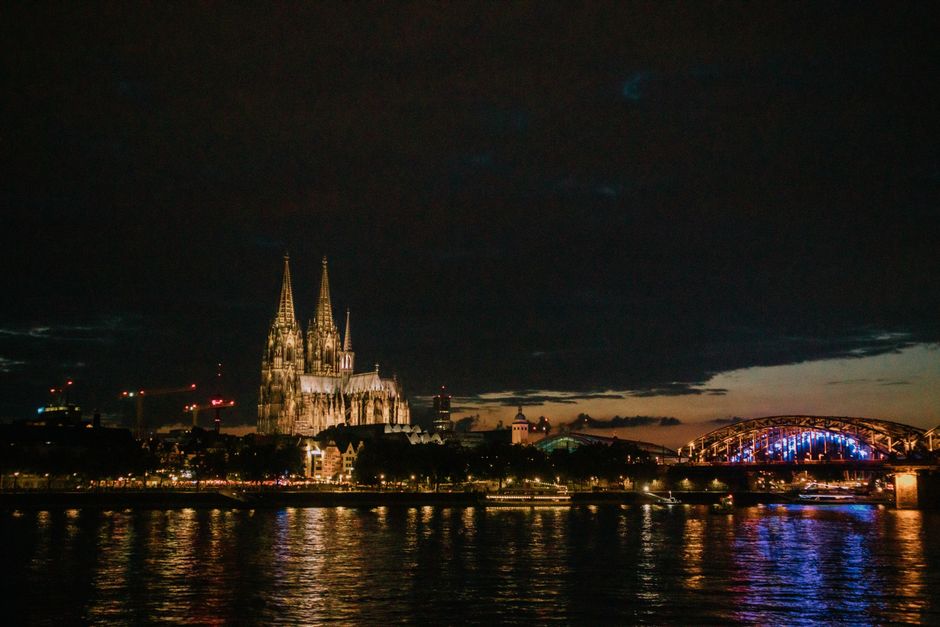
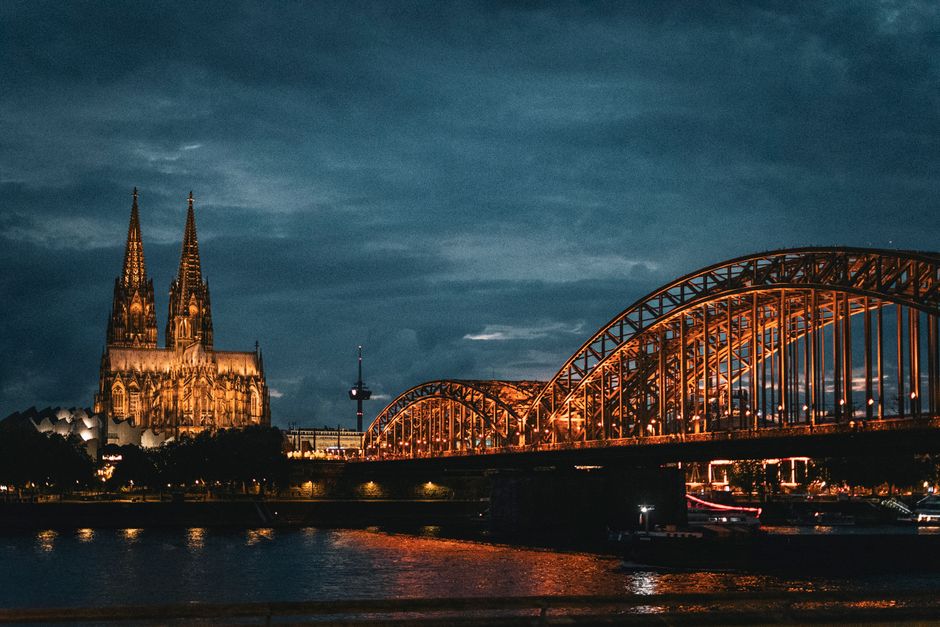
Constructed between 1907 and 1911, the Hohenzollernbrücke stands as an enduring monument to Germany’s industrial golden age, named in honor of the royal Prussian Hohenzollern dynasty. Originally designed as a combined rail and road crossing flanked by neo-Romanesque portal towers, the bridge met catastrophe in March 1945 when retreating German military forces dynamited its spans to impede Allied advances. Post-war reconstruction eliminated the roadway and heavy stone towers, stripping the structure down to its functional, tripartite steel tied-arch silhouette. Guarding the bridgeheads, colossal bronze equestrian statues of Prussian monarchs and German emperors—including Friedrich Wilhelm IV and Kaiser Wilhelm II—still cast severe gazes over the Rhine, anchoring this vital artery in imperial memory. Walking the southern pedestrian walkway, visitors feel the visceral, rhythmic shudder of intercity trains rattling across the iron tracks just inches beyond the wire barrier. The chain-link safety fencing is blanketed beneath hundreds of thousands of brass "love locks" (Liebesschlösser), an undulating metallic tapestry of engraved initials, dates, and padlocks whose keys lie discarded in the currents below. Looking westward across the river, the massive iron curves perfectly frame the blackened, twin-spired silhouette of Cologne Cathedral, providing a dynamic sensory collision of chugging locomotives, river winds, and peerless Gothic grandeur.