 New added
Louvre Museum
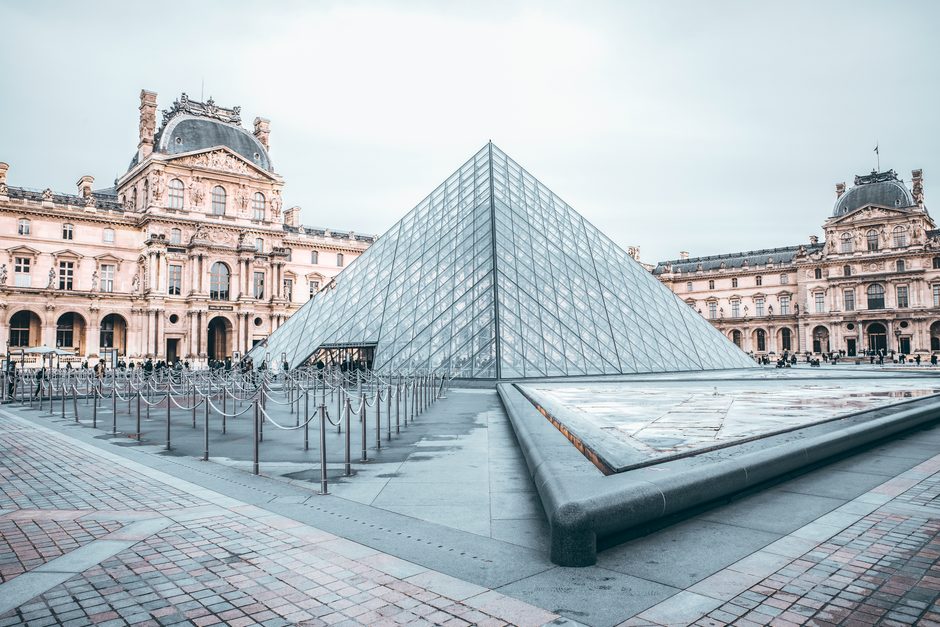
Erected in 1190 as a medieval fortress under King Philippe Auguste, this vast seat of French sovereignty evolved across centuries of royal ambition—rebuilt into a Renaissance palace by Francis I and later expanded by the Sun King, Louis XIV, before he relocated his court to Versailles. Converted into a public museum in 1793 during the throes of the French Revolution, the complex now encompasses over 70,000 square meters of exhibition space anchored across the Sully, Richelieu, and Denon wings. In the central Cour Napoléon, I.M. Pei’s seventy-one-foot glass pyramid provides an audacious modernist foil to the surrounding facades of ornate, honey-colored limestone and classical French pediments. Descending through Pei’s sun-drenched subterranean concourse, visitors step into an intoxicating labyrinth redolent of aged oil pigment, marble dust, and wax-polished oak parquet. Ascending the monumental Daru staircase, one is arrested by the Hellenistic grandeur of the *Winged Victory of Samothrace*, her sculpted Parian drapery seemingly whipped by Aegean sea winds beneath soaring barrel vaults. Farther within the Denon Wing, crowds cluster around the protective glass of Leonardo da Vinci’s *Mona Lisa*, while the nearby Galerie d’Apollon envelops travelers in a dizzying canopy of Louis XIV-era gilded stuccowork and Eugène Delacroix ceiling frescoes, directly confronting them with eight centuries of European artistic and dynastic supremacy.