
Mycenae
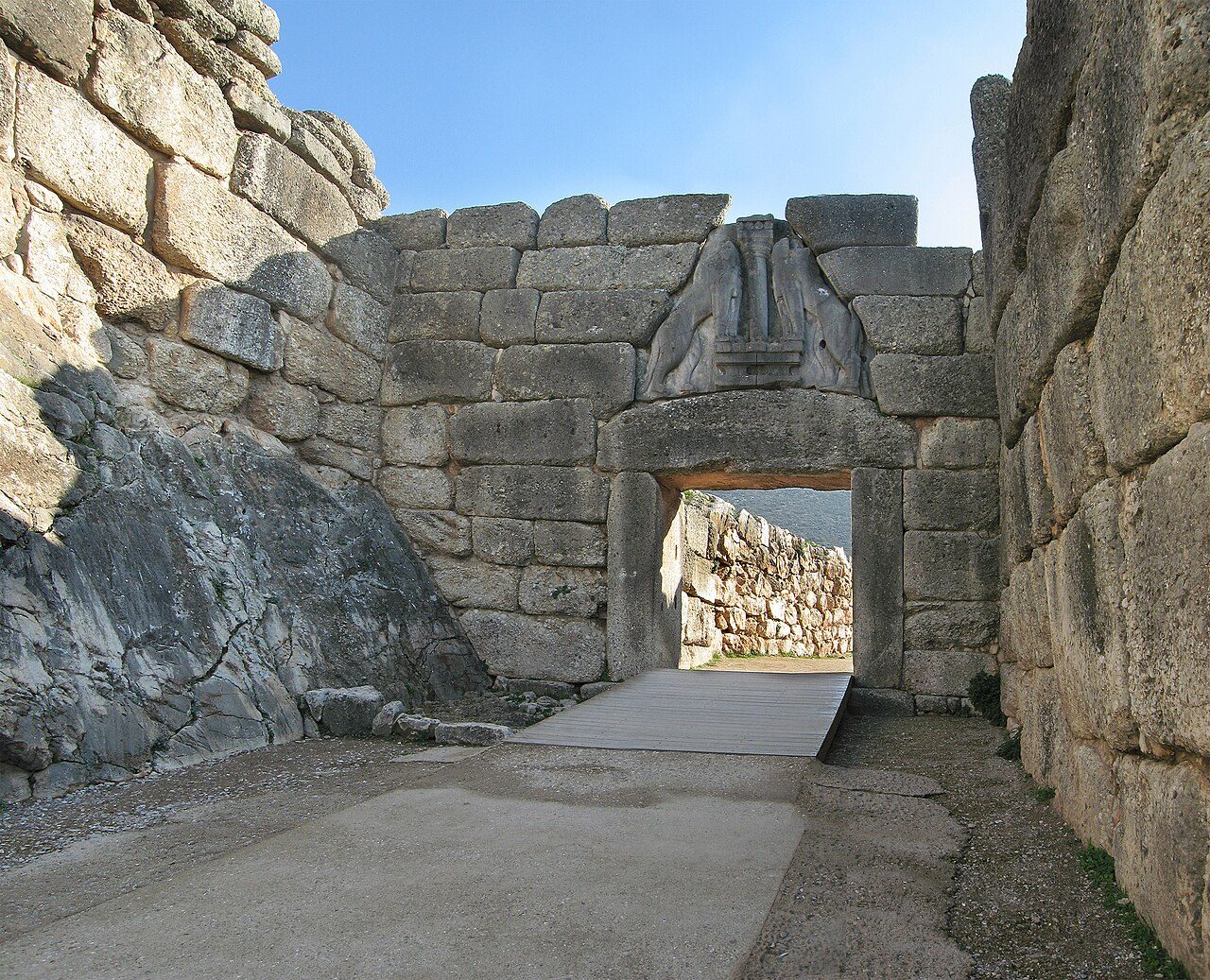
Perched atop a sun-bleached rocky outcrop overlooking the Argive plain near Nafplio, the fortified citadel of Mycenae stands as the formidable heart of Late Bronze Age Greece (c. 1600–1100 BCE). Visitors approach along an ancient stone ramp hemmed in by legendary Cyclopean masonry—monolithic limestone boulders fitted without mortar that classical Greeks believed only one-eyed giants could hoist. Crossing the threshold requires passing beneath the monumental Lion Gate, erected in the 13th century BCE, where two headless heraldic lionesses carved in high relief stand guardian over a single central column. Here, at the mythical seat of Homer’s King Agamemnon, the tactile reality of Bronze Age power replaces myth through sheer monumental engineering. Beyond the gate lies Grave Circle A, a sunken limestone parapet where archaeologist Heinrich Schliemann famously unearthed exquisite hammered-gold death masks and inlaid bronze daggers. Dusty footpaths climb past ruined administrative quarters to the summit’s Megaron, the royal hearth-centered hall where rulers held court against sweeping panoramas of the Peloponnesian mountains. Down the hill, travelers can step out of the blinding Mediterranean sun into the subterranean gloom of the Treasury of Atreus. Inside this immense beehive (tholos) tomb, thirty-three concentric rings of dressed stone narrow into a soaring corbelled dome, enveloping visitors in cool, echoing silence beneath a lintel stone weighing over one hundred tons.
More in Nafplio
Photo credits (3)
- Andreas Trepte, CC BY-SA 2.5, via Wikimedia Commons
- DieBuche, CC BY-SA 3.0, via Wikimedia Commons
- Jeanhousen, CC BY 3.0, via Wikimedia Commons