
Salt Cathedral of Zipaquira
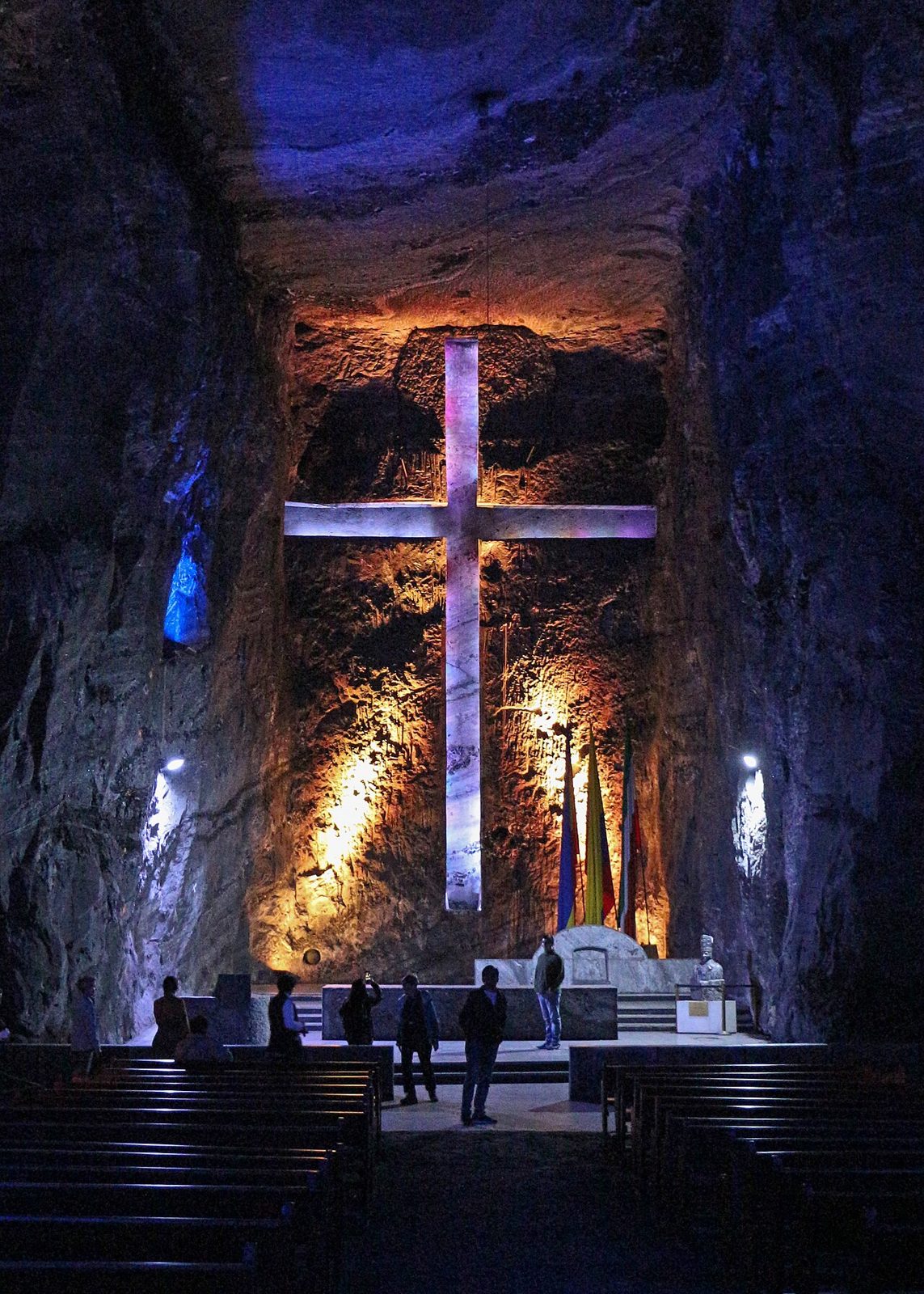
Carved nearly two hundred meters into the halite veins of the Zipaquirá salt mountain north of Bogotá, this subterranean sanctuary marries ancient Andean geology with monumental sacred architecture. Centuries before the Spanish arrival, the indigenous Muisca extracted this "white gold" to build an expansive trading network across the Altiplano Cundiboyacense. Devout miners formalized an underground altar in the 1930s to implore the Virgin of the Rosary for protection, prompting the consecration of a first cathedral in 1954. After structural concerns forced its closure in 1990, Colombian architect Roswell Garavito Pearl designed the current masterpiece, inaugurated in December 1995 as an extraordinary feat of underground engineering. Stepping into the descending portal, visitors feel an immediate plunge in temperature accompanied by the crisp, mineral tang of sodium chloride. The subterranean pilgrimage winds past fourteen cavernous Stations of the Cross, where minimalist altars and kneeling benches emerge organically from dark, chiselled salt walls under washes of electric blue and violet lighting. The tunnel eventually opens into a breathtaking central nave anchored by four colossal rock-salt columns and a massive sixteen-meter-high cross carved into the central apse. Standing beneath the soaring sixty-five-foot-high ceiling, the cathedral’s subterranean acoustics amplify every hushed whisper, creating an ethereal, deeply introspective atmosphere in the hollowed belly of the earth.
More in Bogota
Photo credits (4)
- Bernard Gagnon, CC BY-SA 4.0, via Wikimedia Commons
- Felipe Restrepo Acosta, CC BY-SA 3.0, via Wikimedia Commons
- Felipe Restrepo Acosta, CC BY-SA 4.0, via Wikimedia Commons
- Felipe Ortega Grijalba, CC BY-SA 4.0, via Wikimedia Commons