
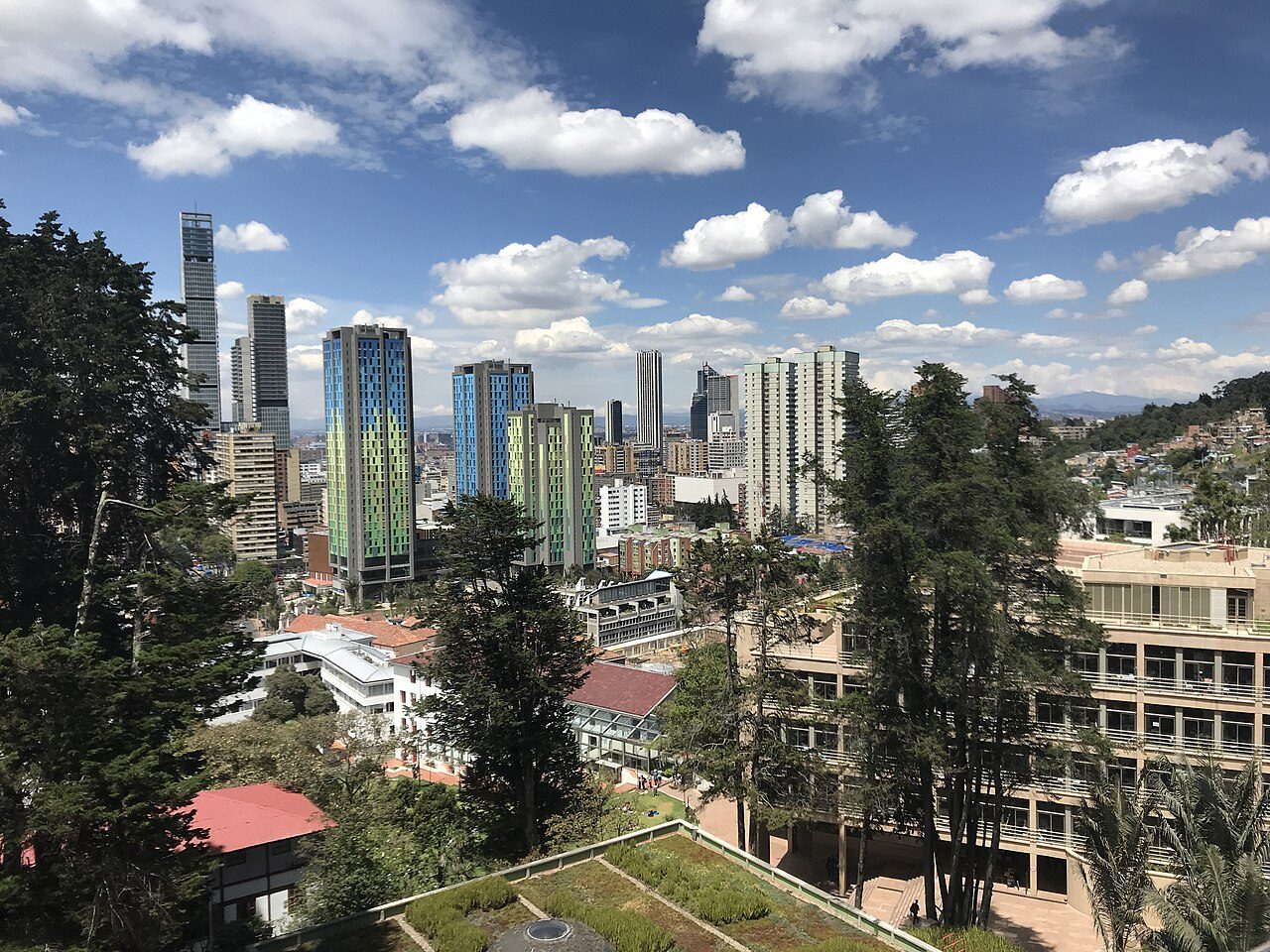
La Candelaria
Cradled against the mist-veiled peaks of Monserrate and Guadalupe, La Candelaria preserves the dramatic crucible of Bogotá’s birth and revolutionary past. At its historic heart lies the cobblestone Plazoleta del Chorro de Quevedo, where conquistador Gonzalo Jiménez de Quesada founded the settlement in 1538 with twelve thatched huts and a rudimentary chapel. Narrow alleys climb steep Andean inclines, lined with 17th- and 18th-century Spanish colonial mansions washed in vivid saffron, indigo, and deep terracotta. Intricately carved cedar balconies overhang the flagstones, while nearby, the striking red-and-white Byzantine-Gothic stripes of the Santuario Nuestra Señora del Carmen punctuate the low-slung roofline—a striking architectural counterpoint to the austere colonial stonework flanking the presidential palaces. Wandering these labyrinthine corridors, travelers step directly into the theater of South American independence. Brass plaques mark the iron-grilled window of the Palacio de San Carlos, where Simón Bolívar famously leaped into the night to escape an assassination plot in 1828 with the help of Manuela Sáenz. The crisp, high-altitude mountain air carries the scent of steaming *ajiaco* broth and fermented maize *chicha* pouring from bohemian taverns. At every turn, kaleidoscopic political murals and depictions of Indigenous Muisca cosmology splash across centuries-old stucco walls, transforming the colonial enclave into a kinetic clash between imperial legacy and restless, modern counterculture.
More in Bogota
Photo credits (4)
- Felipe Ortega Grijalba, CC BY-SA 4.0, via Wikimedia Commons
- Felipe Restrepo Acosta, CC BY-SA 3.0, via Wikimedia Commons
- Felipe Restrepo Acosta, CC BY-SA 4.0, via Wikimedia Commons
- Bernard Gagnon, CC BY-SA 4.0, via Wikimedia Commons