
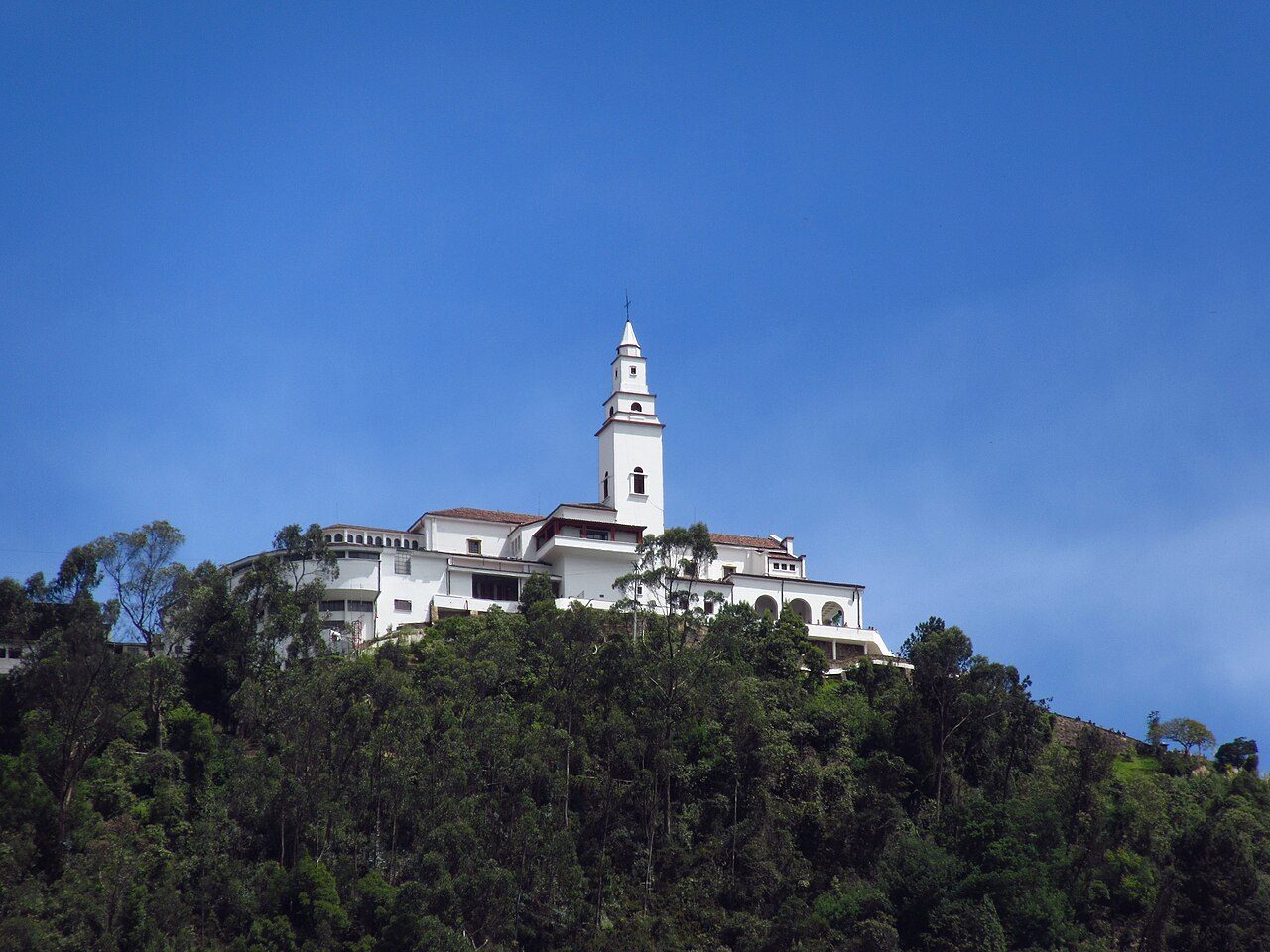
Monserrate
Rising 3,152 meters above sea level to crown Bogotá’s eastern cordillera, the Sanctuary of Monserrate traces its roots to 1640, when Pedro de Solís authorized a hermitage dedicated to the Virgin of Montserrat. After a devastating earthquake leveled the original structure in 1917, architect Arturo Jaramillo designed the current Neocolonial basilica, consecrated in 1925 with a chalk-white stucco facade and a solitary central belfry piercing the cloud line. Inside, beneath vaulted ceilings, pilgrims gather before the glass-encased *Señor Caído* (The Fallen Lord), an exquisite 17th-century sculpture by Pedro de Lugo Albarracín revered for purported miracles. Outside, life-sized 19th-century bronze statues imported from Florence trace a stone-paved Way of the Cross through cloud-forest gardens of weeping paper-bark trees and native bromeliads. Reaching the windswept precipice via the vintage 1929 funicular or the vertiginous cable car, you step onto flagstone terraces enveloped in crisp, thin Andean air. The sharp aroma of eucalyptus mingles with the steam of *canelazo*—clove- and cinnamon-spiced panela water spiked with aguardiente—drifting from hillside stalls. Standing along the southern balustrade, the urban expanse unfolds: Bogotá’s red-brick grid stretches across the high savanna toward distant volcanic ridges, often cut through by rapid, low-hanging mists. During morning hours, the sensory quiet is broken only by the sanctuary bells and the rhythmic footfalls of penitents completing their ascent up the mountain’s 1,605 stone steps.
More in Bogota
Photo credits (4)
- Felipe Restrepo Acosta, CC BY-SA 4.0, via Wikimedia Commons
- Felipe Restrepo Acosta, CC BY-SA 3.0, via Wikimedia Commons
- Felipe Ortega Grijalba, CC BY-SA 4.0, via Wikimedia Commons
- Bernard Gagnon, CC BY-SA 4.0, via Wikimedia Commons