
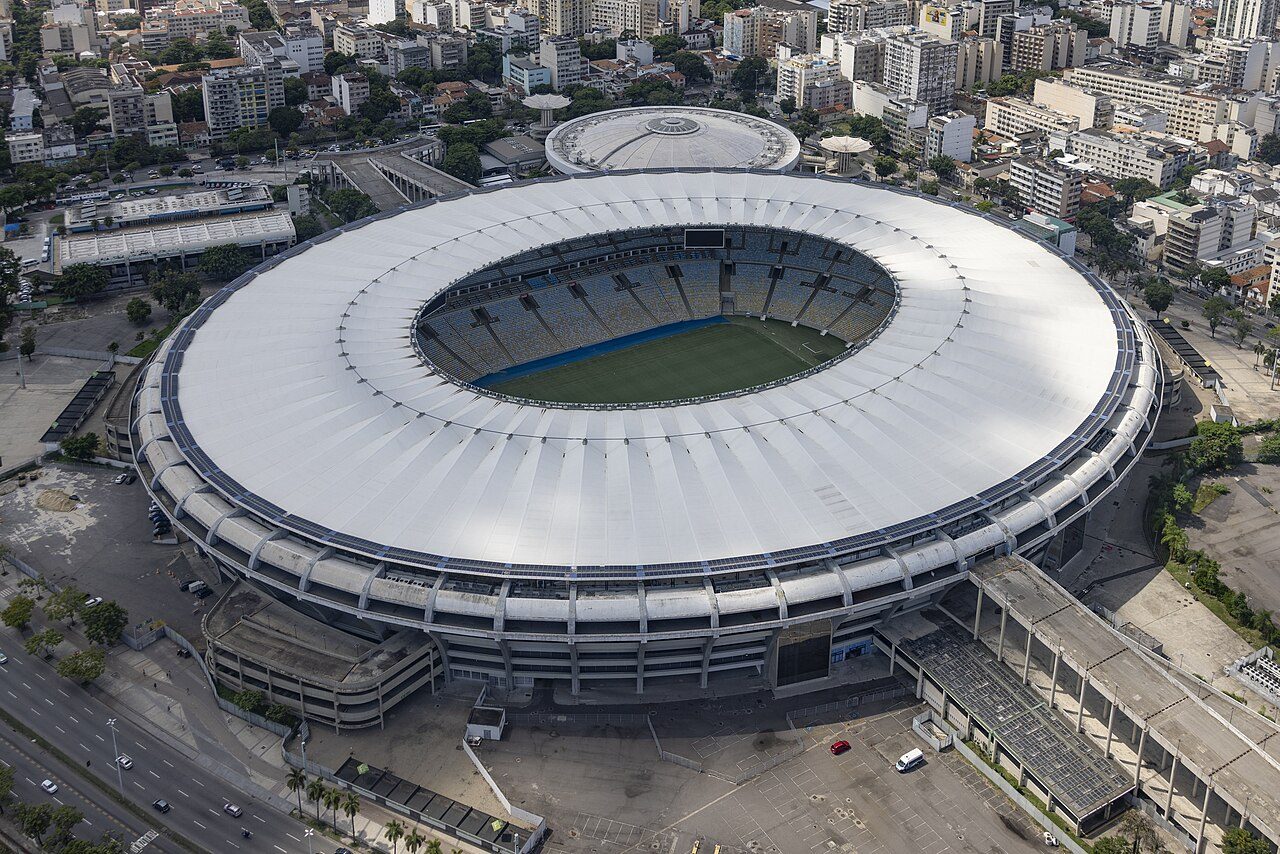
Maracana Stadium
Erected as a monument of modernist ambition for the 1950 FIFA World Cup by a consortium of architects including Waldir Ramos, the Estádio Jornalista Mário Filho—universally known as the Maracanã—stands as the definitive cathedral of Brazilian *futebol*. Within this sacred oval, a record-shattering crowd of nearly 200,000 fell into traumatic silence during the 1950 *Maracanaço* defeat against Uruguay, and Pelé netted his legendary 1,000th career goal in 1969. Extensively reconfigured for the 2014 World Cup, the stadium trades its original standing terraces for a streamlined amphitheater, crowned by a sweeping, tensioned fiberglass-membrane roof that shields a vibrant mosaic of 78,000 yellow, blue, and white seats arranged to echo the national banner. Touring this sporting pantheon, visitors pass the permanent bronze footprints of Garrincha, Zico, and Marta in the Hall of Fame before navigating the subterranean players' tunnel. The descent delivers a dramatic sensory transition: the cool, shadowed concourse abruptly gives way to an explosion of tropical sunlight and the sharp, verdant scent of manicured Bermuda turf. Standing pitchside, the raked tiers rise precipitously overhead, forming an acoustic colosseum that captures every stray breeze drifting from nearby Corcovado, forever resonant with the phantom roars of Brazil's fiercest rivalries.
More in Rio de Janeiro

Photo credits (5)
- Arne Müseler, CC BY-SA 3.0 de, via Wikimedia Commons
- Joalpe, CC BY-SA 4.0, via Wikimedia Commons
- Arne Müseler, CC BY-SA 3.0 de, via Wikimedia Commons
- Eduardo P, CC BY-SA 3.0, via Wikimedia Commons
- Marcos Cunha, CC BY-SA 3.0, via Wikimedia Commons