
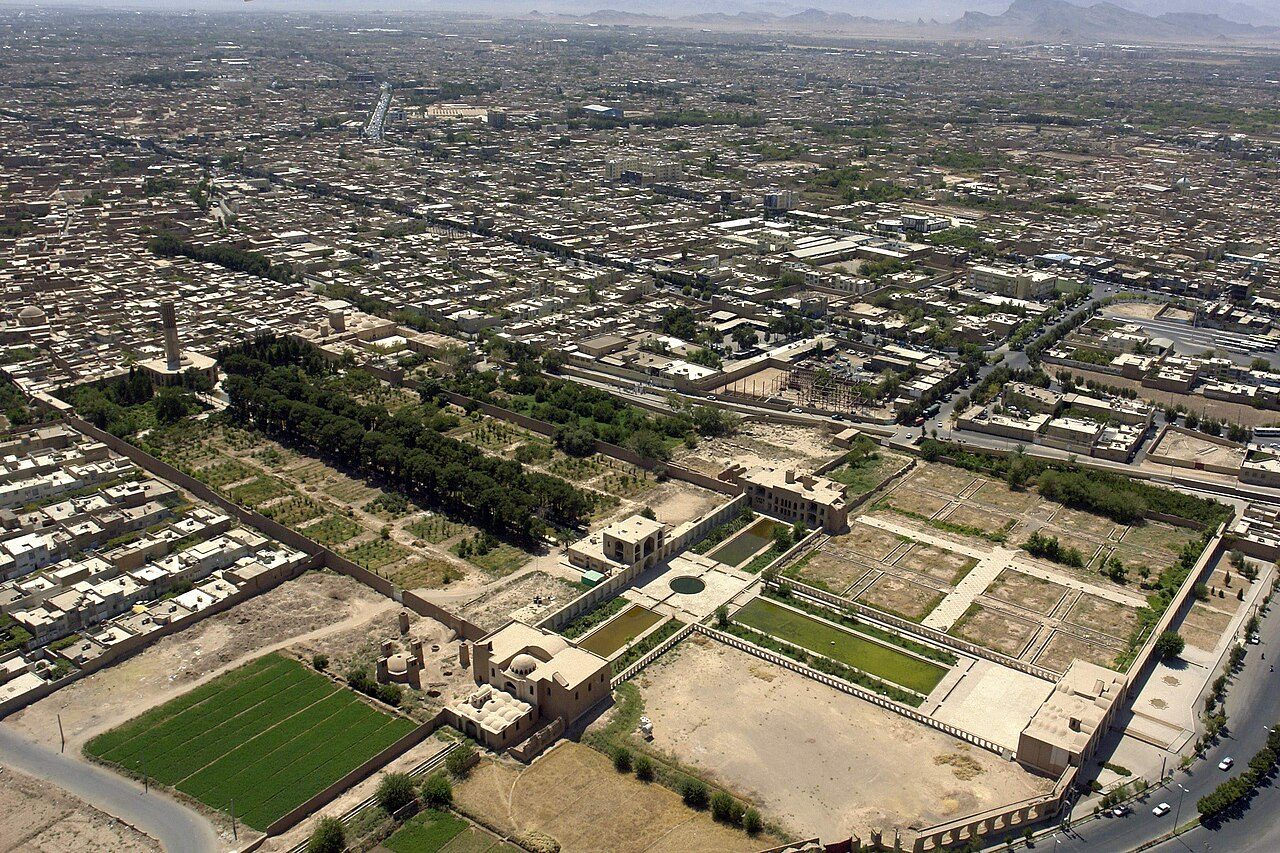
Dowlatabad Garden
Commissioned around 1747 by Mohammad Taghi Khan Bafqi during the transition between the Afsharid and Zand dynasties, Dowlatabad Garden stands as a triumph of desert engineering and UNESCO-recognized *chahar bagh* design. Fed by an intricate subterranean *qanat* tapping alpine aquifers, the walled compound served as both a fortified provincial seat and an oasis retreat. Its architectural marvel is the octagonal Hashti pavilion, crowned by an extraordinary 33.8-meter adobe windcatcher (*badgir*)—the tallest surviving structure of its kind in the world—which rises sharply against the stark backdrop of Yazd’s arid horizons. Stepping inside the pavilion, travelers experience a startling drop in temperature as the towering chimney scoops hot, high-altitude breezes, cooling the air as it descends over interior marble basins. Sunbeams pierce through intricate *orosi*—latticework wooden windows fitted with thousands of vibrant ruby, cobalt, and amber glass panes—scattering a kaleidoscopic tapestry of color across the brickwork and plaster vaults. Outside, along the axis of an elongated 250-meter reflecting pool, ancient cypresses, fragrant sour orange groves, and pomegranate trees filter the searing sun, filling the courtyards with a gentle microclimate that has defied the surrounding desert for nearly three centuries.
More in Yazd
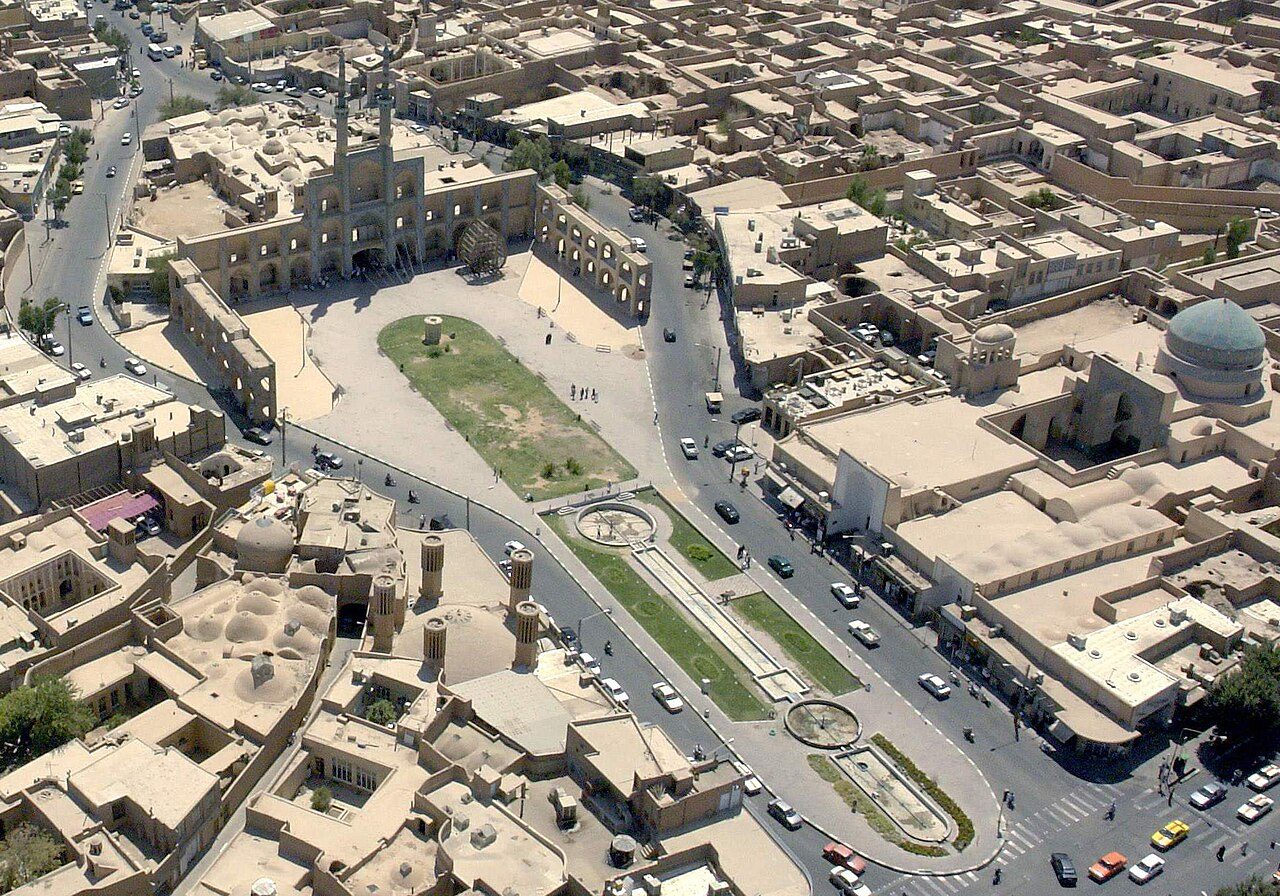
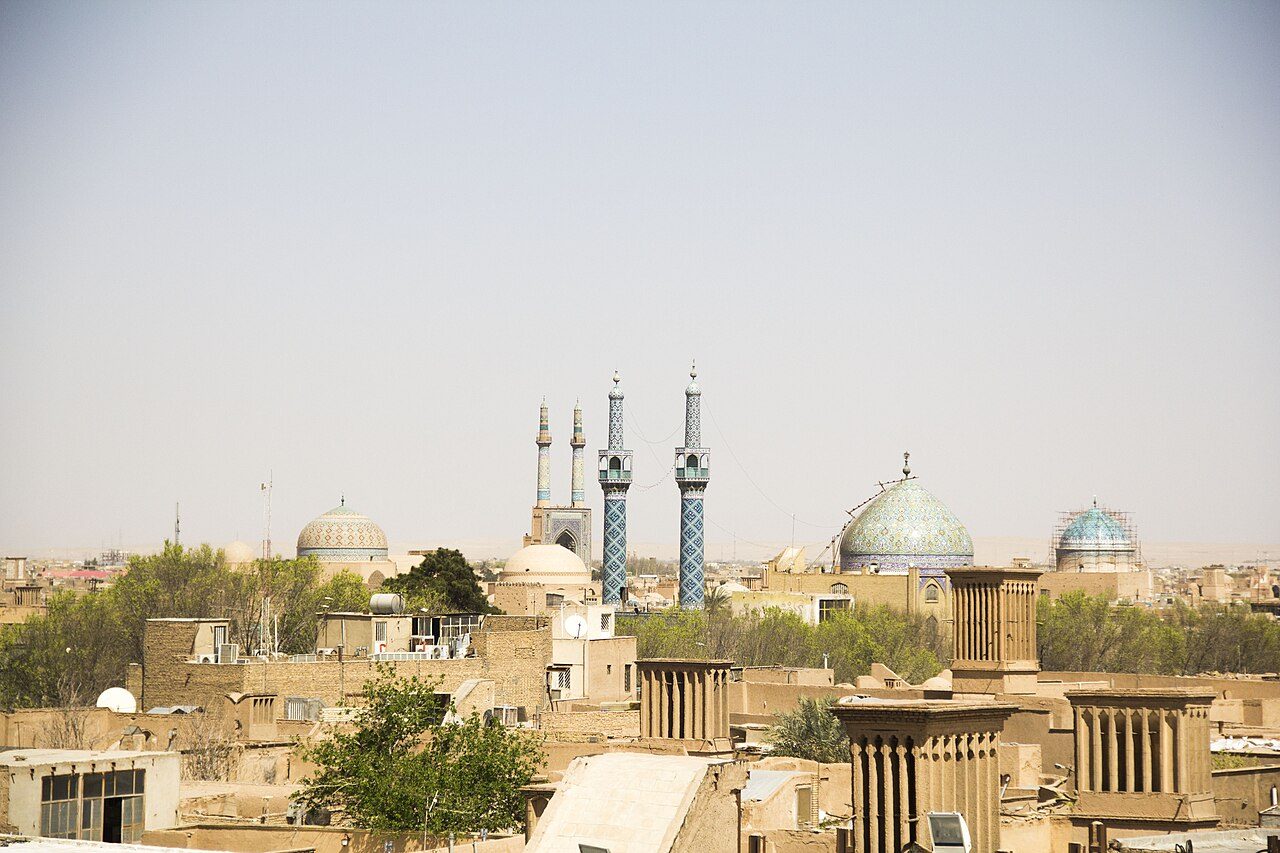
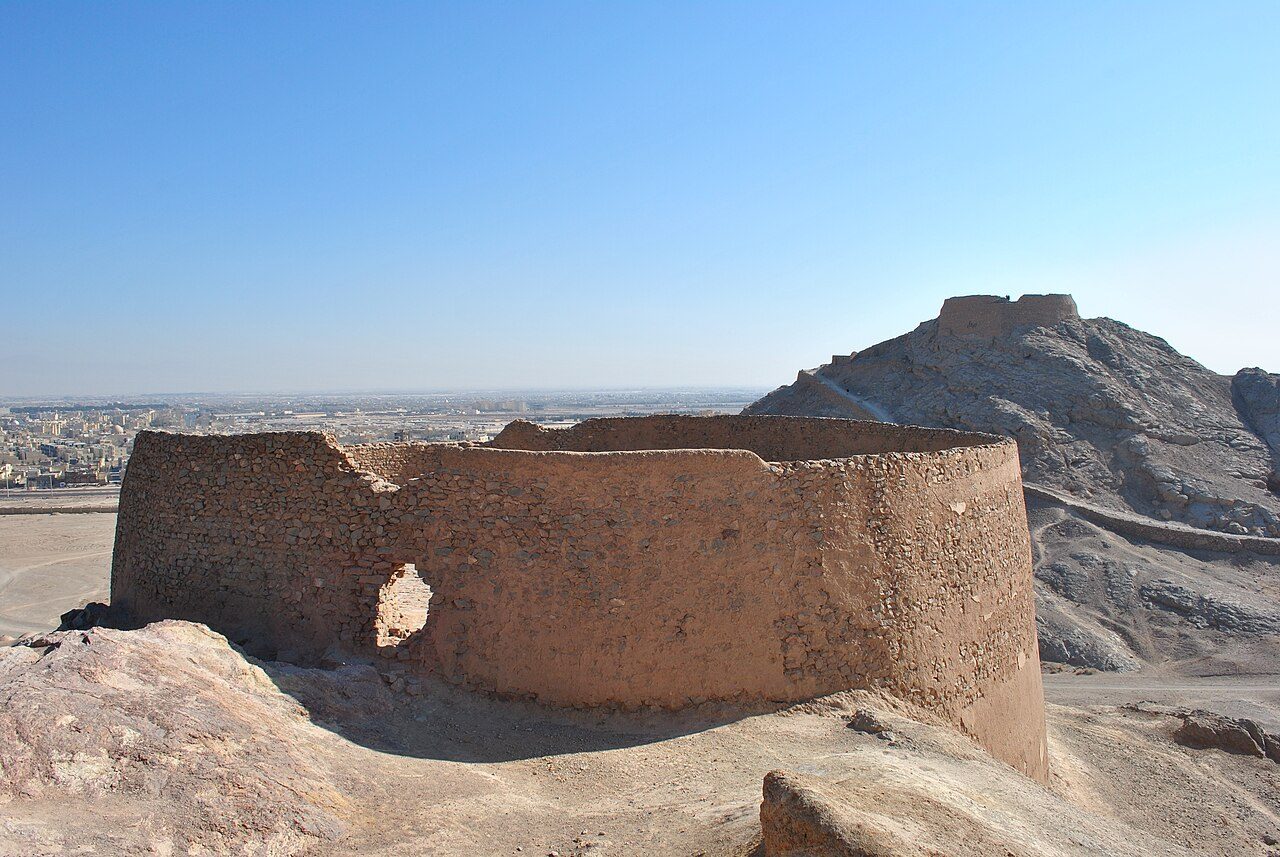
Photo credits (4)
- مهدی خبره دست, CC BY-SA 4.0, via Wikimedia Commons
- مهدی خبره دست, CC BY-SA 4.0, via Wikimedia Commons
- Ali.modiry, CC BY-SA 4.0, via Wikimedia Commons
- Zenith210 at English Wikipedia, CC BY-SA 3.0, via Wikimedia Commons