
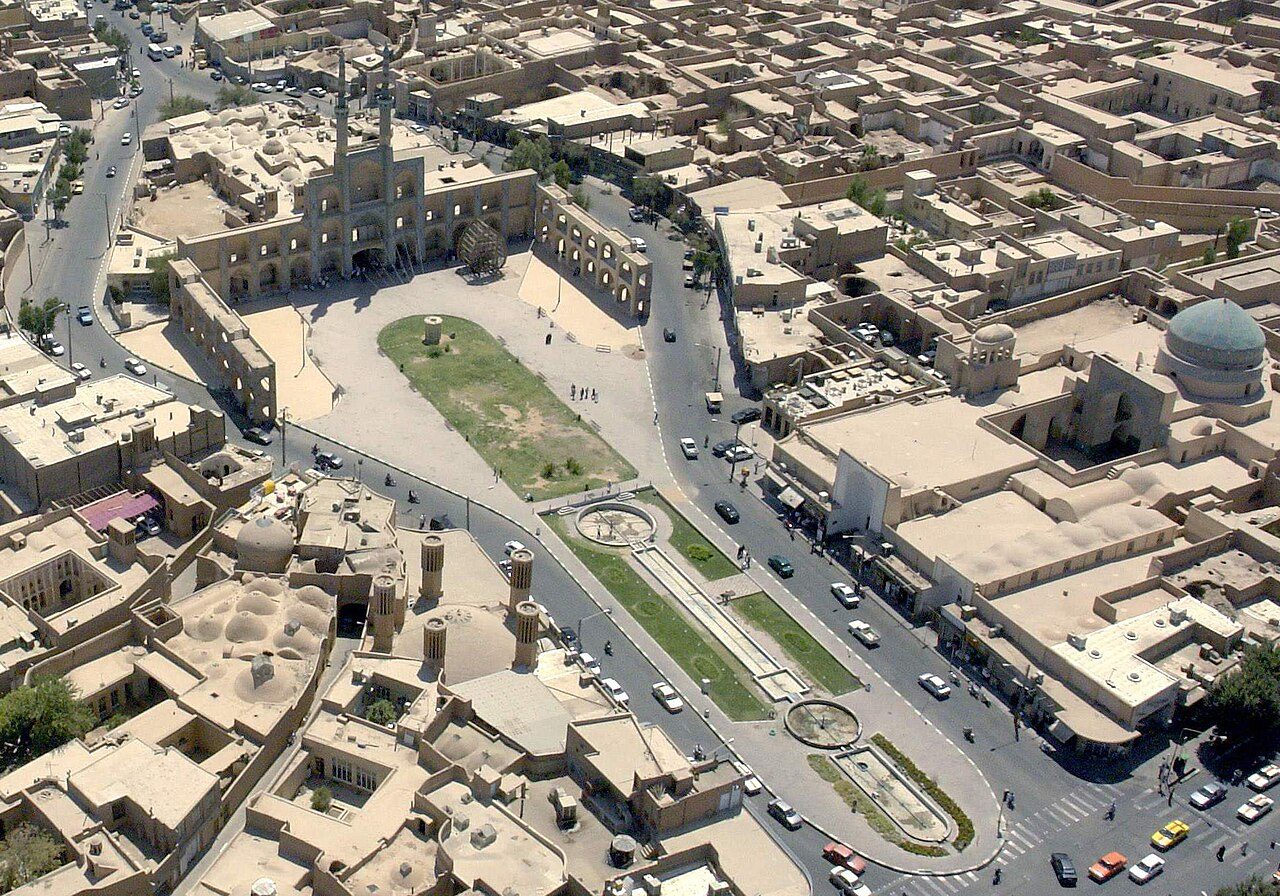
Amir Chakhmaq Complex
Commissioned in the 15th century during the Timurid renaissance by Jalal al-Din Amir Chakhmaq, the governor of Yazd, and his wife Seti Fatemeh, this square anchors the city’s ancient mud-brick core. Its dramatic centerpiece is a monumental three-tiered *tekyeh*—a ceremonial grandstand constructed for Shia mourning rituals during Muharram. Rising above symmetrical rows of vaulted, sunken alcoves, two slender minarets puncture the desert sky, lending vertical majesty to the sun-baked earthen facade. In the shadow of the porticoes rests a colossal *nakhl*, a multi-tiered wooden armature resembling a leafless cypress, traditionally hauled by hundreds of men during the passionate rites of Ashura. Standing in the expansive plaza at dusk, travelers witness the austere earthen architecture ignite into a dramatic honeycomb of amber light, mirrored precisely across the surface of the central reflecting pool. The cool desert evening air carries the distinct, sugary warmth of freshly baked *qottab* and rosewater sweets drifting from the adjacent confectioners of the bazaar. Looking outward from the esplanade, the hum of gathering locals mingles with the splashing fountains, framing an unforgettable panorama of Yazd’s low-slung earthen rooftops bristling with ancestral *badgirs* (windcatchers) against the darkening desert mountains.
More in Yazd
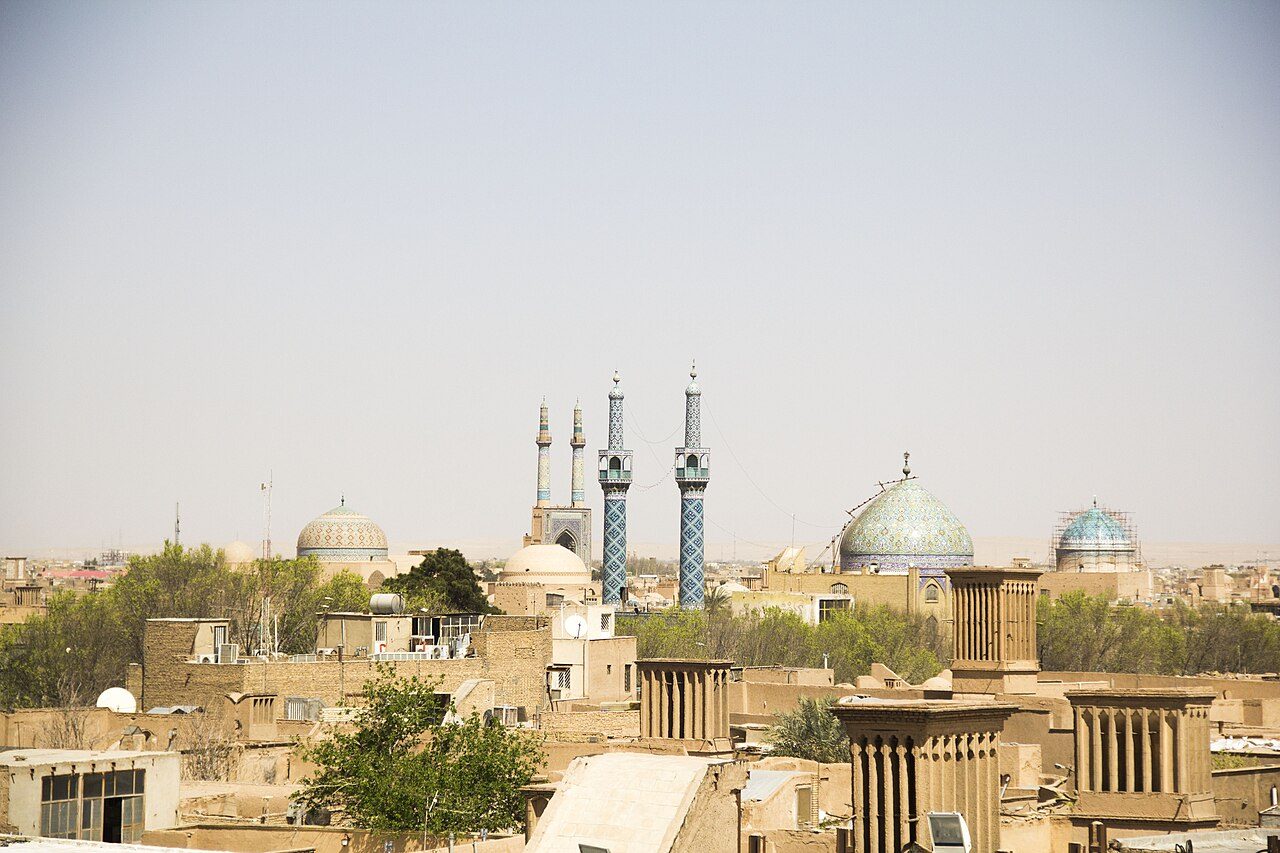
Photo credits (4)
- مهدی خبره دست, CC BY-SA 4.0, via Wikimedia Commons
- مهدی خبره دست, CC BY-SA 4.0, via Wikimedia Commons
- Ali.modiry, CC BY-SA 4.0, via Wikimedia Commons
- Zenith210 at English Wikipedia, CC BY-SA 3.0, via Wikimedia Commons