
Yazd
Rising between the Dasht-e Kavir and Dasht-e Lut deserts, Yazd sits on an arid plain beneath the barren ridges of the Shirkuh mountain range. Walking through its historic core feels like navigating a sun-baked earthen labyrinth. Clay-and-straw walls rise high above narrow lanes, vaulted arches cast cool corridors of shade, and tall badgirs—ancient windcatchers—slice the horizon, silently funneling the desert breeze into subterranean homes. Spared from Mongol devastation in the thirteenth century, the city flourished under the Muzaffarids as a major Silk Road crossroads. In the old Fahadan quarter, winding alleys reveal restored adobe mansions with quiet courtyard fountains. Nearby, the fourteenth-century Jameh Mosque anchors the skyline with twin turquoise minarets that rank among the tallest in Iran. On the desert outskirts stand the stark Towers of Silence, where Zoroastrians practiced sky burials until the 1960s, while the central Atash Behram houses a sacred fire said to have burned continuously since 470 CE. Daily life converges on the covered passages around the Amir Chakhmaq Complex, where confectioners box cardamom-scented qottab pastries alongside stacks of saffron rock candy. In the evening, residents gather at Saheb A Zaman Zurkhaneh, a converted subterranean water reservoir where athletes perform traditional endurance exercises to rhythmic drumming and poetry. Yazd is best visited between October and April, when desert temperatures turn mild. The historic center is made for walking, though shared taxis are the easiest way to reach the outlying shrines.
Read more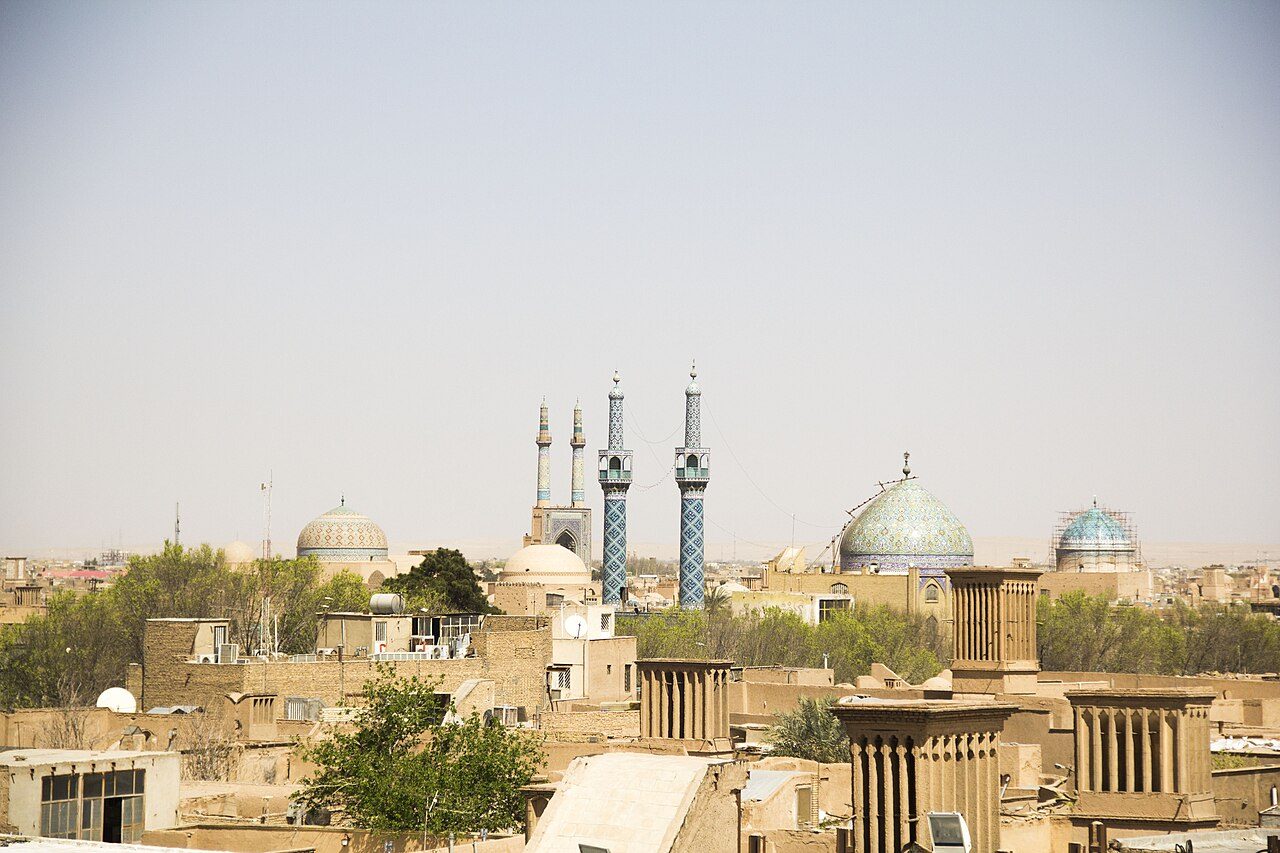
What to see in Yazd
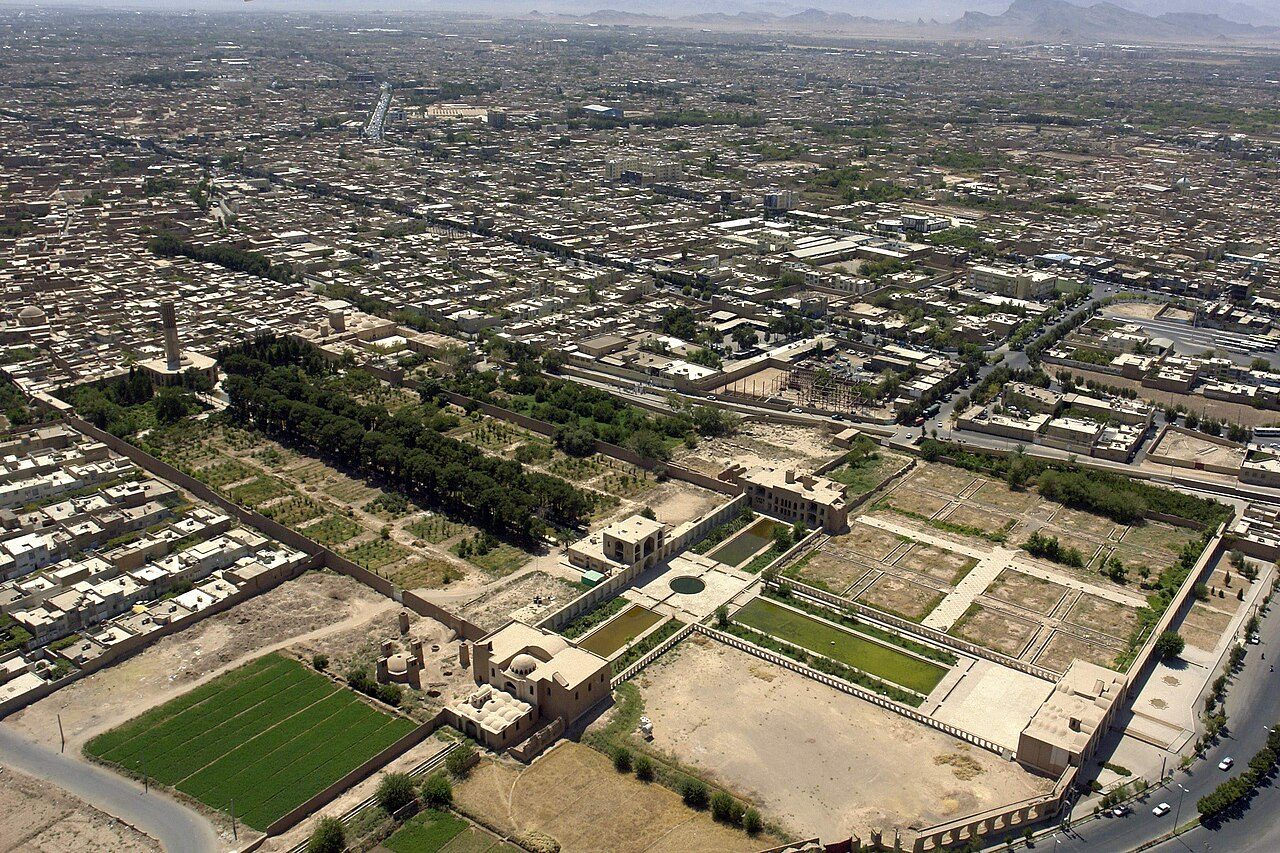
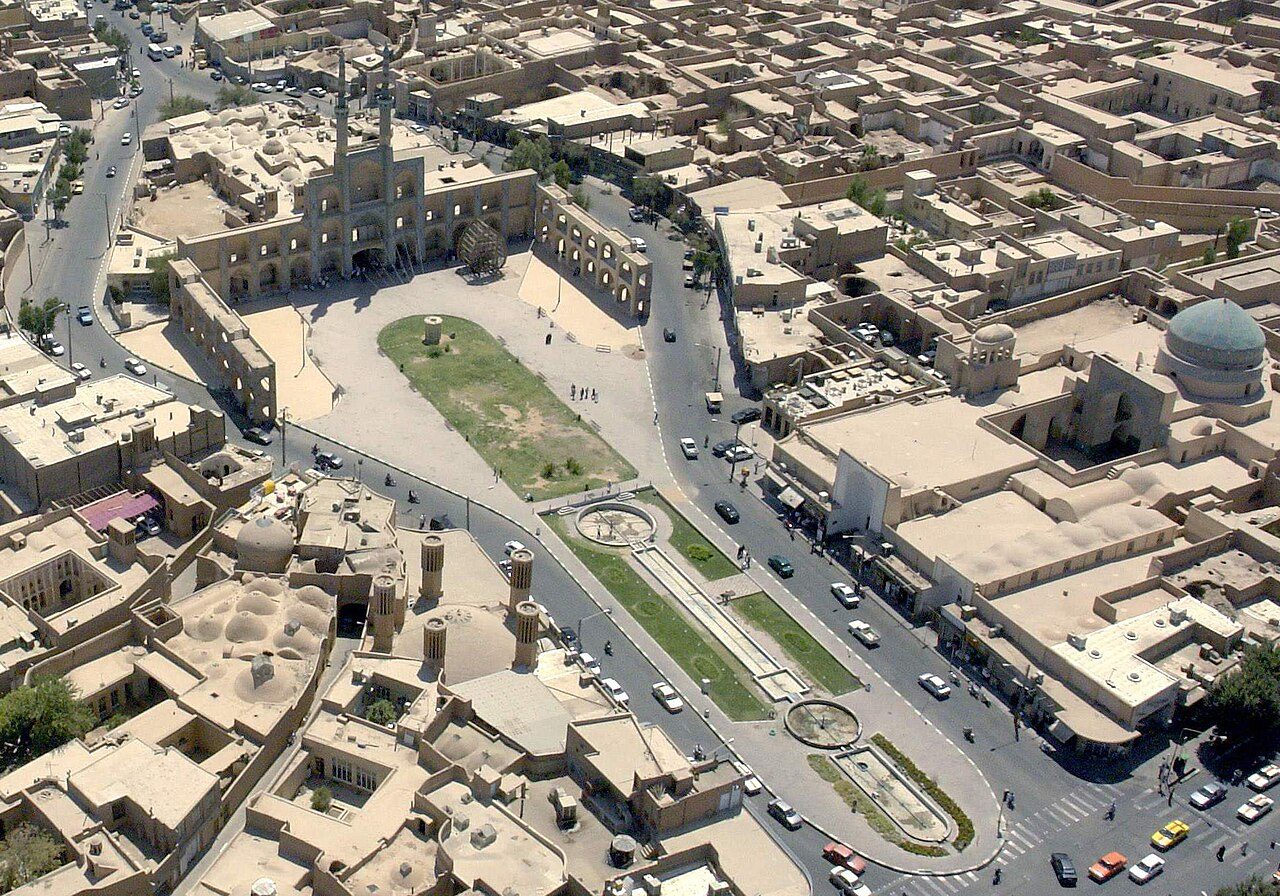
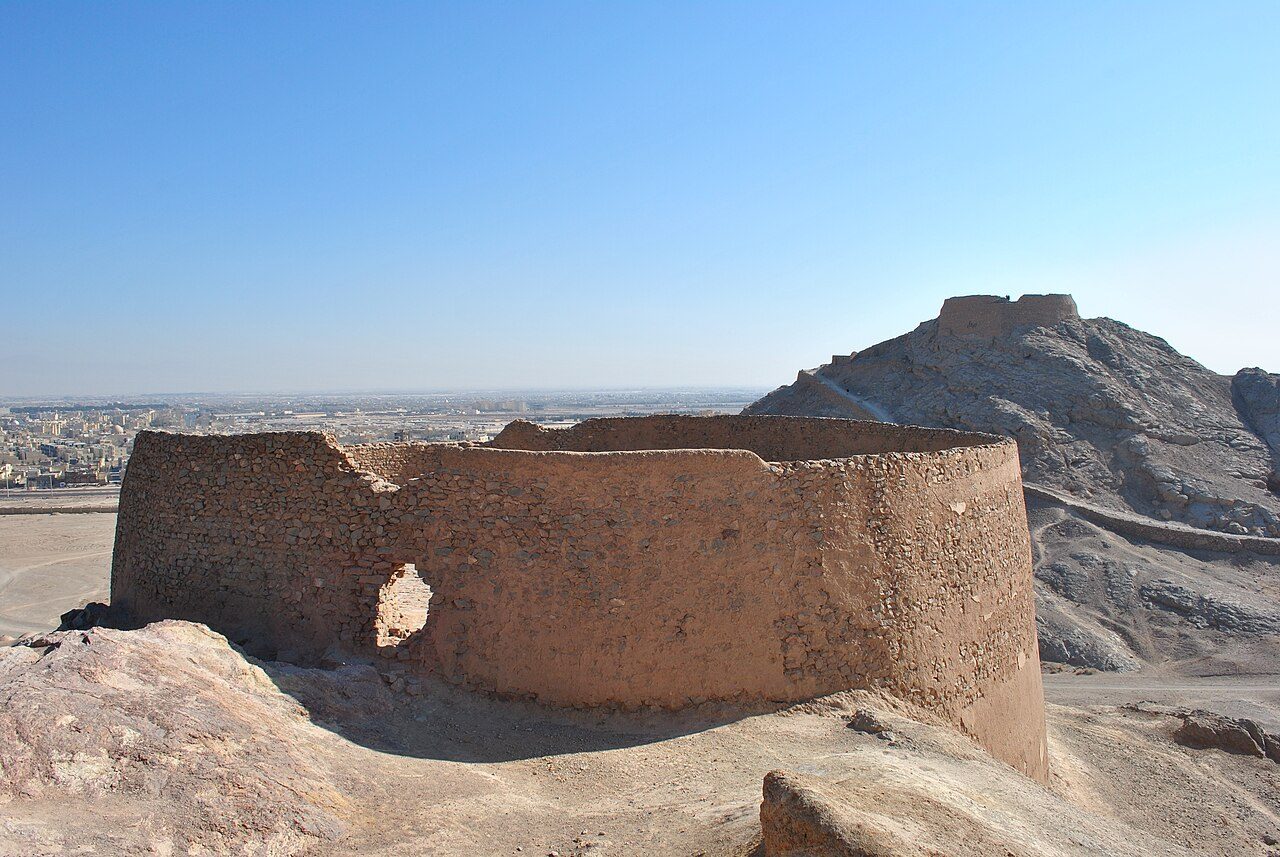
Photo credits (4)
- Ali.modiry, CC BY-SA 4.0, via Wikimedia Commons
- مهدی خبره دست, CC BY-SA 4.0, via Wikimedia Commons
- مهدی خبره دست, CC BY-SA 4.0, via Wikimedia Commons
- Zenith210 at English Wikipedia, CC BY-SA 3.0, via Wikimedia Commons