
Towers of Silence
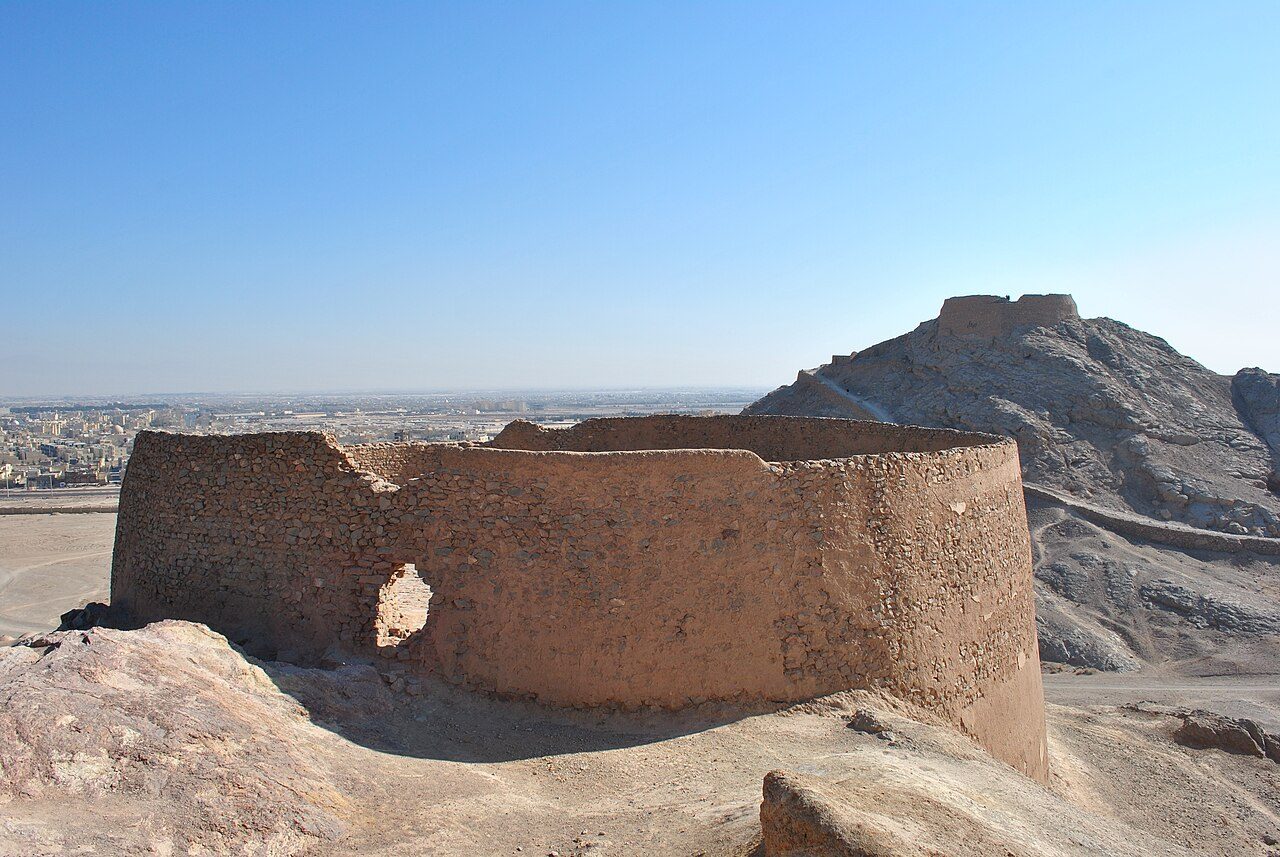
Rising starkly from the wind-scoured plains south of Yazd, the twin circular stone bastions known as the *Dakhmeh-ye Zartoshtiyun* embody centuries of Zoroastrian cosmology. Built atop twin rocky outcrops, these roofless mortuary platforms functioned until their official prohibition in the late 1960s under the Pahlavi modernization reforms. Grounded in the ancient belief that a corpse (*nasu*) would corrupt the sacred elements of earth and fire, Zoroastrian funerary rites consigned the deceased here for sky burial by carrion birds. Within the stark limestone walls lies a calibrated amphitheater of mortality: three concentric paved rings—the outer ring designated for men, the middle for women, and the inner circle for children—all sloping toward a central, lime-filled ossuary pit (*ostodan*) where the sun-bleached bones ultimately dissolved into dust. Ascending the craggy, sun-baked trail to the summit, you pass the adobe ruins of mourning pavilions (*kheilehs*) and twin-domed water cisterns (*ab anbars*) clustered at the base. Stepping through the weathered entry portal into the silent rotunda, the hollow interior delivers a profound stillness, punctuated only by the relentless desert breeze skimming over the bare flagstones. Standing on the elevated parapet, the visual contrast is striking: beneath your feet rests an austere realm of archaic ritual, while the horizon unfolds with the golden, windcatcher-studded sprawl of Yazd stretching across the arid Dasht-e Kavir.
More in Yazd
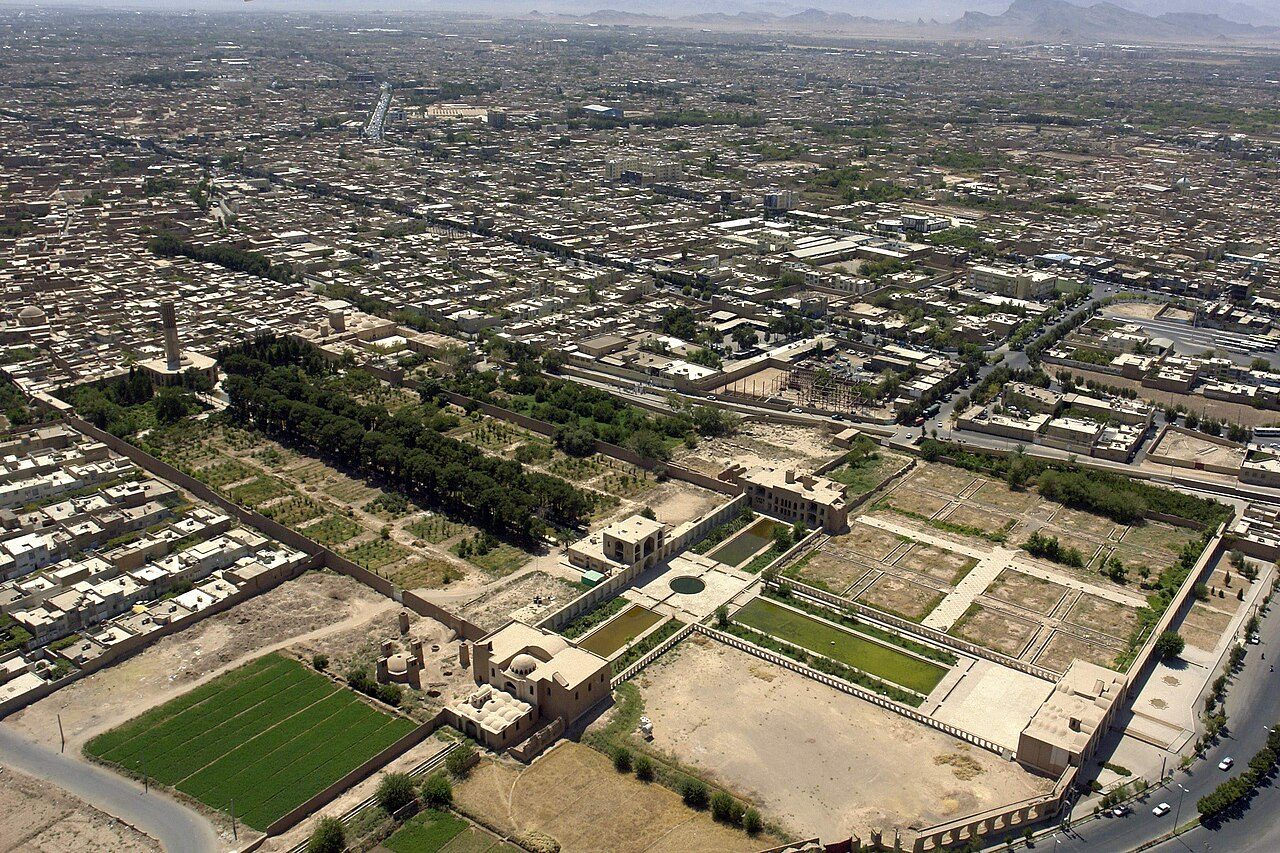
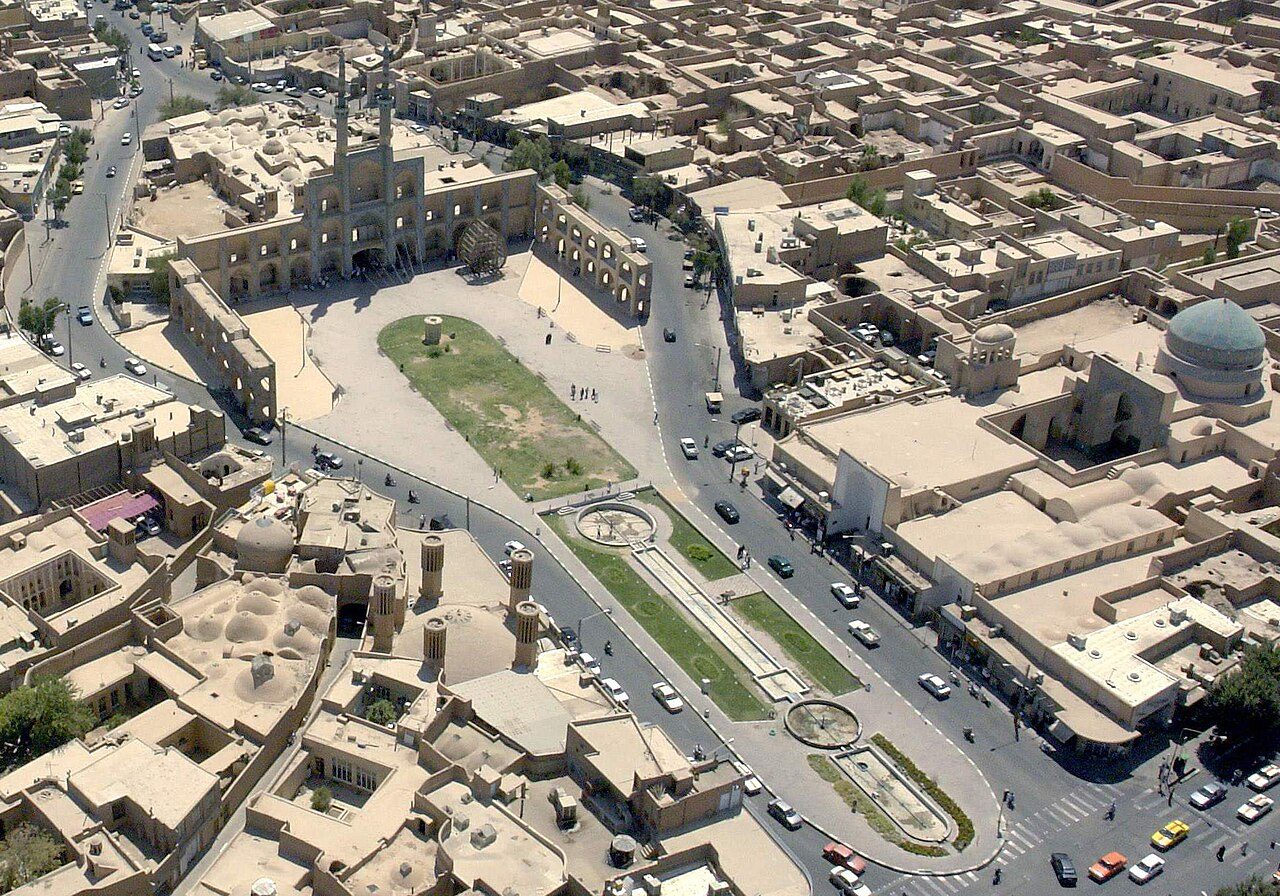
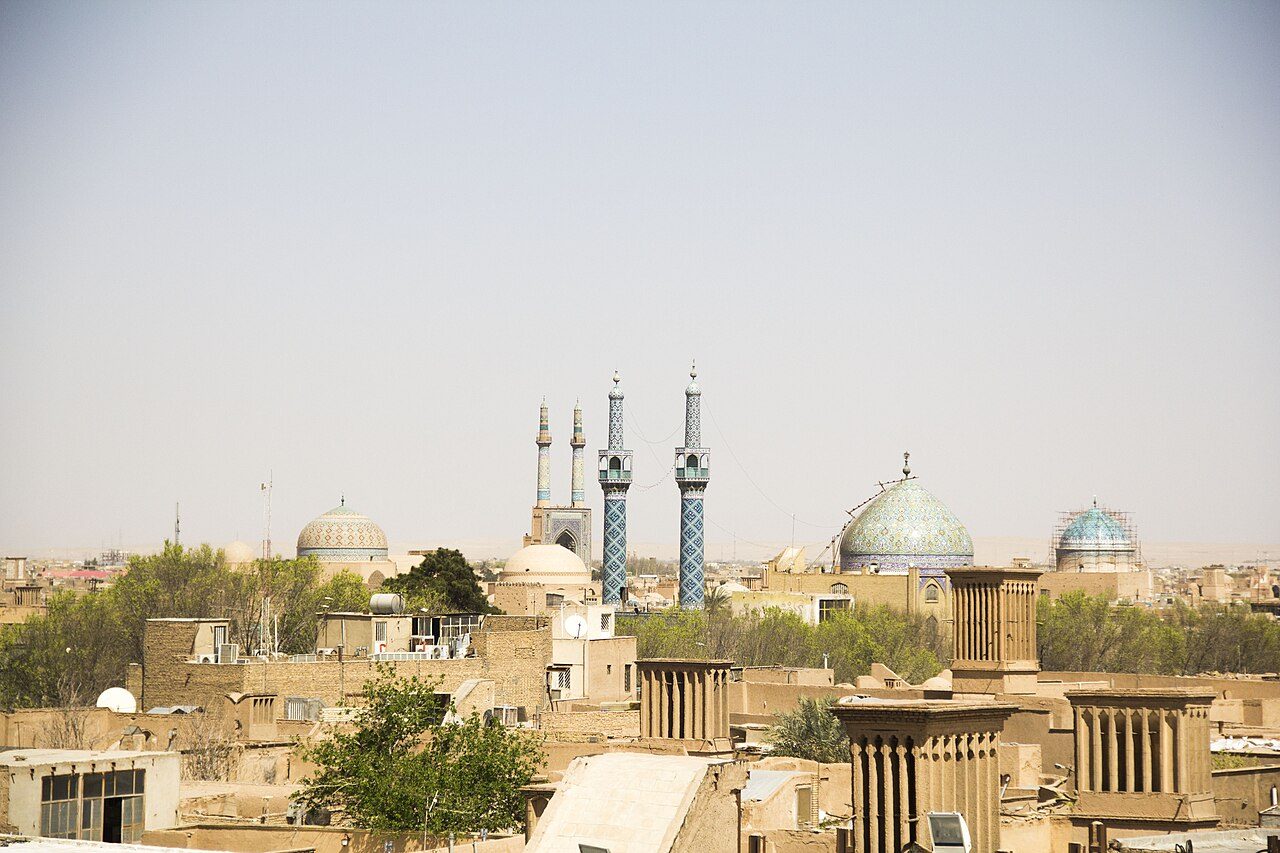
Photo credits (4)
- Zenith210 at English Wikipedia, CC BY-SA 3.0, via Wikimedia Commons
- مهدی خبره دست, CC BY-SA 4.0, via Wikimedia Commons
- مهدی خبره دست, CC BY-SA 4.0, via Wikimedia Commons
- Ali.modiry, CC BY-SA 4.0, via Wikimedia Commons