 New added
Koza Han
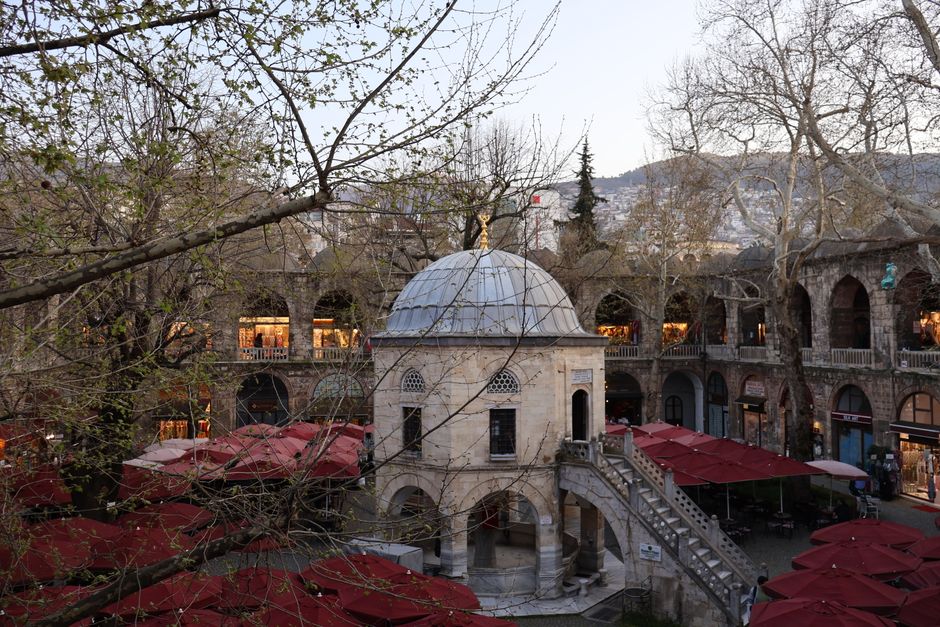
Commissioned in 1491 by Ottoman Sultan Bayezid II to fund his imperial mosque complex in Istanbul, Koza Han long served as the thrumming western terminus of the Silk Road. Master architect Abdul Ula bin Pulad Shah executed the two-story caravanserai in alternating bands of dressed stone and fired brick, arranging 95 vaulted chambers around a monumental rectangular courtyard. Its crowning architectural jewel stands directly at the center: an elevated, octagonal *mescit* (prayer hall) raised upon eight sturdy stone pillars, with a multifaceted marble *şadırvan* (ablution fountain) murmuring beneath its arches. Stepping through the grand corbeled portal, travelers enter a sun-dappled cloister shielded beneath the sweeping canopy of centuries-old plane trees. The upper galleries—where medieval merchants once traded raw silkworm cocoons—now rustle with hand-loomed Bursa silk scarves, iridescent brocades, and embroidered textiles unfurled along arched porticoes. Down in the paved courtyard, the aroma of embers and sand-brewed Turkish coffee drifts past low wicker chairs, underscored by the gentle clinking of porcelain saucers and the steady trickle of historic fountain water.