 New added
Cumalikizik Village
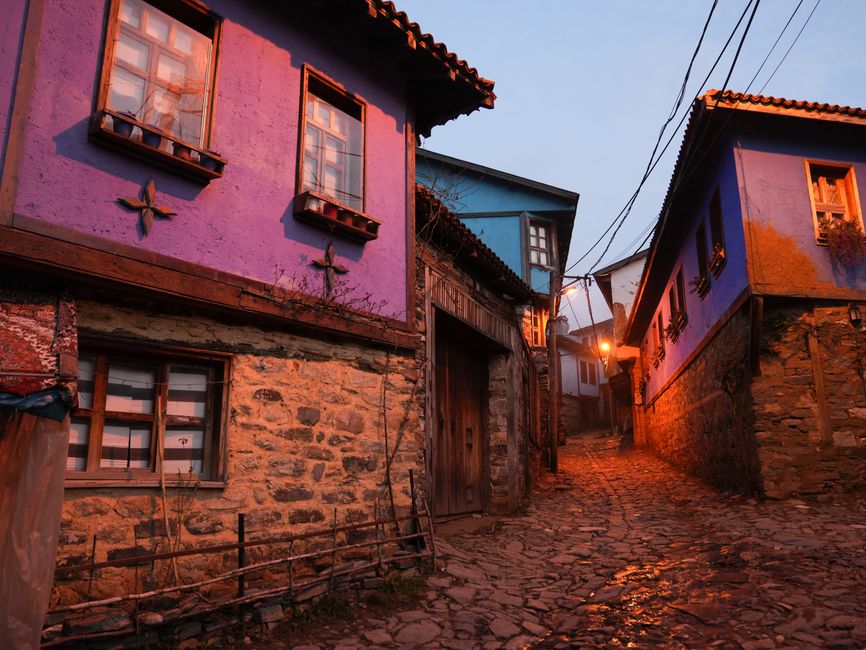
Founded in the early 1300s as an agricultural endowment (*vakıf*) to support the burgeoning Ottoman capital of Bursa under Sultan Orhan Gazi, Cumalıkızık endures as an exceptionally preserved open-air archive of early Ottoman rural architecture. Hugging the northern slopes of Mount Uludağ, the village is renowned for its traditional *hımış* construction—half-timbered chestnut frameworks infilled with rubble stone and sun-dried mudbrick. Striking upper floors project directly over narrow passages via cantilevered *cumba* (bay windows), their exterior lime plaster painted in vivid historic washes of indigo blue, saffron yellow, and soft purple. Massive double-winged wooden gates, reinforced with hand-forged iron studs and heavy decorative knockers, seal off stone-paved inner courtyards from the public sphere. Stepping onto the village’s steep, serpentine alleyways reveals a tactile encounter with medieval infrastructure, where center-grooved cobblestones still funnel cold mountain snowmelt away from residential foundations. Sunlight angles sharply between the tightly clustered, leaning eaves, casting patterned shadows across street-side stalls laden with freshly baked village bread, tarhana, and regional blackberry preserves. Visitors navigate an authentic living settlement untethered from modern haste, enveloped by the scent of woodsmoke, the steady trickle of Uludağ’s alpine runoff, and the weathered patina of timber beams that have weathered seven centuries of imperial history.