
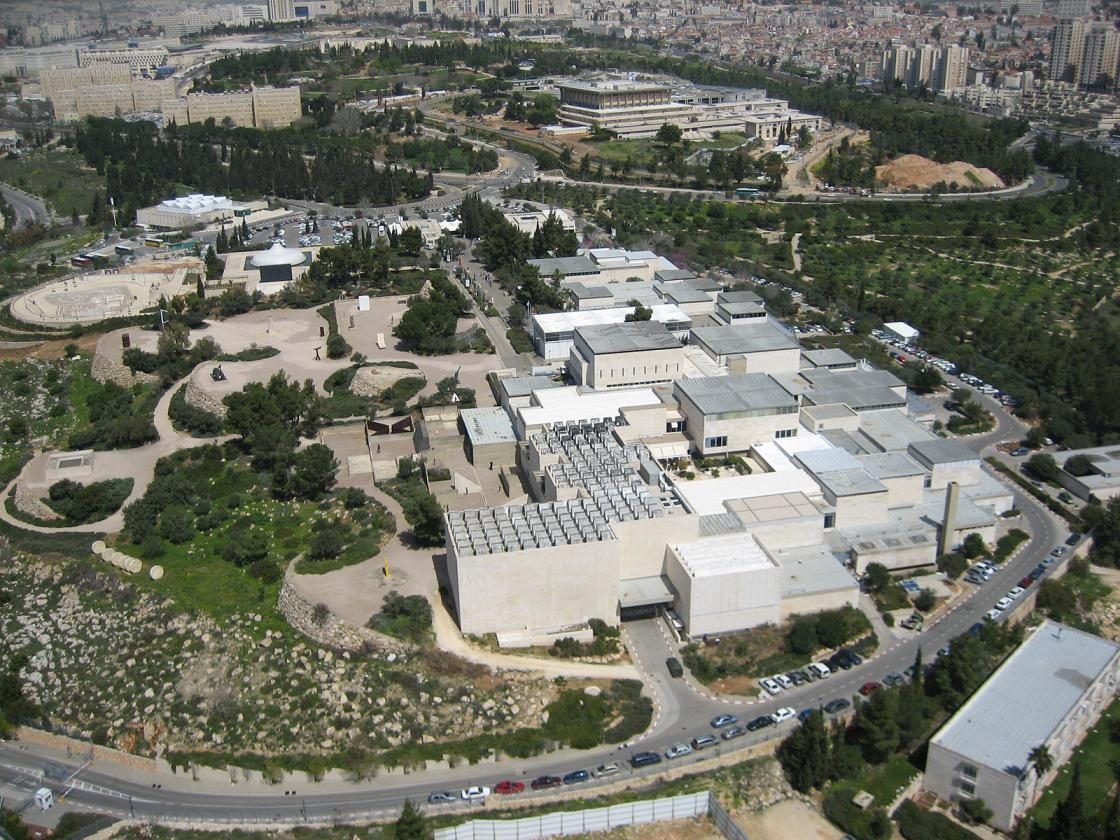
Israel Museum
Crowning the Judean hills of Givat Ram since 1965, the Israel Museum was conceived by Jerusalem Mayor Teddy Kollek as an encyclopedic sanctuary bridging deep antiquity and modernism. Its architectural centerpiece is Frederick Kiesler and Armand Bartos’s Shrine of the Book, where a gleaming white ceramic dome—modeled on the lids of the pottery jars found in the Qumran caves—emerges from a sunken reflecting pool opposite a brooding black basalt wall, an architectural nod to the War of the Sons of Light Against the Sons of Darkness. Descending into the subterranean sanctuary, travelers encounter a cool, dimly illuminated rotunda where a facsimile of the Great Isaiah Scroll coils around a massive central drum beneath an undulating, ribbed concrete ceiling. Beyond the shrine, the campus unfolds across modernist modular pavilions designed by Alfred Mansfeld. Visitors navigate Isamu Noguchi’s Billy Rose Art Garden, where raw fieldstone terraces and gravel paths frame monumental bronzes by Henry Moore and Auguste Rodin against the bright Mediterranean sky. Nearby, an sprawling 1:50 scale outdoor model reconstructs Jerusalem as it stood in 66 CE, just prior to Roman devastation. Inside the archaeology galleries, the atmosphere turns reverent before the Tel Dan Stele—bearing the earliest extra-biblical inscription of the "House of David"—and the haunting, hollow-eyed stares of 9,000-year-old Neolithic plaster masks recovered from the Judean Desert.
More in Jerusalem
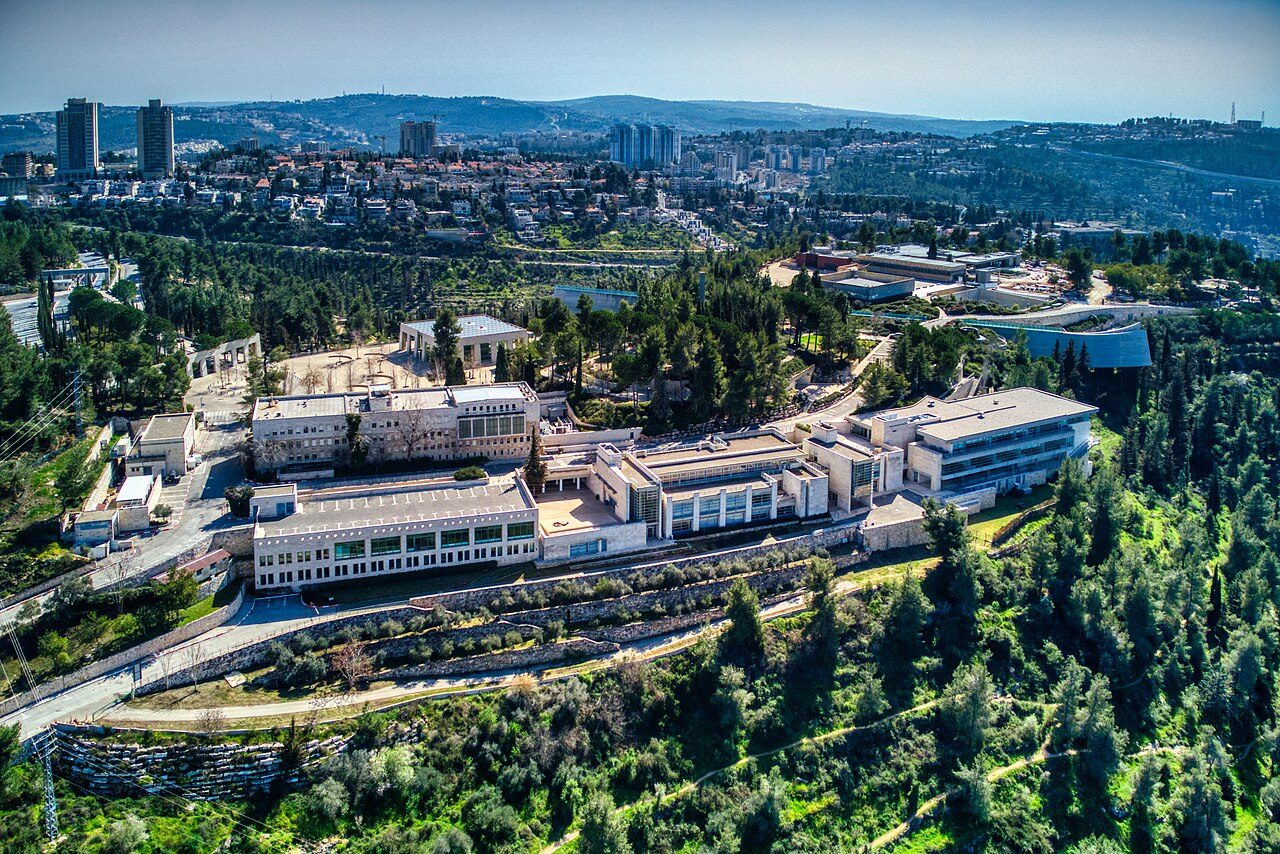

Photo credits (6)
- Original uploader was אסף.צ at he.wikipedia, CC BY-SA 3.0, via Wikimedia Commons
- StateofIsrael, CC BY-SA 2.0, via Wikimedia Commons
- https://www.flickr.com/photos/jlascar/, CC BY 2.0, via Wikimedia Commons
- אורי אלוני, CC BY-SA 4.0, via Wikimedia Commons
- Hagai Agmon-Snir حچاي اچمون-سنير חגי אגמון-שניר, CC BY-SA 4.0, via Wikimedia Commons
- Godot13, CC BY-SA 4.0, via Wikimedia Commons