
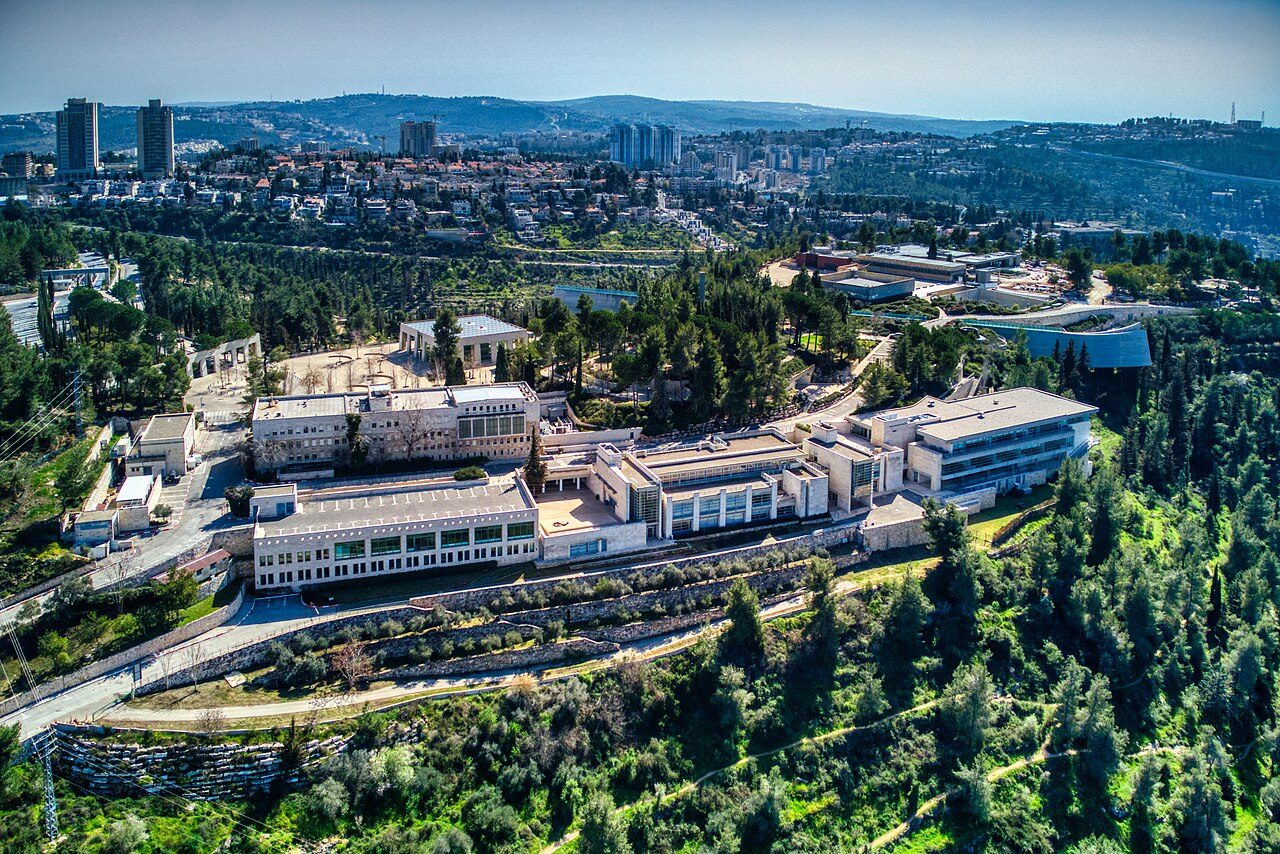
Yad Vashem
Carved into the western slopes of Jerusalem’s Mount Herzl, Yad Vashem was established by the Israeli Knesset in 1953 to preserve the memory of the six million Jews murdered in the Shoah. The complex is anchored by Moshe Safdie’s 2005 Holocaust History Museum: a 180-meter-long triangular prism of raw, poured concrete slicing straight through the mountain bedrock. Walking its subterranean floor, visitors navigate a zigzagging sequence of galleries that descend into historical shadows, illuminated only by a narrow skylight running the length of the apex. The chronological path culminates beneath the soaring conical vault of the Hall of Names, where six hundred individual portraits look down over shelves containing millions of Pages of Testimony, their reflections mirrored in a deep basin chiseled into the living limestone below. Outside, dappled sunlight filters through carob and olive trees along the Avenue of the Righteous Among the Nations, honoring non-Jews who risked their lives to save others. Deep emotional gravity defines the adjacent Children's Memorial, an underground cavern where mirrors multiply the light of five solitary burning candles into an infinite constellation of 1.5 million points of light, while recorded voices softly recite the names, ages, and lost hometowns of the youngest victims. The journey ends abruptly as the concrete walls of the main prism flare open into a dramatic, cantilevered balcony, thrusting travelers out of claustrophobic darkness into the open air and sweeping panoramas of the Judean hills.
More in Jerusalem

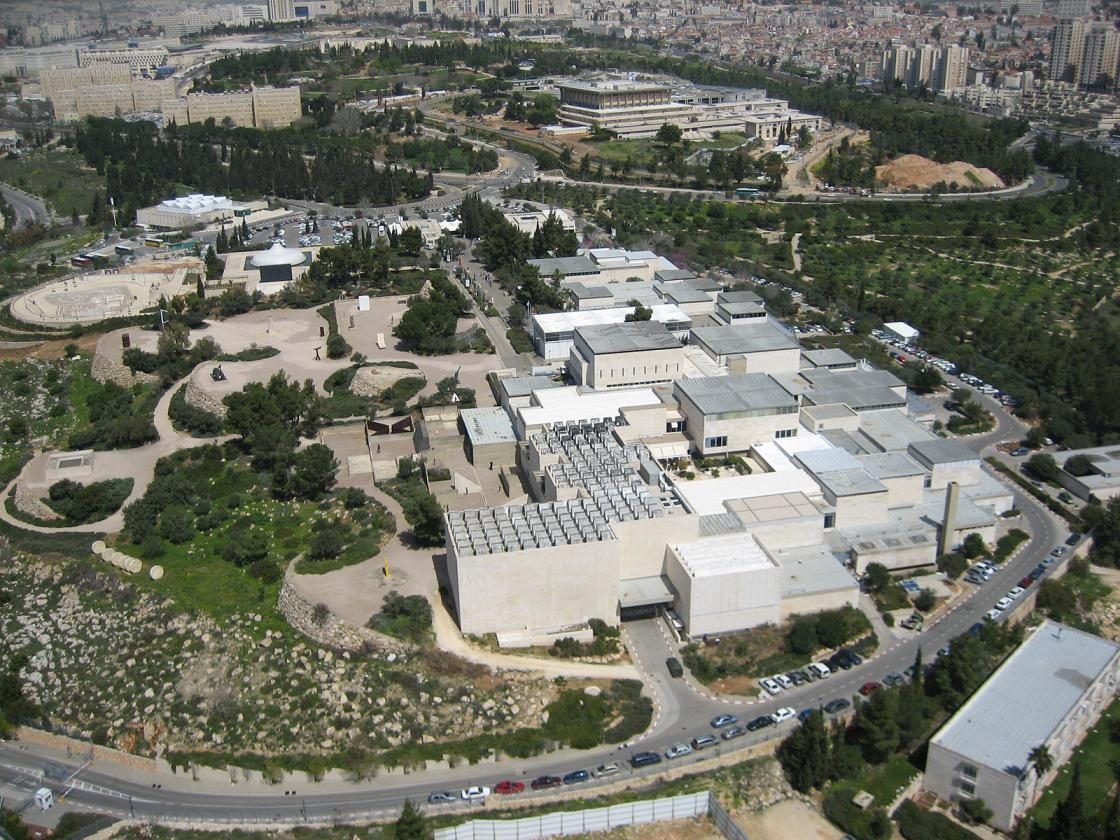
Photo credits (6)
- Hagai Agmon-Snir حچاي اچمون-سنير חגי אגמון-שניר, CC BY-SA 4.0, via Wikimedia Commons
- StateofIsrael, CC BY-SA 2.0, via Wikimedia Commons
- https://www.flickr.com/photos/jlascar/, CC BY 2.0, via Wikimedia Commons
- אורי אלוני, CC BY-SA 4.0, via Wikimedia Commons
- Godot13, CC BY-SA 4.0, via Wikimedia Commons
- Original uploader was אסף.צ at he.wikipedia, CC BY-SA 3.0, via Wikimedia Commons