
Western Wall
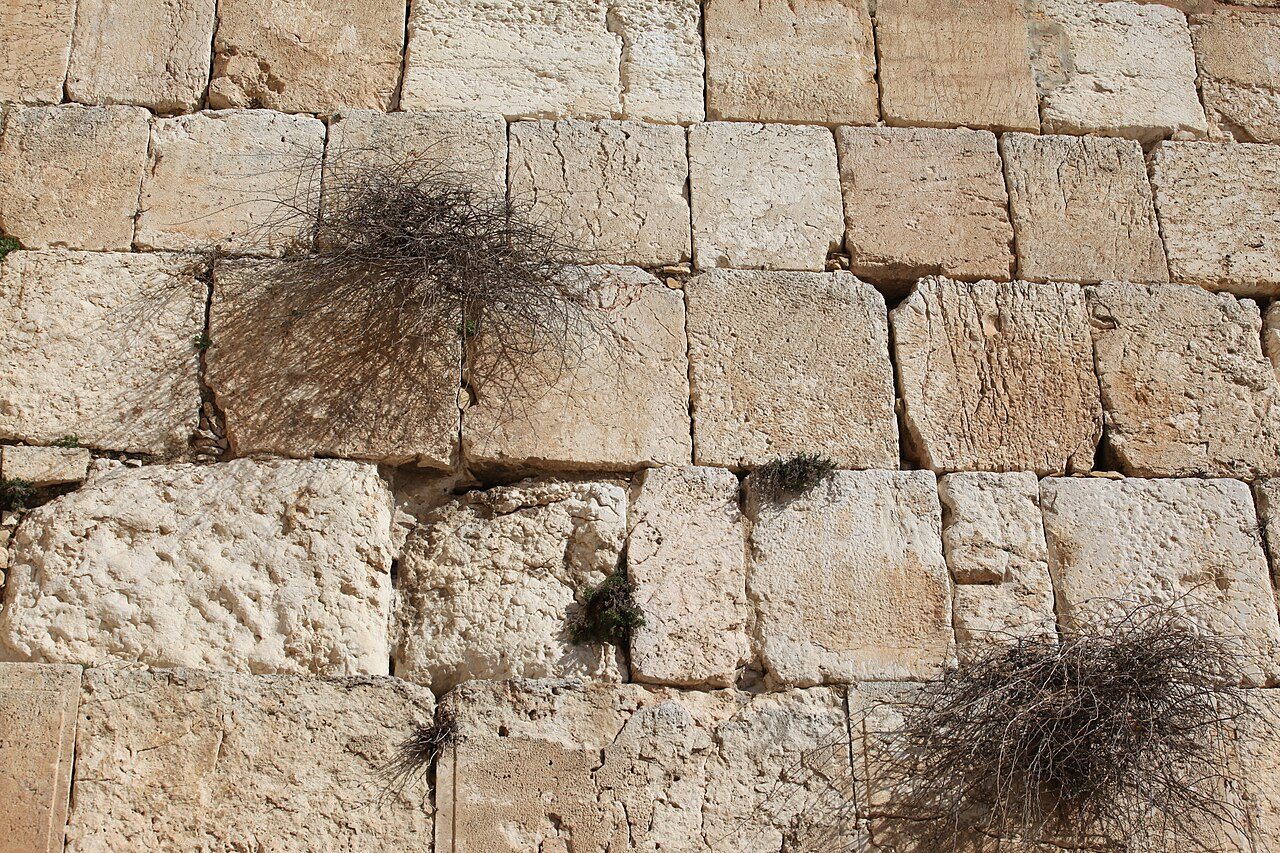
Rising from the foundation of Mount Moriah, the Western Wall—or *Kotel*—is the monumental remnant of the retaining rampart engineered by Herod the Great in 19 BCE to support the expanded esplanade of the Second Temple. Spared complete demolition when Roman legions under Titus leveled the sanctuary in 70 CE, the wall stands as an open-air archive of Jerusalem’s architectural stratigraphy. The colossal lower tiers feature signature Herodian masonry: hand-chiseled limestone megaliths, some exceeding fifty tons, dry-fitted with precision and edged with delicate marginal drafting. Above them rest smaller, smoother-faced blocks stacked during Umayyad and Ottoman reconstructions, each layer marking an epoch of imperial retreat and reoccupation. Approaching the sun-baked plaza, travelers enter a space humming with collective reverence. The pale Jerusalem limestone, burnished smooth by centuries of leaning foreheads and weeping palms, radiates ambient heat by day and takes on an amber glow beneath evening floodlights. Visitors encounter narrow deep-cut mortarless fissures packed tightly with white tufts of paper—written petitions (*kvitlach*) tucked into every reachable cranny. Between the murmur of Hebrew psalms, the rustle of woven prayer shawls, and the shadow of swifts darting from wild caper bushes rooted directly into the bedrock, the encounter is profoundly tactile, collapsing two thousand years of longing into a single touch against cold stone.
More in Jerusalem

Photo credits (6)
- StateofIsrael, CC BY-SA 2.0, via Wikimedia Commons
- https://www.flickr.com/photos/jlascar/, CC BY 2.0, via Wikimedia Commons
- אורי אלוני, CC BY-SA 4.0, via Wikimedia Commons
- Hagai Agmon-Snir حچاي اچمون-سنير חגי אגמון-שניר, CC BY-SA 4.0, via Wikimedia Commons
- Godot13, CC BY-SA 4.0, via Wikimedia Commons
- Original uploader was אסף.צ at he.wikipedia, CC BY-SA 3.0, via Wikimedia Commons