
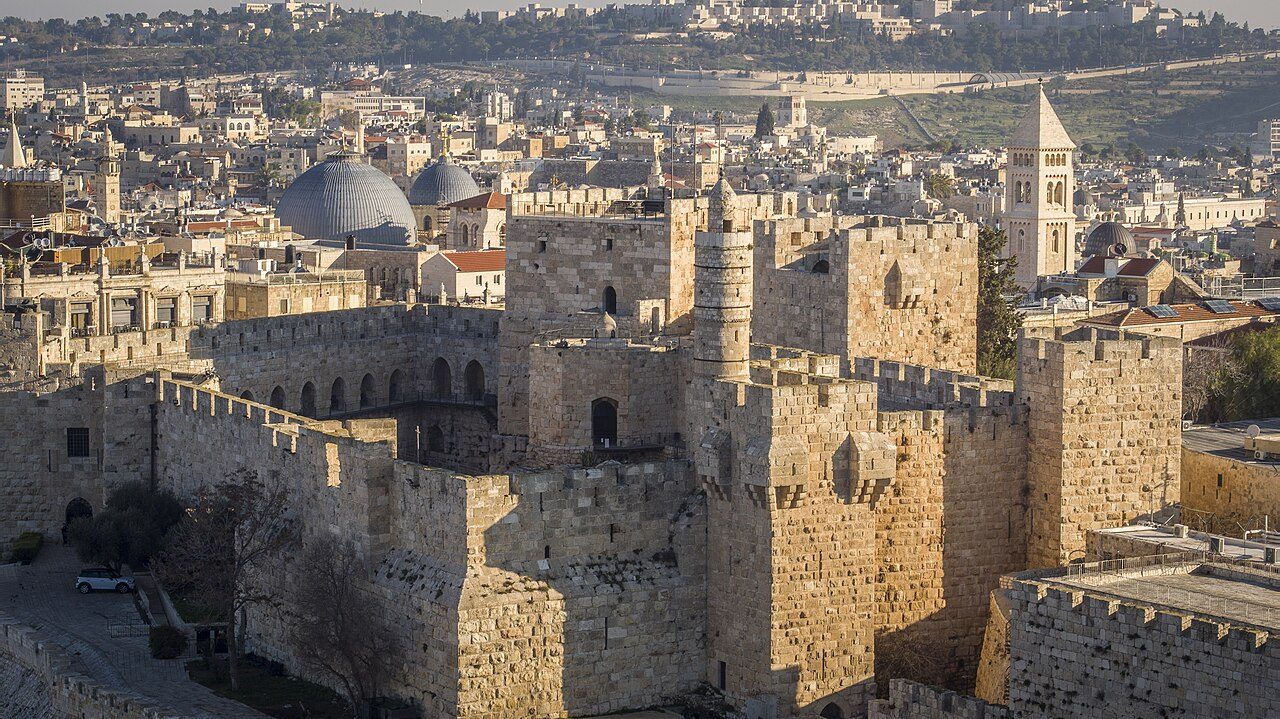
Tower of David
Guarding the western breach beside Jaffa Gate, the citadel known as the Tower of David is a fortified palimpsest spanning more than two millennia. King Herod the Great erected the colossal Phasael Tower here in the first century BCE, its massive, chiseled ashlar blocks still anchoring the compound's western foundation. Despite Byzantine and Crusader misattributions that linked the fortress to the biblical King David, the complex primarily reflects Islamic military architecture, defined by Mamluk bastions, crenelated parapets, and a slender seventeenth-century Ottoman minaret. It was on these historic stone steps in December 1917 that British General Edmund Allenby dismounted his horse to formally accept the city’s surrender. Crossing a wooden footbridge over the ancient dry moat, visitors enter an excavated central courtyard revealing exposed Hasmonean walls and Byzantine cisterns. Climbing the narrow stone staircase to the Phasael ramparts yields an unmatched 360-degree panorama: a tight mosaic of terracotta roofs across the Christian Quarter, the gilded cupola of the Dome of the Rock, and the arid crest of the Mount of Olives. As the late afternoon desert sun sets the limestone masonry ablaze in amber hues, the tactile coolness of the weathered stone contrasts with the sensory swell of chiming church bells and the melodic cadence of the adhan rolling across the city.
More in Jerusalem
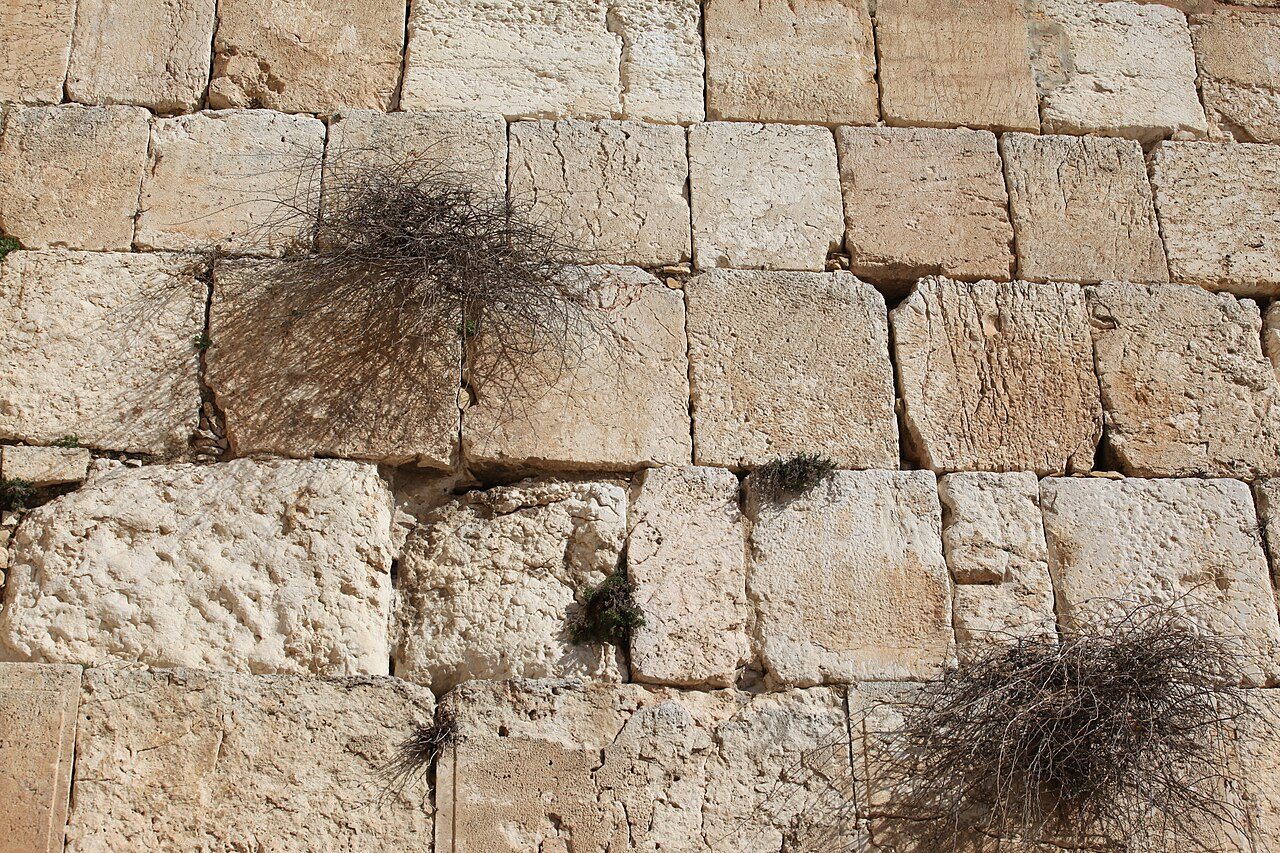

Photo credits (6)
- אורי אלוני, CC BY-SA 4.0, via Wikimedia Commons
- StateofIsrael, CC BY-SA 2.0, via Wikimedia Commons
- https://www.flickr.com/photos/jlascar/, CC BY 2.0, via Wikimedia Commons
- Hagai Agmon-Snir حچاي اچمون-سنير חגי אגמון-שניר, CC BY-SA 4.0, via Wikimedia Commons
- Godot13, CC BY-SA 4.0, via Wikimedia Commons
- Original uploader was אסף.צ at he.wikipedia, CC BY-SA 3.0, via Wikimedia Commons