
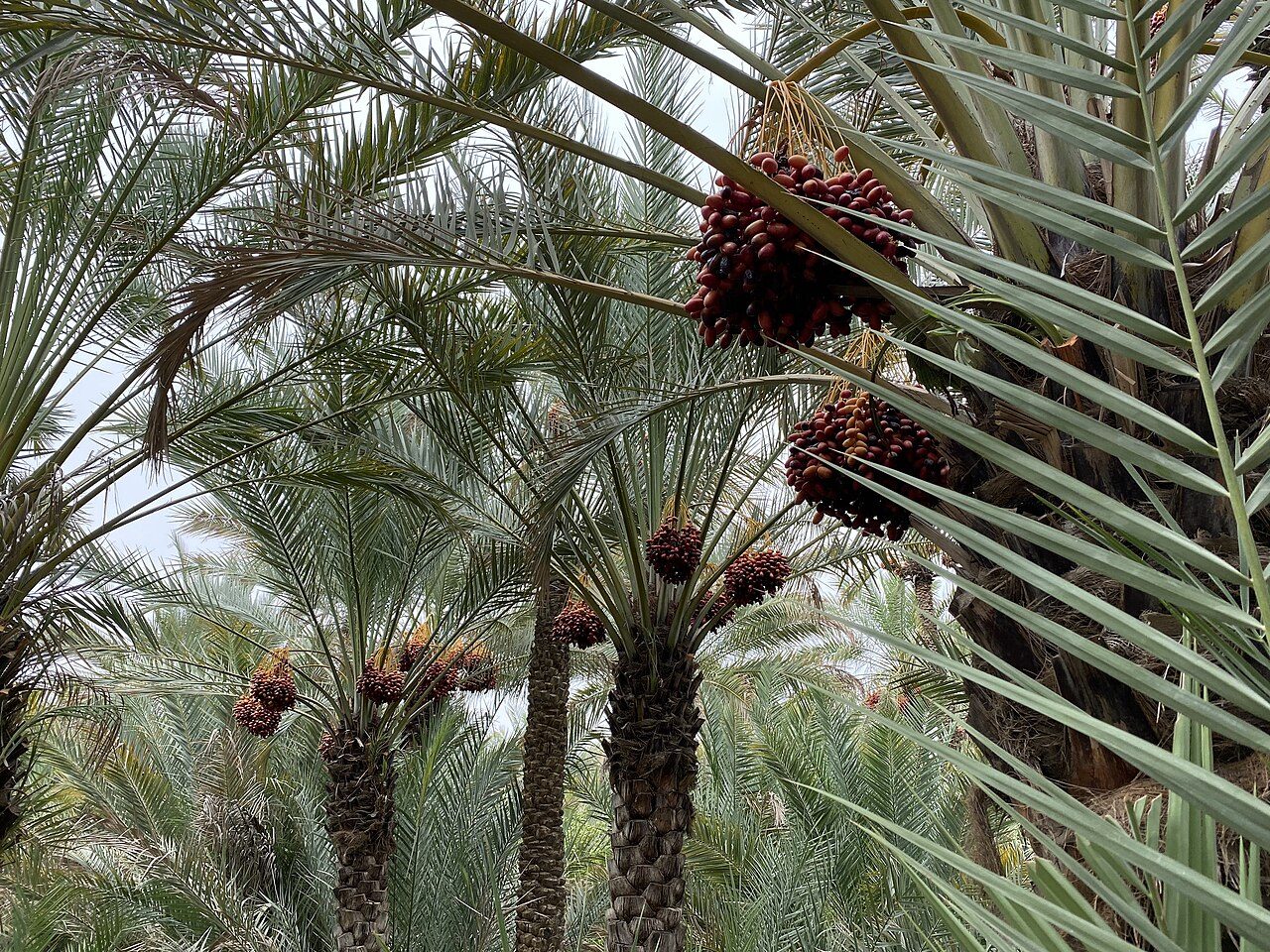
Al Ain Oasis
Spanning nearly 3,000 acres in the desert interior, the Al Ain Oasis preserves an unbroken 4,000-year continuum of sedentary oasis agriculture, leading to its inscription as the UAE’s first UNESCO World Heritage site in 2011. Bronze and Iron Age settlers tamed this hyper-arid landscape by tapping the water tables beneath neighboring Jebel Hafeet using the *aflaj*—an ingenious network of subterranean and surface-level gravity aqueducts. Closely linked to the ancestral lineage of the ruling Al Nahyan family, this emerald enclave long served as a vital provisioning station along ancient overland caravan routes between the Omani interior and the Arabian Gulf. Beyond low-slung, sun-dried mudbrick boundary walls, visitors step into a shaded microclimate where temperatures drop beneath a dense canopy of over 147,000 date palms representing roughly 100 distinct cultivars, including *Fard* and *Kholas*. Footpaths paved with compacted earth wind past communal agricultural plots, where the quiet rustle of fronds mingles with the constant trickle of water through narrow, plaster-lined channels. Here, travelers encounter working farmsteads where centuries-old wooden sluice gates still divert water to two-tiered understory plantings of pomegranate, mango, and sweet lime, offering an immersive look at an ancient living ecosystem that continues to yield seasonal harvests.
More in Al Ain
Photo credits (3)
- Slywire, CC BY-SA 4.0, via Wikimedia Commons
- Xiaotong Gao, CC BY-SA 3.0, via Wikimedia Commons
- Kaulike2b, CC BY-SA 4.0, via Wikimedia Commons