
Harran
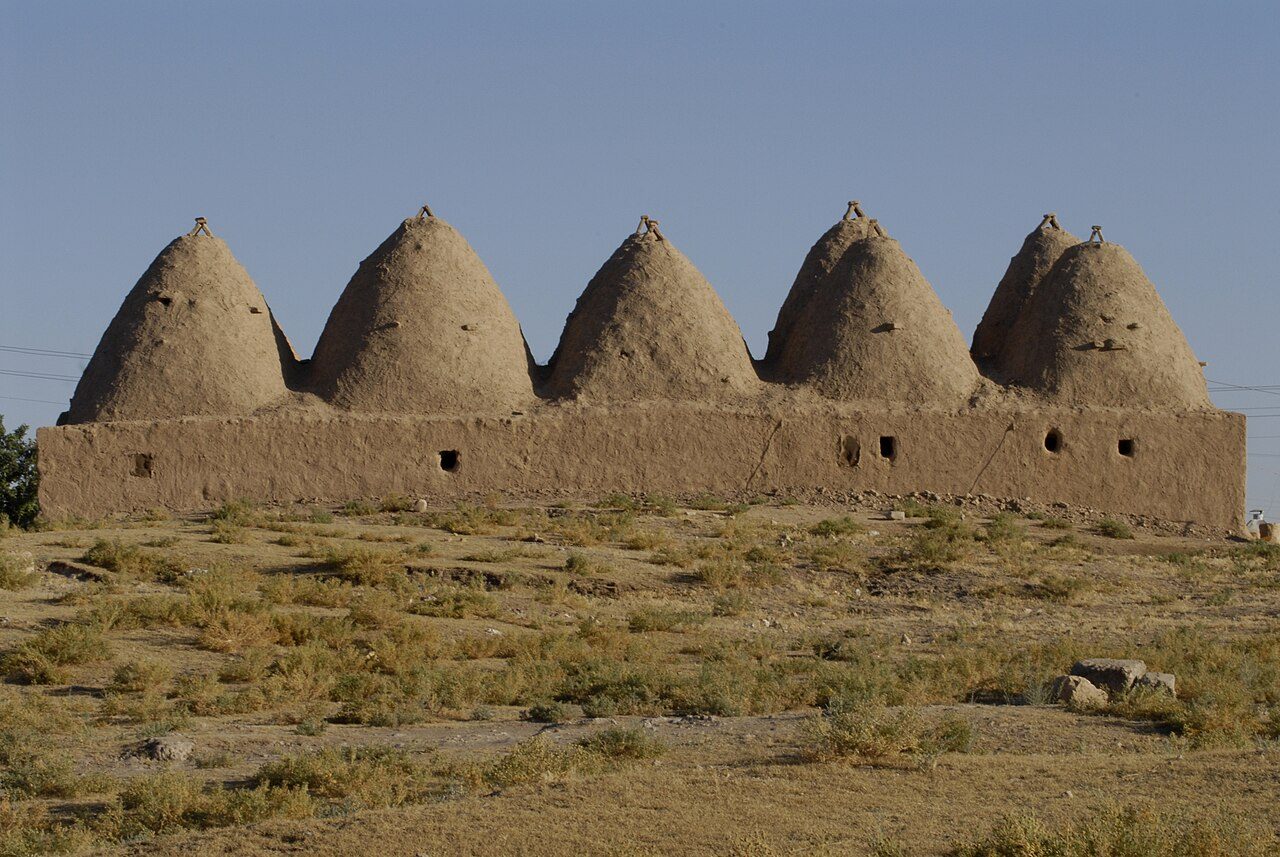
Rising from the sun-scorched Mesopotamian plains, Harran carries over four millennia of history, having served as a Bronze Age cult center for the lunar deity Sin, a biblical waypoint for the patriarch Abraham, and the site of an early Islamic academy. The landscape is dominated by the iconic conical beehive houses (*kümbet evleri*), constructed entirely without timber using adobe brick, raw clay, and straw. Arranged in interconnected clusters, these earthen domes utilize high apex vents to cycle air and deflect the searing desert sun. Stepping across a low threshold, visitors immediately feel a dramatic drop in temperature, enclosed by cool ochre walls adorned with antique brassware, woven camel-hair sacks, and vibrant hand-loomed kilims. A short walk through the dust leads to the skeletal remains of the 8th-century Ulu Cami, commissioned by the last Umayyad caliph, Marwan II. Visitors stand in the shadow of its 33-meter-tall square minaret, a soaring stone tower once used by medieval astronomers like Al-Battani to calculate the solar year. Scattered across the excavation zone, fallen basalt capitals, Roman spolia, and carved arches lie half-buried in the soil. Looking out from the ruined polyhedral bastions of Harran Fortress, travelers are met with panoramic desert vistas and a quiet stillness, breathing in the scent of dry earth and woodsmoke where ancient scientific triumph met pastoral frontier life.
More in Sanliurfa
Photo credits (3)
- Zhengan, CC BY-SA 4.0, via Wikimedia Commons
- Teomancimit, CC BY-SA 3.0, via Wikimedia Commons
- Anadolu, CC BY-SA 3.0, via Wikimedia Commons