
Gobekli Tepe
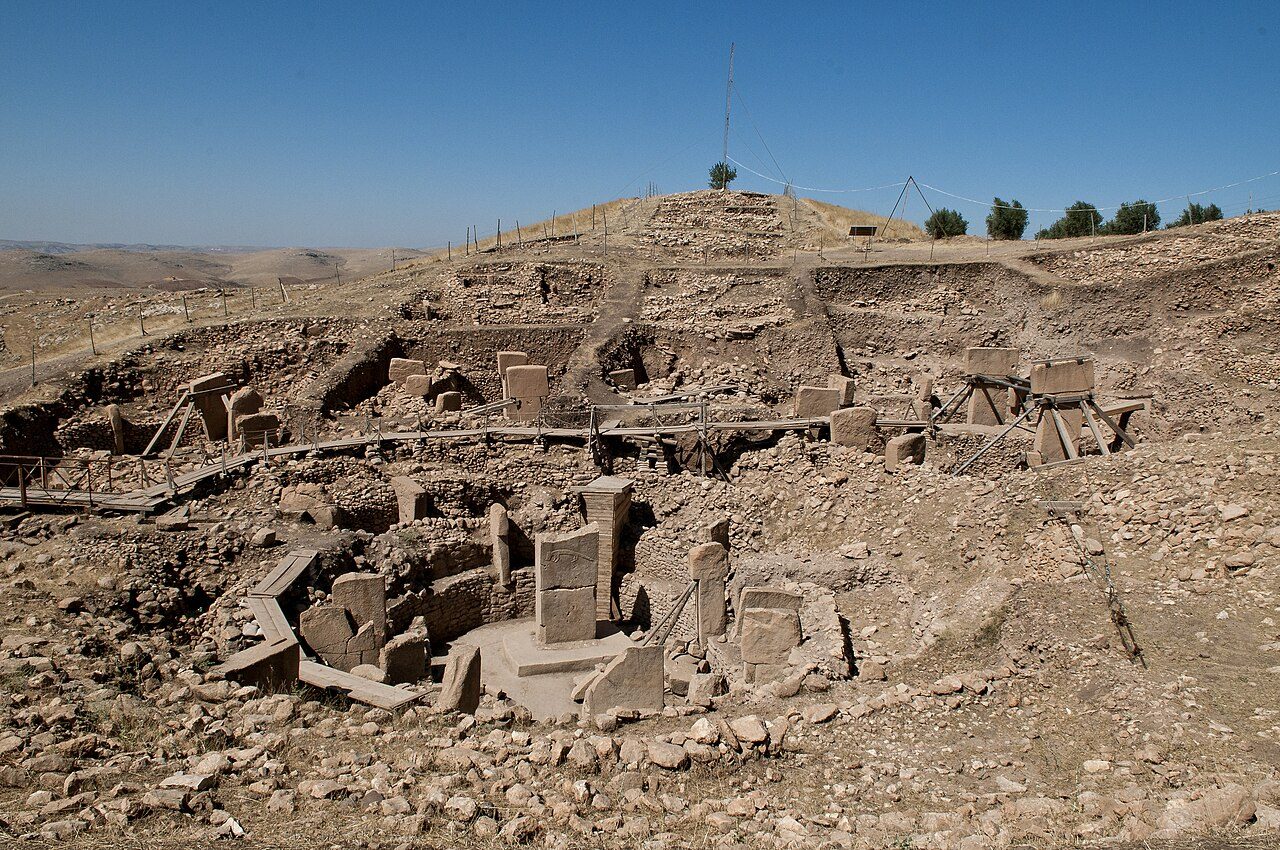
Perched atop a limestone ridge overlooking the sun-baked Harran Plain, Göbekli Tepe upends conventional narratives of human civilization. First systematically excavated in 1995 by German archaeologist Klaus Schmidt, this monumental Pre-Pottery Neolithic sanctuary dates to roughly 9500 BCE—predating Stonehenge by six millennia and early agriculture itself. Concentric, dry-stone circular enclosures, designated Enclosures A through D, are anchored by monolithic T-shaped limestone pillars rising over five meters high. Carved directly into the pale stone in striking bas-relief, a fearsome menagerie of predatory fauna emerges: snarling wild boars, coiled snakes, scorpions, and long-necked vultures. These beasts guard stylized anthropomorphic pillars, complete with finely chiseled human arms, hands, and loincloths cinched at stone waists. Standing on the elevated timber walkway suspended beneath a sweeping protective canopy, travelers gaze straight down into these sunken, ochre-tinted ritual chambers. The arid steppe wind sweeps across the excavated trenches, carrying a quiet reverence that underscores the sheer engineering mystery of the site. Without wheels, draft animals, or metal tools, hunter-gatherers quarried and positioned stones weighing up to sixteen tons. Looking beyond the megalithic perimeter toward the shimmering, distant horizons of southeastern Anatolia, one directly encounters the dawn of monumental architecture—an ancient sacred threshold where nomadic humanity first gathered to carve their fears, rituals, and cosmology into permanent stone.
More in Sanliurfa
Photo credits (3)
- Teomancimit, CC BY-SA 3.0, via Wikimedia Commons
- Anadolu, CC BY-SA 3.0, via Wikimedia Commons
- Zhengan, CC BY-SA 4.0, via Wikimedia Commons