
Sanliurfa
Sprawled across the sun-baked plains of southeastern Anatolia just north of the Syrian border, Sanliurfa feels anchored in deep antiquity. Walking through its labyrinthine core means slipping beneath shaded stone archways, passing pale limestone courtyards, and inhaling the earthy scent of roasting meat and crushed purple isot pepper drifting from open-air kitchens. Rooted in millennia of Mesopotamian history, the city—known anciently as Edessa—was formally refounded by Seleucus I Nicator around 302 BC and revered by tradition as the birthplace of the Prophet Abraham. At Balikligol, sacred carp swim in clear, spring-fed pools flanked by the graceful stone arcades of the Rizvaniye Mosque. Above them, perched on the rocky crest, Urfa Castle features two solitary Corinthian columns dating to Roman rule. Fifteen kilometers northeast, the megalithic circles of Gobeklitepe reveal complex stone carvings raised around 9500 BC, while down in the historic quarter, the sixteenth-century Gumruk Hani caravanserai remains crowded with locals drinking wild pistachio coffee under mature plane trees. Evenings center on sira geceleri, long-standing communal gatherings where men sing folk ballads and knead bulgur, paste, and spices into fresh cig kofte. Dining centers heavily on grilled lamb liver skewers and minced Urfa kebabs served with fresh herbs and flatbread. The best time to visit is during spring or autumn, avoiding the fierce summer temperatures that regularly exceed forty degrees Celsius. The entire historical center is easily crossed on foot, while yellow municipal buses reliably connect the center to Gobeklitepe.
Read more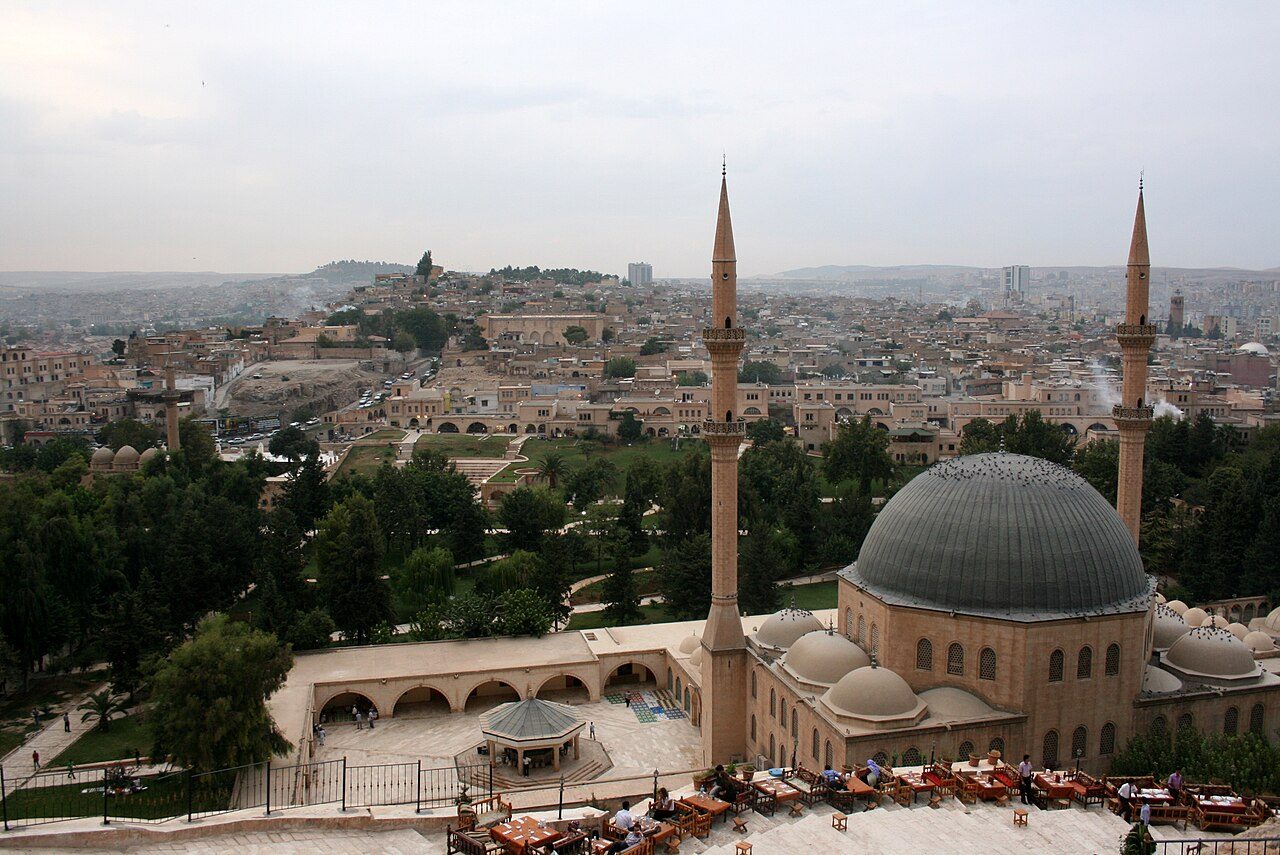
What to see in Sanliurfa
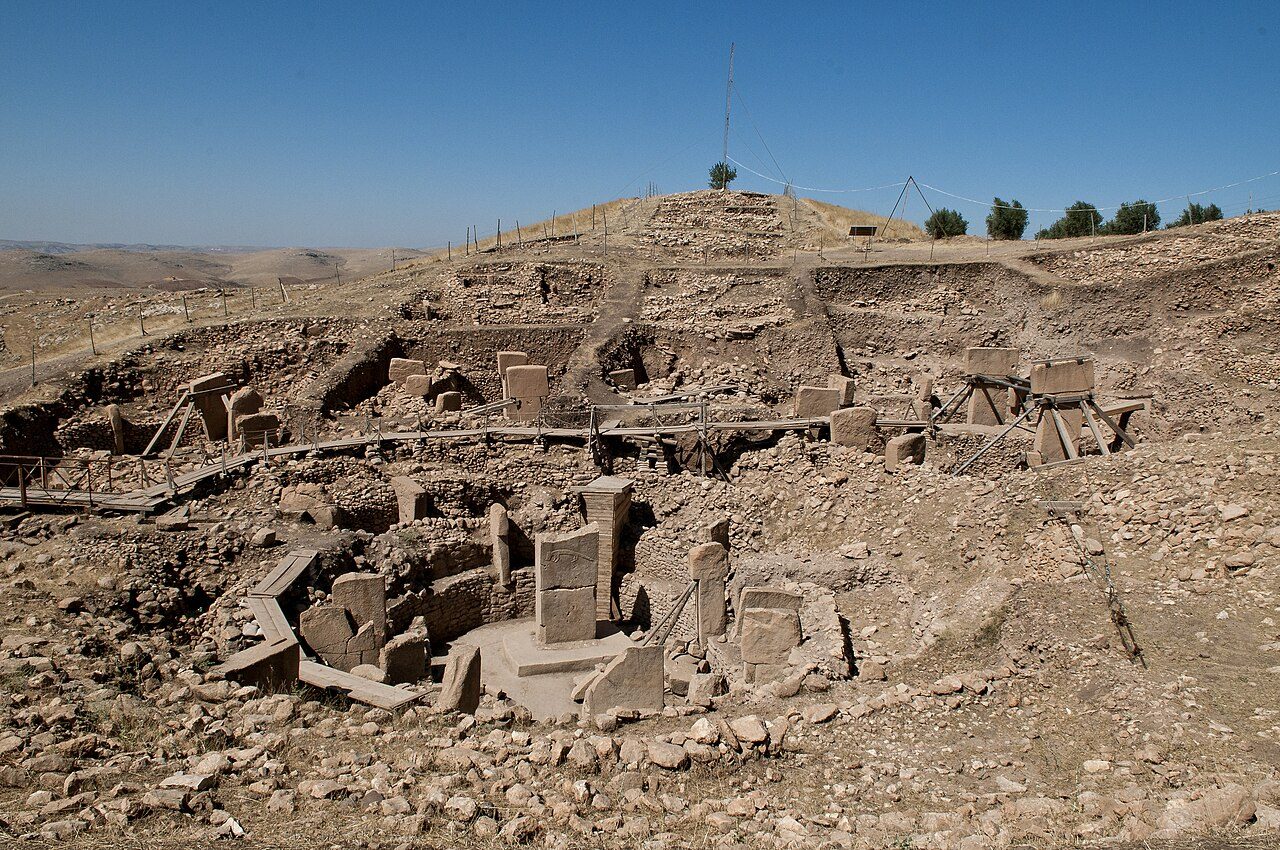
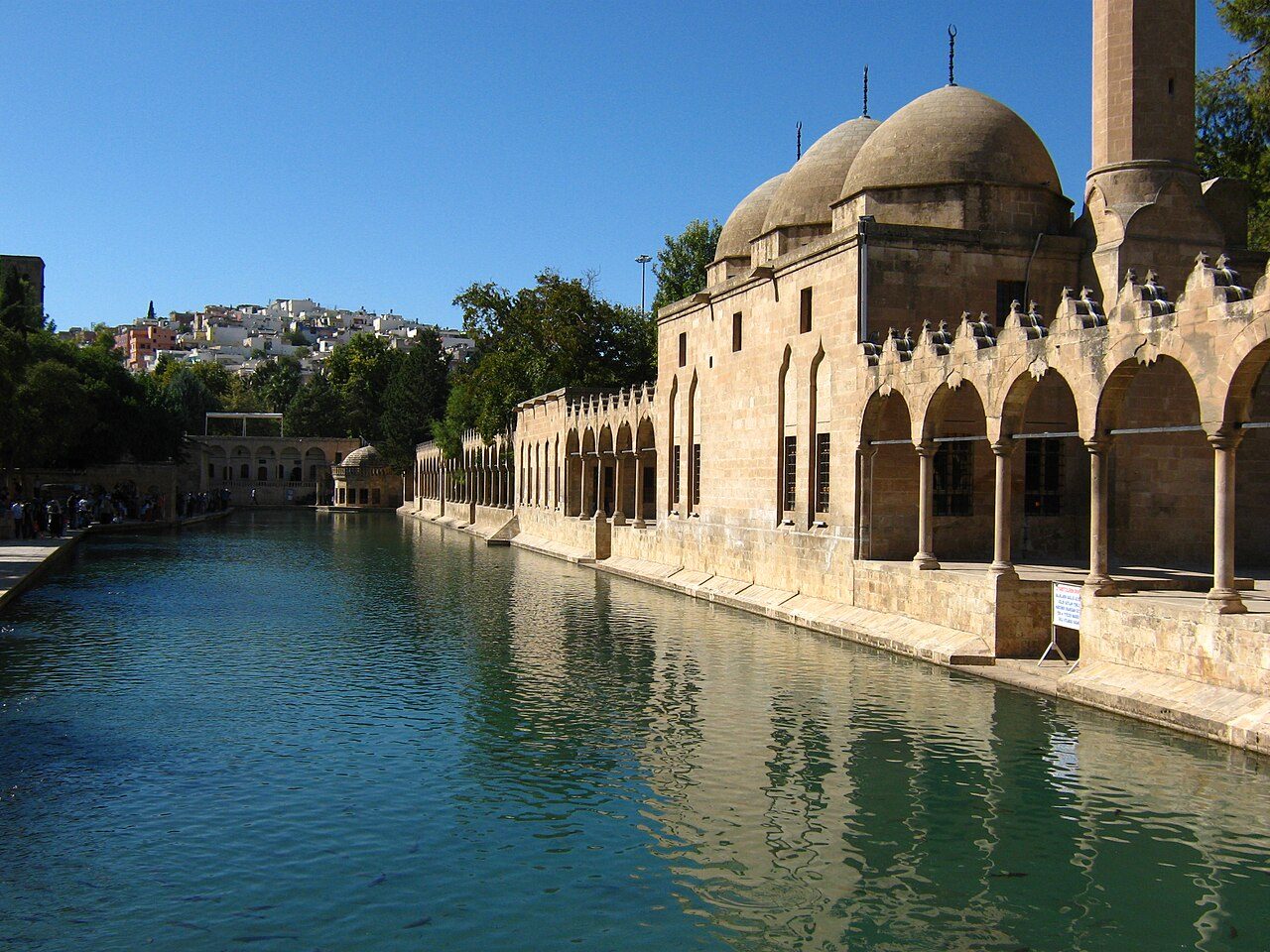
Photo credits (4)
- Damien Halleux Radermecker, CC BY-SA 2.0, via Wikimedia Commons
- Teomancimit, CC BY-SA 3.0, via Wikimedia Commons
- Anadolu, CC BY-SA 3.0, via Wikimedia Commons
- Zhengan, CC BY-SA 4.0, via Wikimedia Commons