

Seven Lakes (Haft Kul / Marguzor)
Carved into the rugged Shing River valley within northern Tajikistan’s Fan Mountains, the Seven Lakes cascade across an elevation rise from 1,600 to over 2,400 meters. Local Sogdian folklore attributes their creation to the weeping of seven devoted daughters who drowned the canyon in tears while mourning their lost father; geologically, massive seismic landslides dammed the gorge over millennia to form seven distinct, stepped reservoirs. Each body of water—from the lowest basin, Lake Mijgon, to the sub-alpine expanse of Hazorchashma—displays an eerie chromatic shift dictated by varying sunlight, depth, and dissolved limestone and copper minerals, cycling from brooding violet and emerald to dazzling aquamarine. Navigating the narrow gravel tracks carved along steep scree slopes, travelers encounter a landscape of stark contrasts, shadowed by the towering limestone peaks of the Zeravshan range. The thin alpine air carries the sharp resinous scent of wild *archa* (juniper) and birch trees, alongside drift of woodsmoke from flat-roofed stone villages like Padrud. Approaching Lake Marguzor, the largest of the chain, the sheer scale of the cliff faces becomes suffocatingly grand, their jagged ramparts reflected perfectly in mirror-calm shallows. Standing at the water's edge, visitors feel the immediate, teeth-chattering bite of glacial meltwater, enveloped in an immense mountain silence broken only by the rhythmic clatter of pack donkeys traversing shale paths.
More in Penjikent
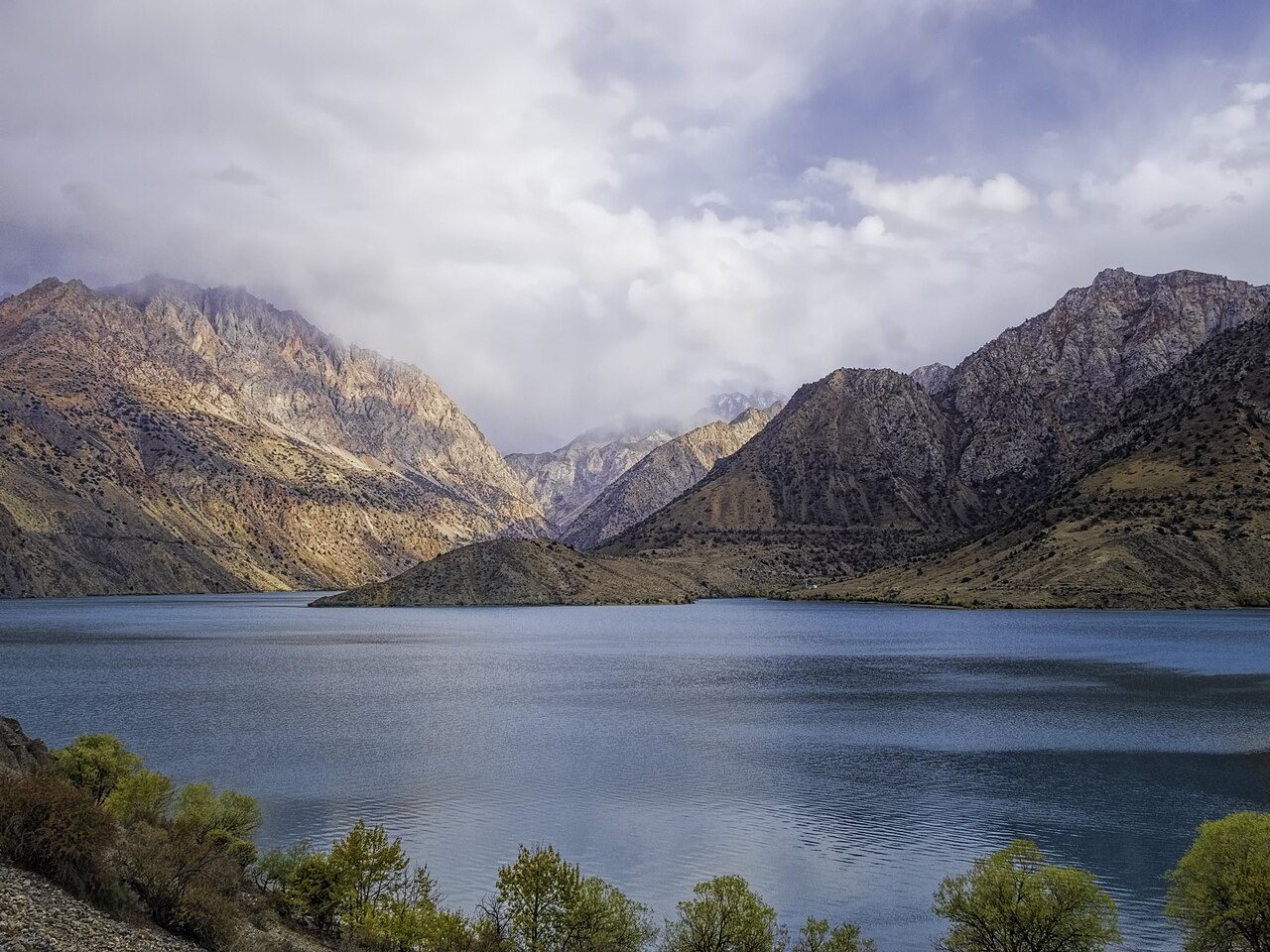
Photo credits (2)
- Dan Lundberg, CC BY-SA 2.0, via Wikimedia Commons
- ALFGRN, CC BY-SA 2.0, via Wikimedia Commons