
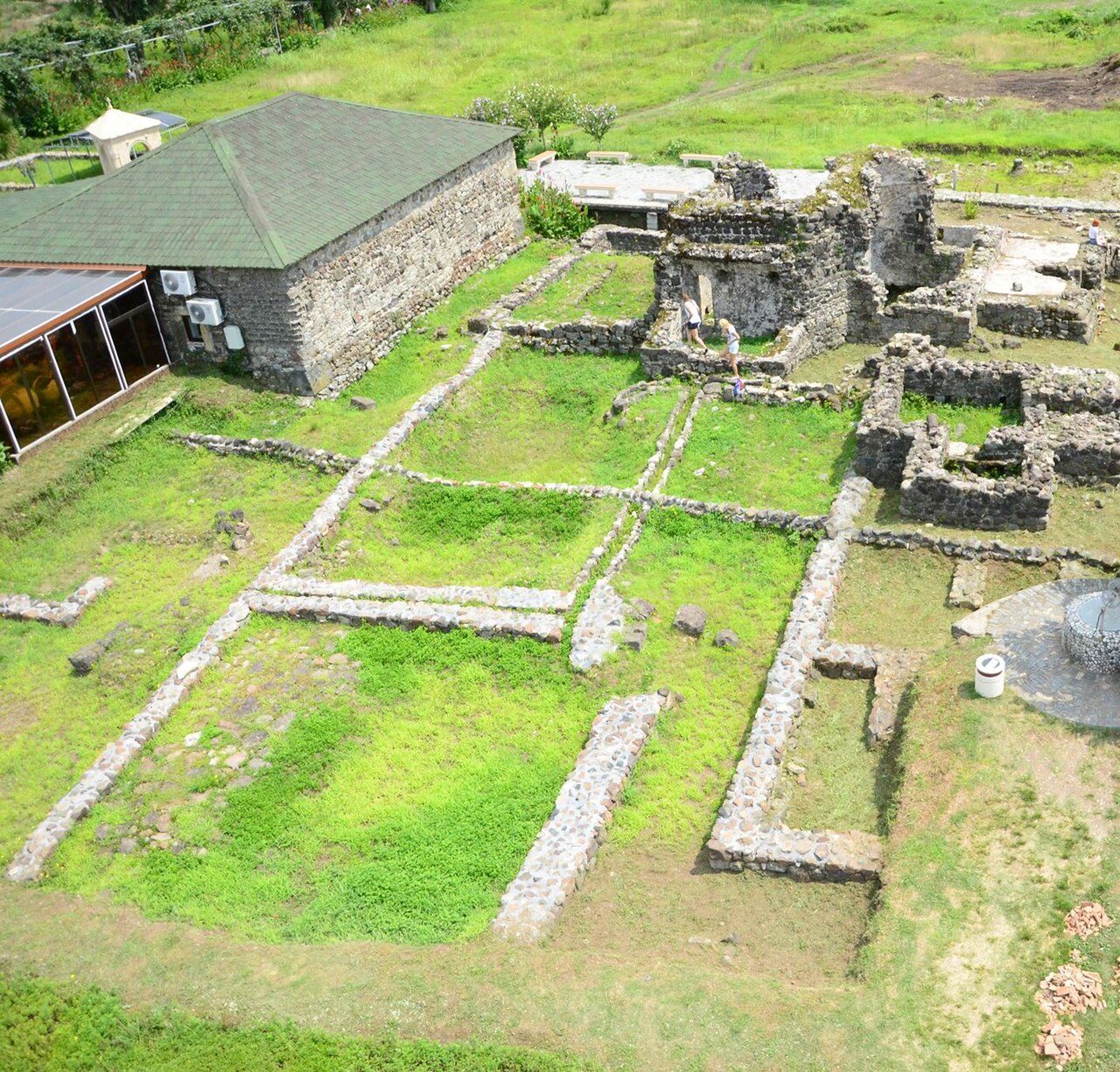
Gonio Fortress
Guarding the mouth of the Chorokhi River just south of Batumi, the Roman castrum of Apsaros—recorded by Pliny the Elder in the first century AD—survives as a formidable testament to imperial frontier engineering. Behind five-meter-tall curtain walls of layered ashlar and smooth river stone, Gonio Fortress absorbed millennia of strategic conflict, transitioning from an auxiliary Roman garrison with sophisticated aqueducts to a Byzantine redoubt and, by 1547, an Ottoman stronghold. Eighteen of the fortress’s original twenty-two crenelated towers still stand watch along its 900-meter perimeter, framing a sprawling four-hectare interior where deep antiquity and medieval fortification meet. Stepping through the arched western portal, travelers enter a tranquil expanse perfumed by wild mint and neighboring citrus groves. Walking the elevated stone ramparts reveals the strategic sweep of the Black Sea coastline, while paths below lead past the excavated brick hypocausts of a sixteenth-century Ottoman bathhouse and fragmented Roman ceramic pipelines. At the compound's center rests a flower-strewn stone canopy traditionally venerated as the grave of the Apostle Matthias, who was martyred after preaching across Colchis. The air feels hushed and salt-tinged, letting you trace the physical strata of lost empires through exposed foundations and museum display cases filled with excavated Hellenistic coins, terracotta amphorae, and Colchian bronze.
More in Batumi

Photo credits (3)
- კოლხი, CC BY-SA 4.0, via Wikimedia Commons
- Philipp Weigell, CC BY 3.0, via Wikimedia Commons
- Paata vardanashvili, CC BY-SA 4.0, via Wikimedia Commons