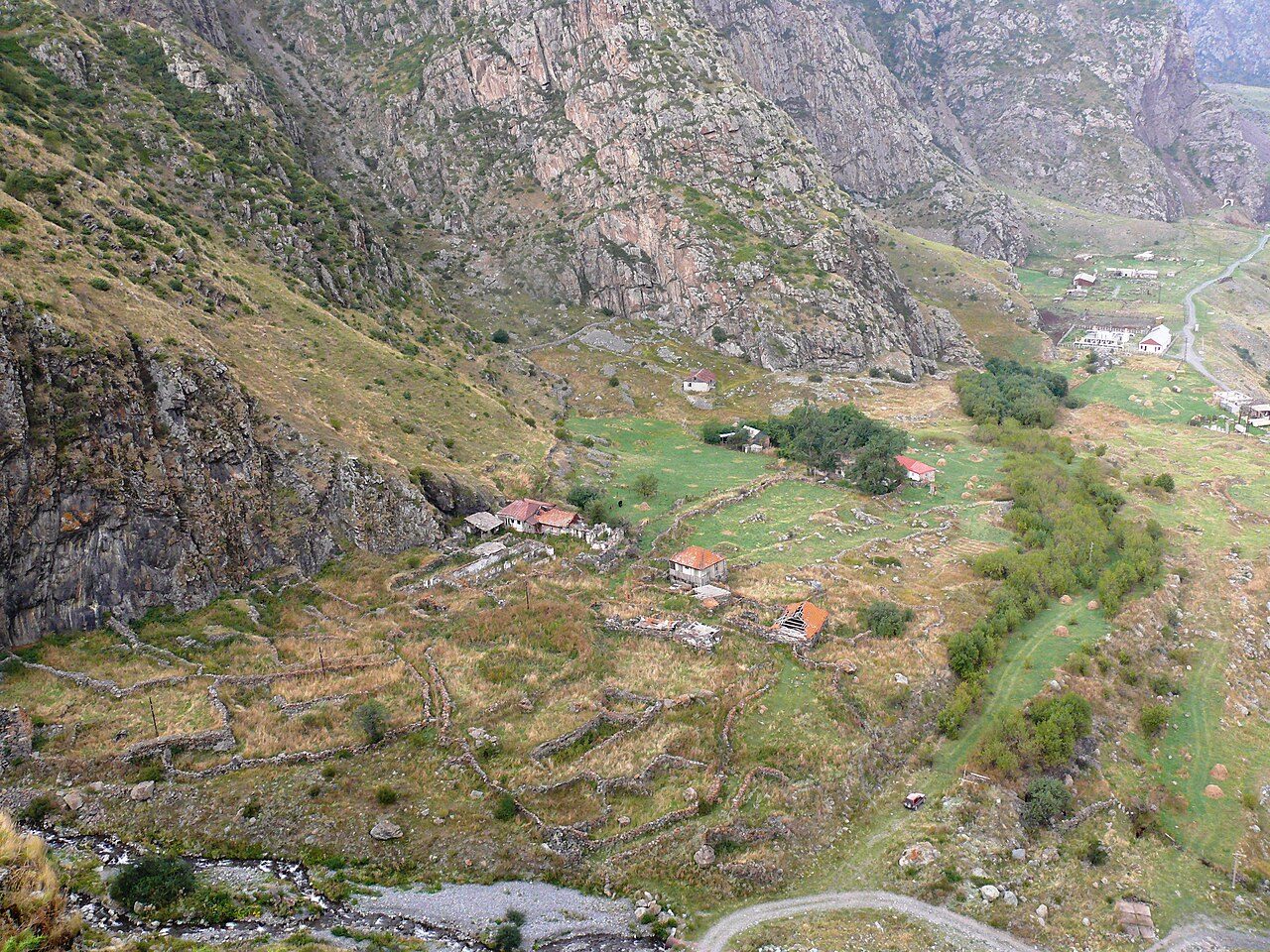
Juta Village
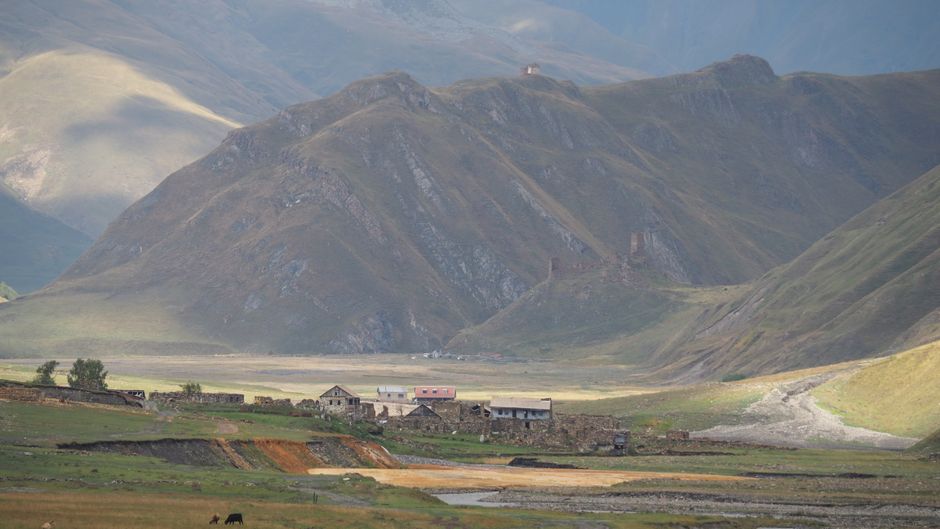
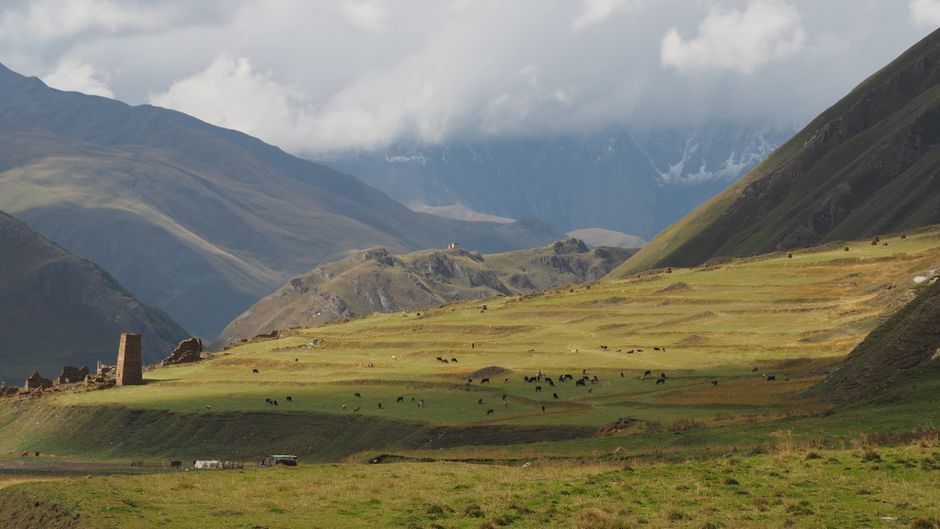
Perched at 2,214 meters within the jagged Sno Valley, Juta originated as a fortified redoubt established by Khevsur clans migrating over the Arkhoti Pass during the late medieval era. Cut off from the Georgian lowlands by impassable snowdrifts for nearly half the year, the village historically sustained a fiercely independent, pastoral way of life steeped in archaic Khevsurian codes and animist-tinged Orthodox shrines known as *khati*. The architectural fabric of the settlement reflects this harsh alpine reality: rustic stone dwellings are crafted from dark, dry-stacked slate, fortified with timber beams, and topped with flat sod roofs designed to withstand severe Caucasus blizzards, with livestock stables carved directly into the steep shale hillsides beneath the living quarters. Entering Juta on foot, visitors are met by the pungent scent of birch-wood smoke and the thunderous churn of the Jutistsqali River cleaving through the valley floor. Free-roaming horses graze along narrow mud switchbacks, framed by weather-beaten wooden fences and clusters of wild Caucasian rhododendrons. Looking south past the village’s clustered stone cottages, the landscape opens dramatically into an amphitheater dominated by the Chaukhi Massif—a formidable wall of splintered basalt pinnacles often dubbed the "Georgian Dolomites." As glacial gusts sweep down from the 3,842-meter peaks, the settlement offers an immediate, sensory transition from lived highland heritage to raw, untamed wilderness.