
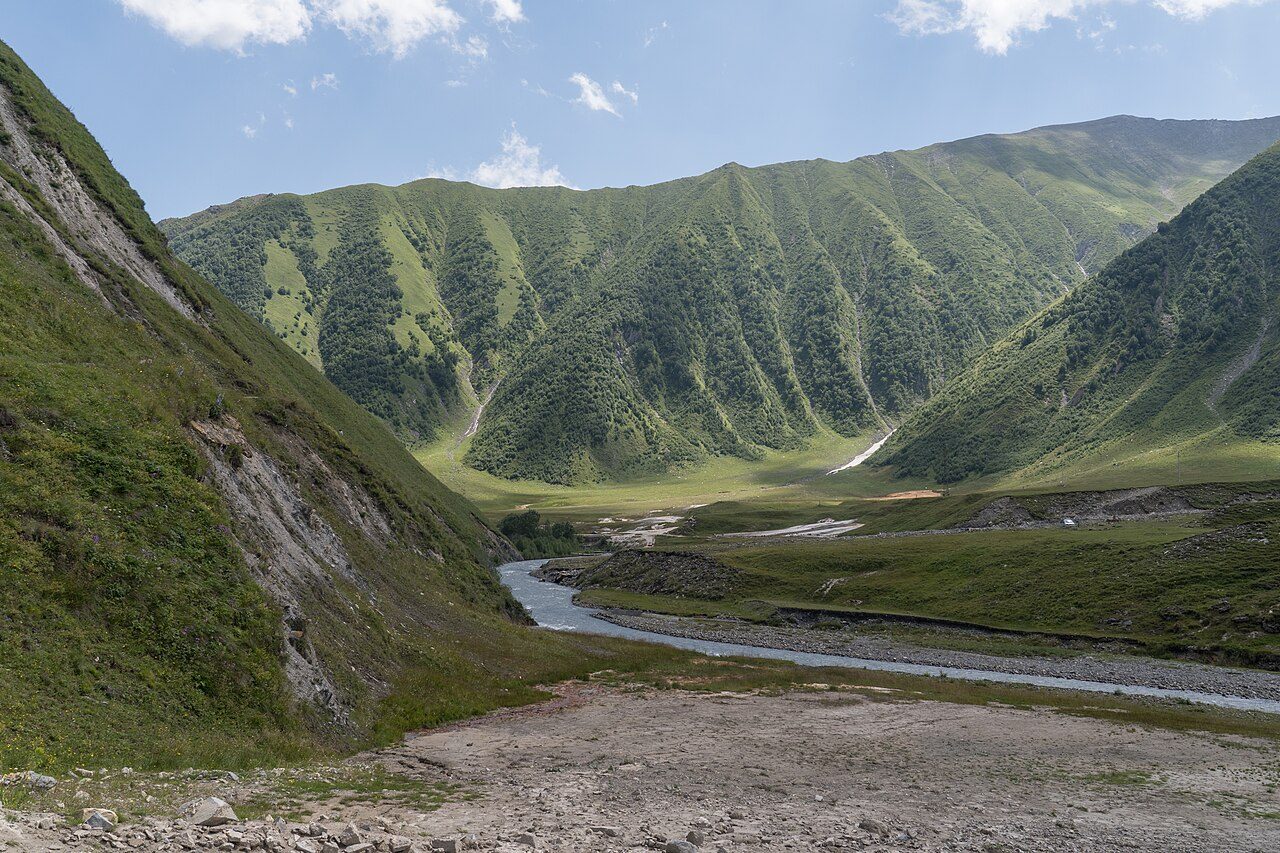
Truso Valley
Carved by the infant Tergi River along the northern slopes of the Greater Caucasus, Truso Valley preserves a stark frontier history etched into volcanic stone. Once a strategic corridor connecting Georgia with the North Caucasus, this high-altitude gorge was fortified between the 14th and 17th centuries by Ossetian and Georgian clans. Its primary architectural sentinel, the ruined Zakagori Fortress, crowns a limestone bluff with crumbling slate parapets and defensive watchtowers (koshki) that once guarded the Daryal approach. Below, depopulated hamlets like Ketrisi display hollow-eyed dry-stone towers and flat-roofed dwellings—largely abandoned after regional conflicts in the 1990s—alongside the restored stone walls of the 10th-century Nunnery of the Holy Archangels. Walking the barren valley floor, travelers navigate a surreal landscape sculpted by subterranean geothermal forces. The air carries a sharp, metallic scent of sulfur as carbonated springs erupt from the bedrock, coating the riverbed in brilliant travertine terraces stained rust-orange, chalk-white, and deep ochre. At the Abano mineral lake, cold turquoise water churns constantly with escaping gas, creating a natural cauldron framed by towering basalt cliffs. Footsteps crunch over loose river shale into an eerie, wind-scoured stillness, where the roar of the Tergi and the flapping of prayer flags offer the only accompaniment through a canyon caught between tectonic raw energy and medieval abandonment.
More in Kazbegi
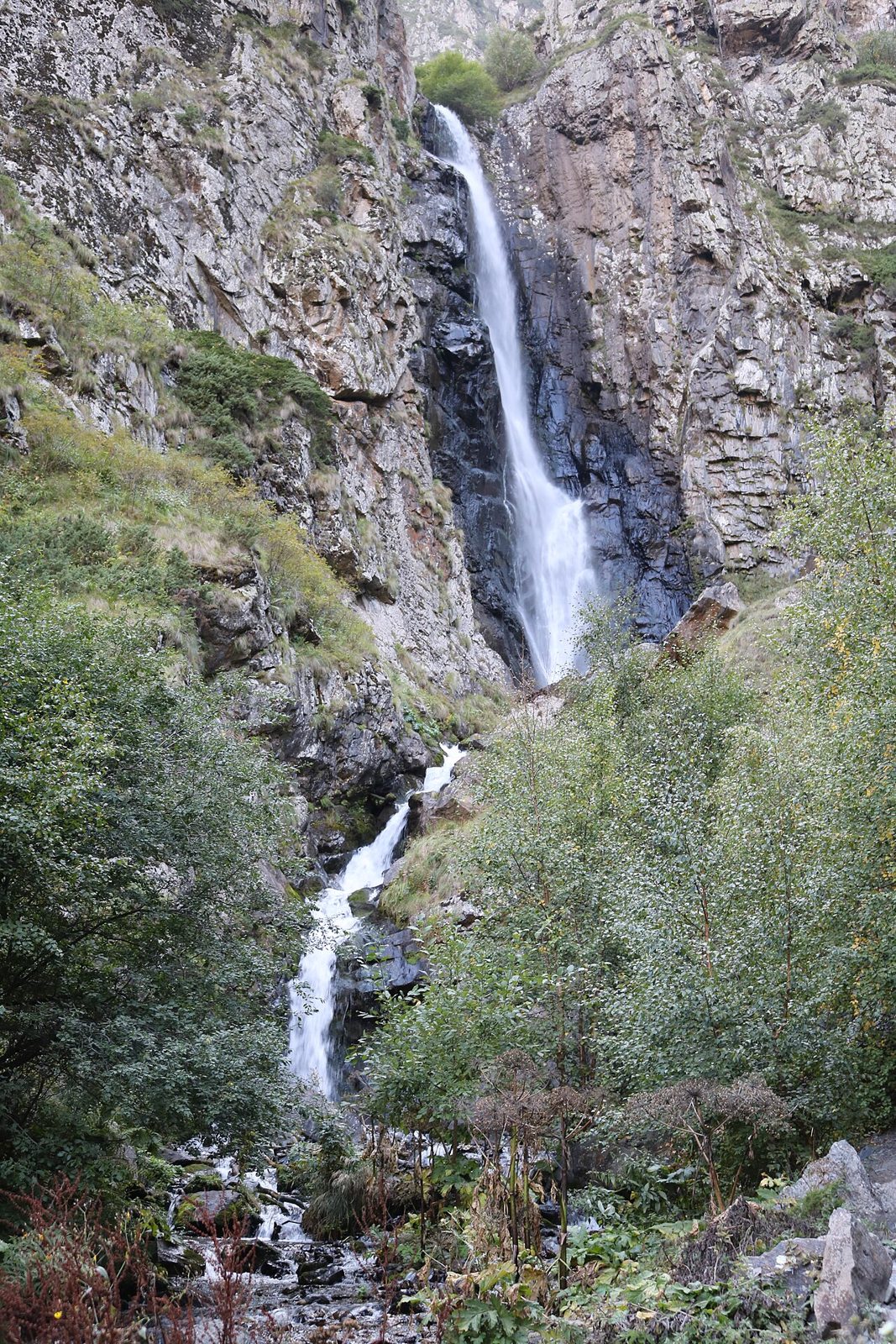
Photo credits (4)
- Alexkom000, CC BY 4.0, via Wikimedia Commons
- Kober, Public domain, via Wikimedia Commons
- Safa.daneshvar, CC BY-SA 4.0, via Wikimedia Commons
- UG-GE, CC BY-SA 4.0, via Wikimedia Commons