
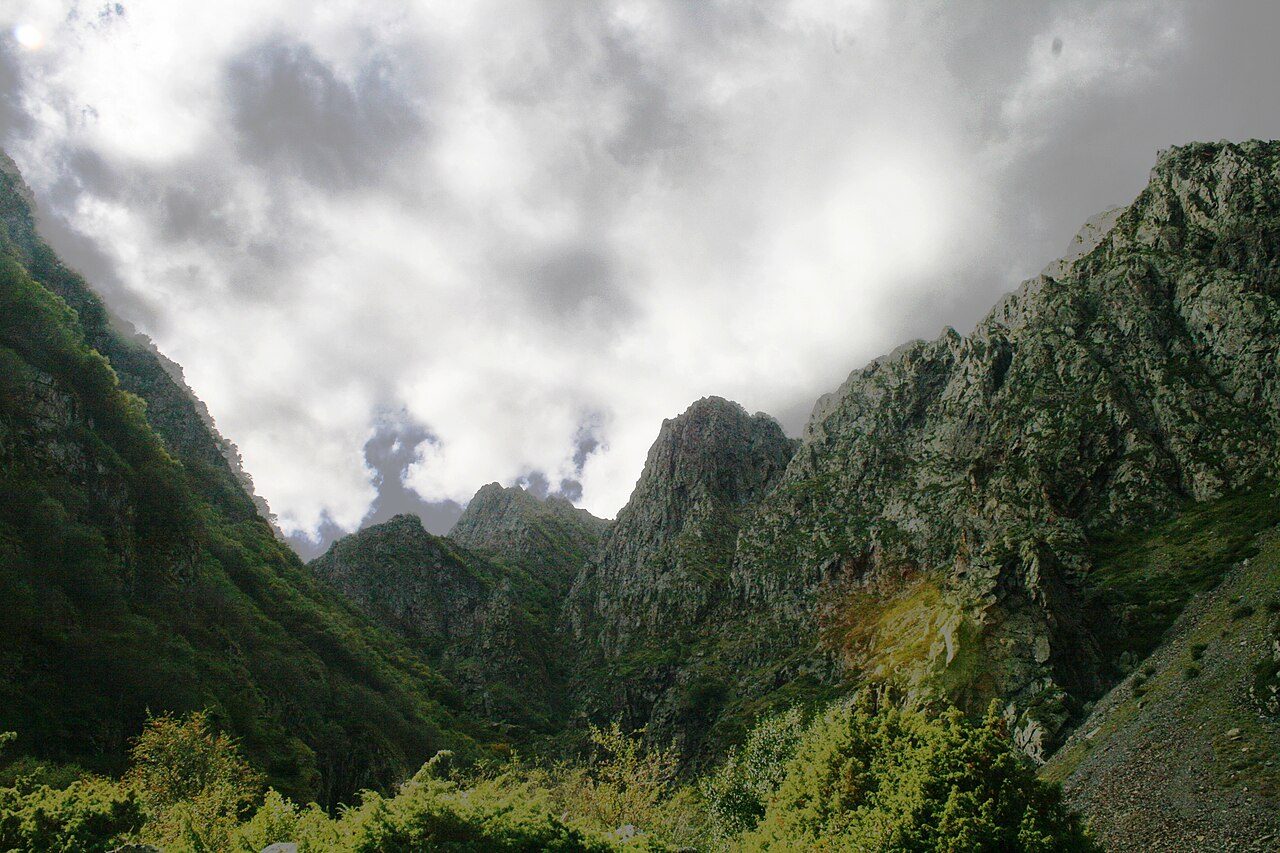
Darial Gorge
Carved through the basalt and granite spine of the Greater Caucasus by the ferocious Terek River, this narrow defile long marked the contested boundary between the Eurasian steppe and Transcaucasia. Known to the Sasanian Persians as the *Dar-i Alān* ("Gate of the Alans") and fortified by Iberian monarchs as early as the 1st century BCE, the gorge functioned for millennia as a vital military choke point. Perched atop a craggy spur lie the weathered stone rubble of Tamara’s Castle, where medieval garrisons once controlled the northern approach, while nearby stands the modern Monastery of the Archangels Michael and Gabriel, its pink felsite walls, arched porticos, and conical slate domes reviving traditional medieval Georgian church architecture against the wilderness. Standing along this rugged stretch of the Georgian Military Highway, travelers are dwarfed by sheer, slate-gray canyon walls that plunge vertically for nearly 1,000 meters, blocking direct sunlight even at midday. The sensory experience is dominated by the deafening roar of the silt-laden Terek as it churns white over jagged boulders, spraying the cool alpine air with fine mist. Biting mountain drafts sweep down the narrow corridor, carrying the scent of damp stone and wild scrub, immersing visitors in the dramatic, claustrophobic majesty of an ancient imperial frontier.
More in Kazbegi
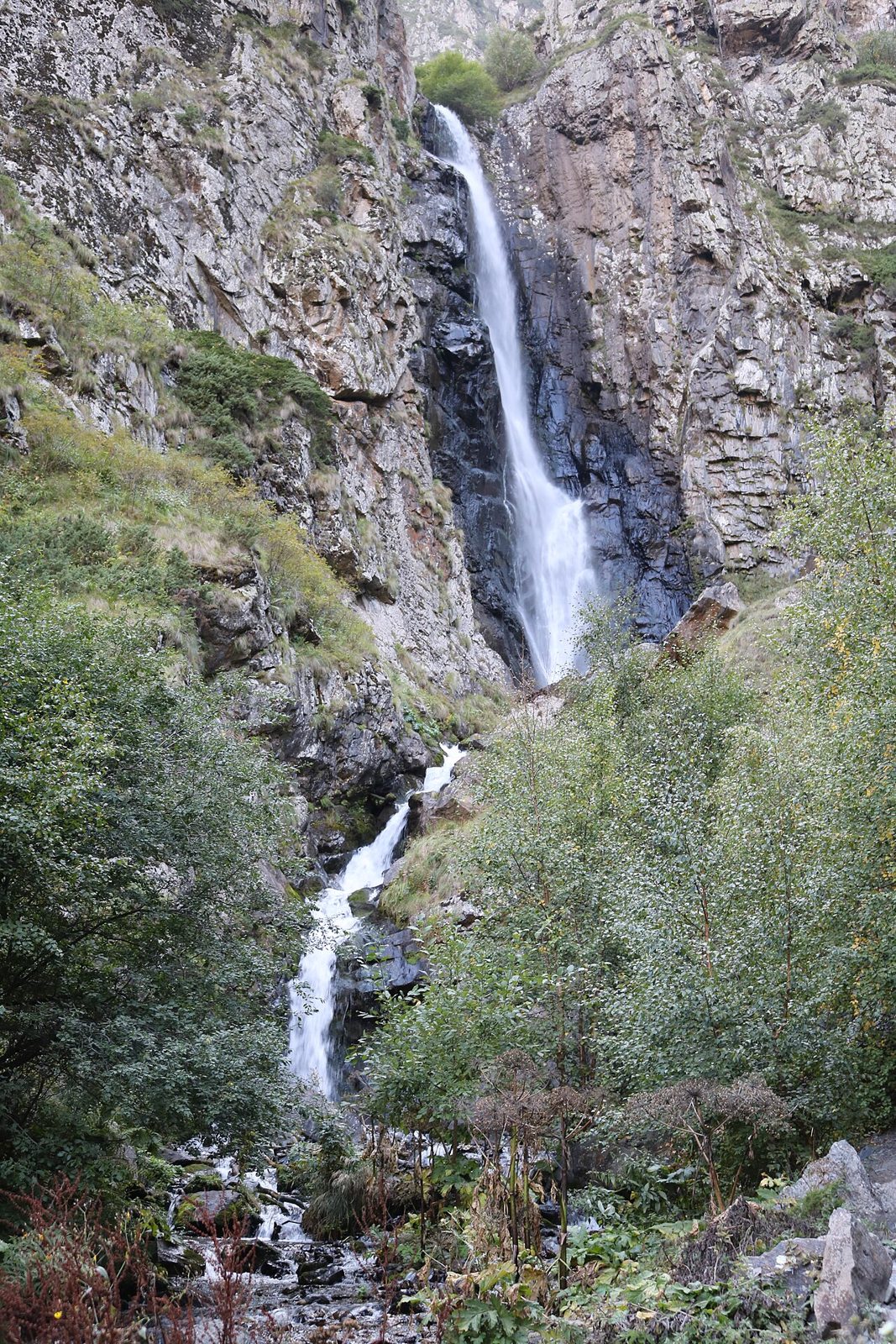
Photo credits (4)
- Kober, Public domain, via Wikimedia Commons
- Alexkom000, CC BY 4.0, via Wikimedia Commons
- Safa.daneshvar, CC BY-SA 4.0, via Wikimedia Commons
- UG-GE, CC BY-SA 4.0, via Wikimedia Commons