

Mount Cheget
In 1963, Soviet engineers carved Cheget into alpine history by installing the USSR’s very first single-chair passenger lift up its notoriously steep northern flank. Throughout the 1960s and 1970s, this rugged spur in the Kabardino-Balkar Republic served as both a proving ground for elite mountain rescue squads and an ideological sanctuary for dissident bards. Soviet balladeer Yuri Vizbor immortalized the peak while penning songs inside Café Ai (“Moon”), a saucer-shaped, steel-and-glass pavilion anchored to the crags at 2,750 meters. Below its knife-edge ridges, the surrounding Baksan Valley preserves the memory of the 1942 Battle of the Caucasus, where Soviet alpine troops engaged German mountain divisions across these glacial passes. Ascending the mountain on retro, open-air chairlifts painted in weathered reds and yellows, travelers contend with biting sub-zero crosswinds suspended above fields of fractured slate. Stepping onto the windswept upper ridges above 3,000 meters, the view opens onto an unforgiving amphitheater of ice and stone. Directly across the valley, the blinding white, twin-peaked volcanic mass of Mount Elbrus fills the northern horizon. Turning toward the southern frontier, the sheer, dark face of Donguz-Orun confronts the eye, marked by the infamous "Seven" glacier—a stark diagonal fault of blue ice resembling a giant numeral etched into sheer basalt. The thin, pine-tinged air cuts deep into the lungs, underscored only by the mechanical groaning of the steel lift cables.
More in Elbrus
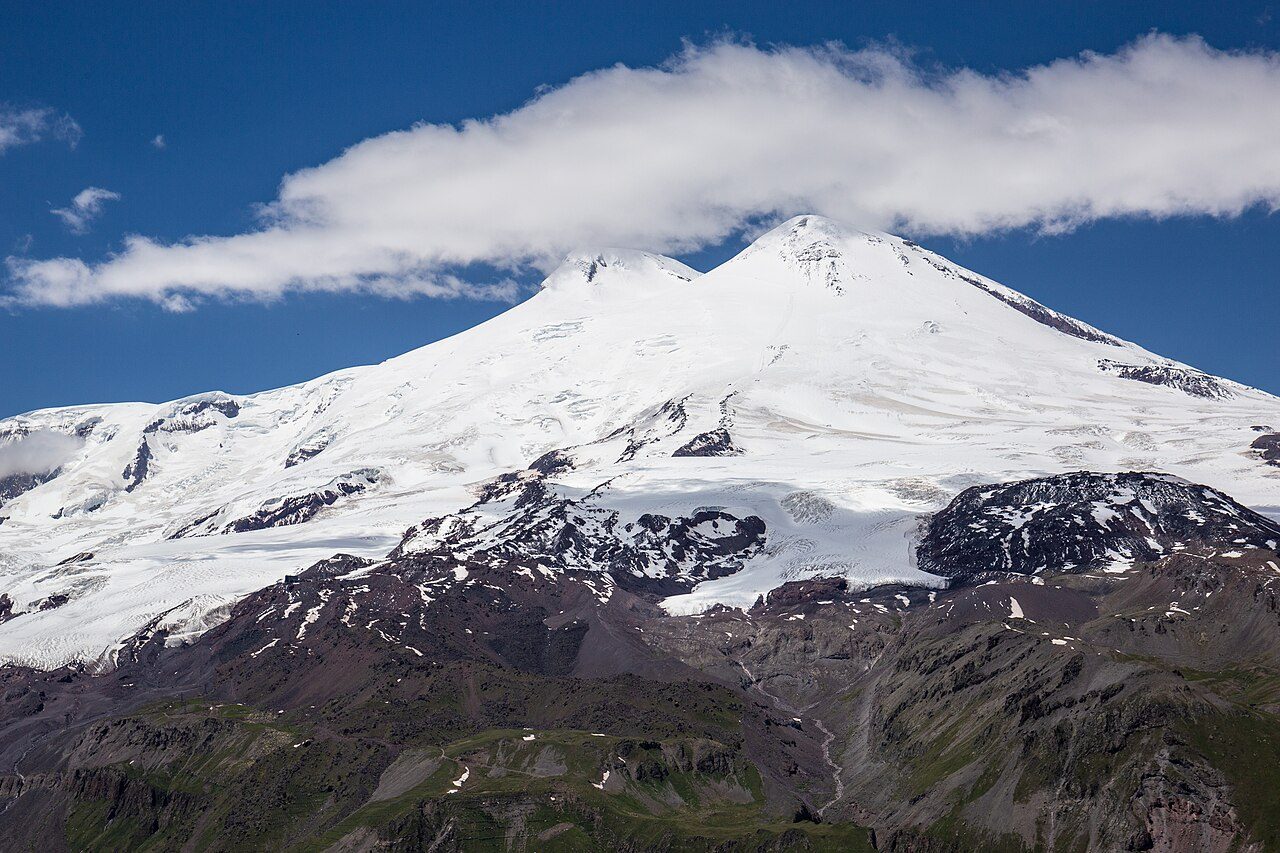
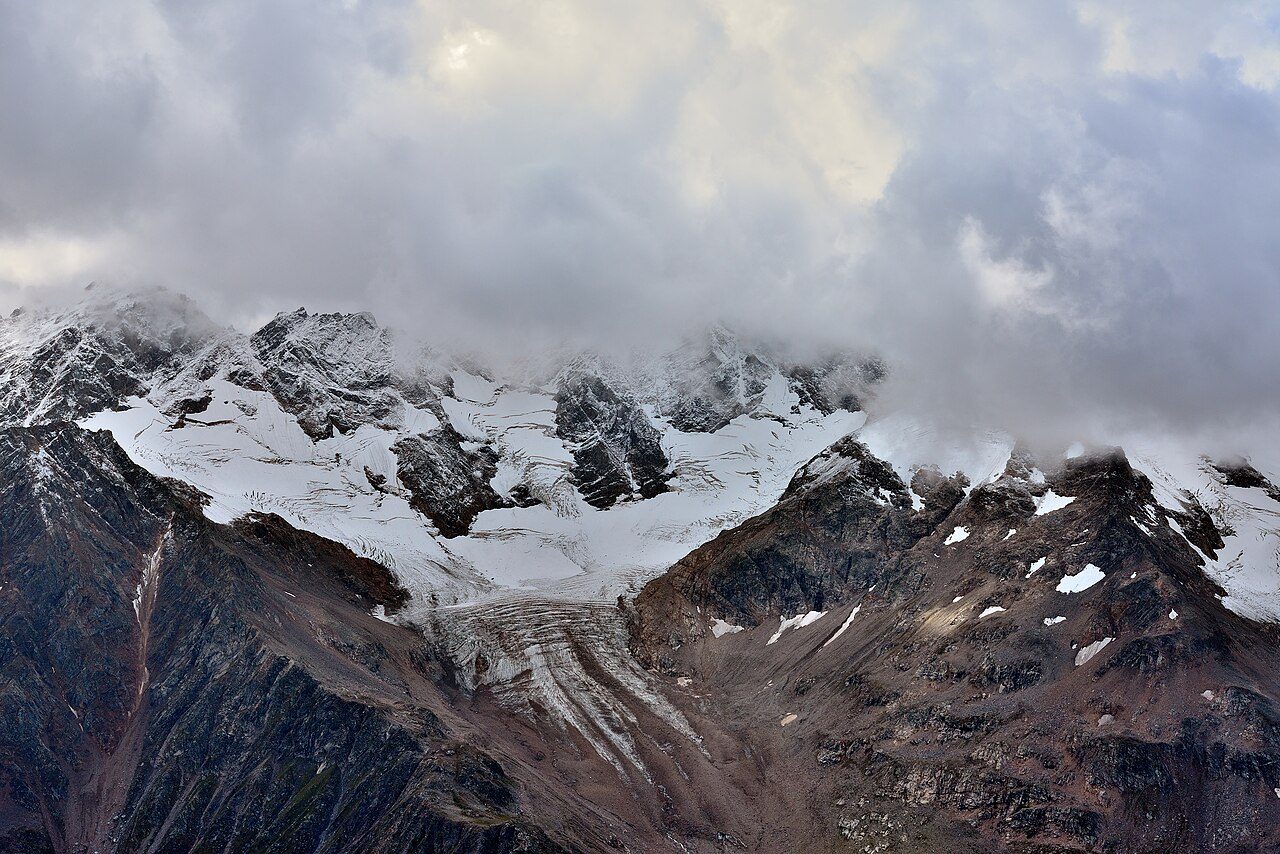
Photo credits (2)
- Dmitry A. Mottl, CC BY-SA 4.0, via Wikimedia Commons
- Александр Байдуков, CC BY-SA 4.0, via Wikimedia Commons