
Mount Elbrus
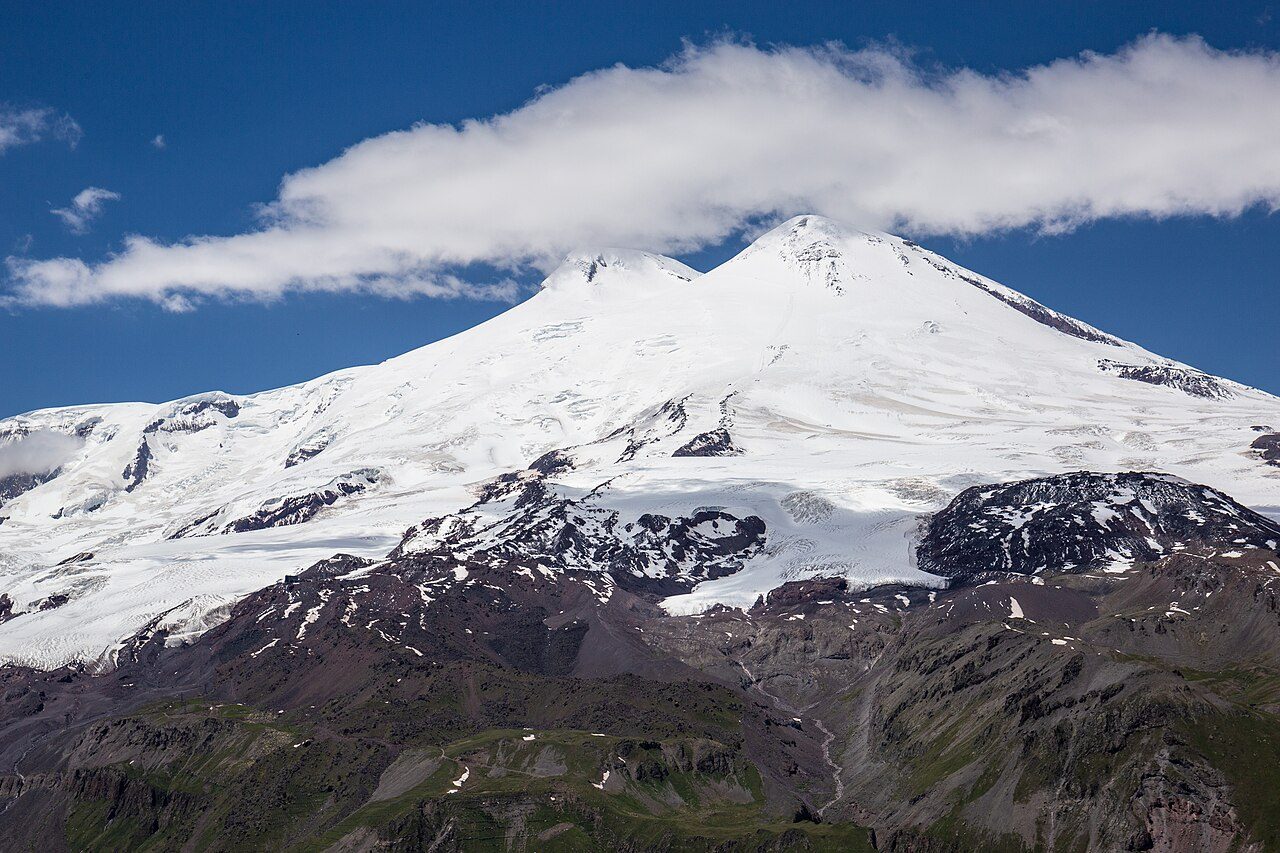
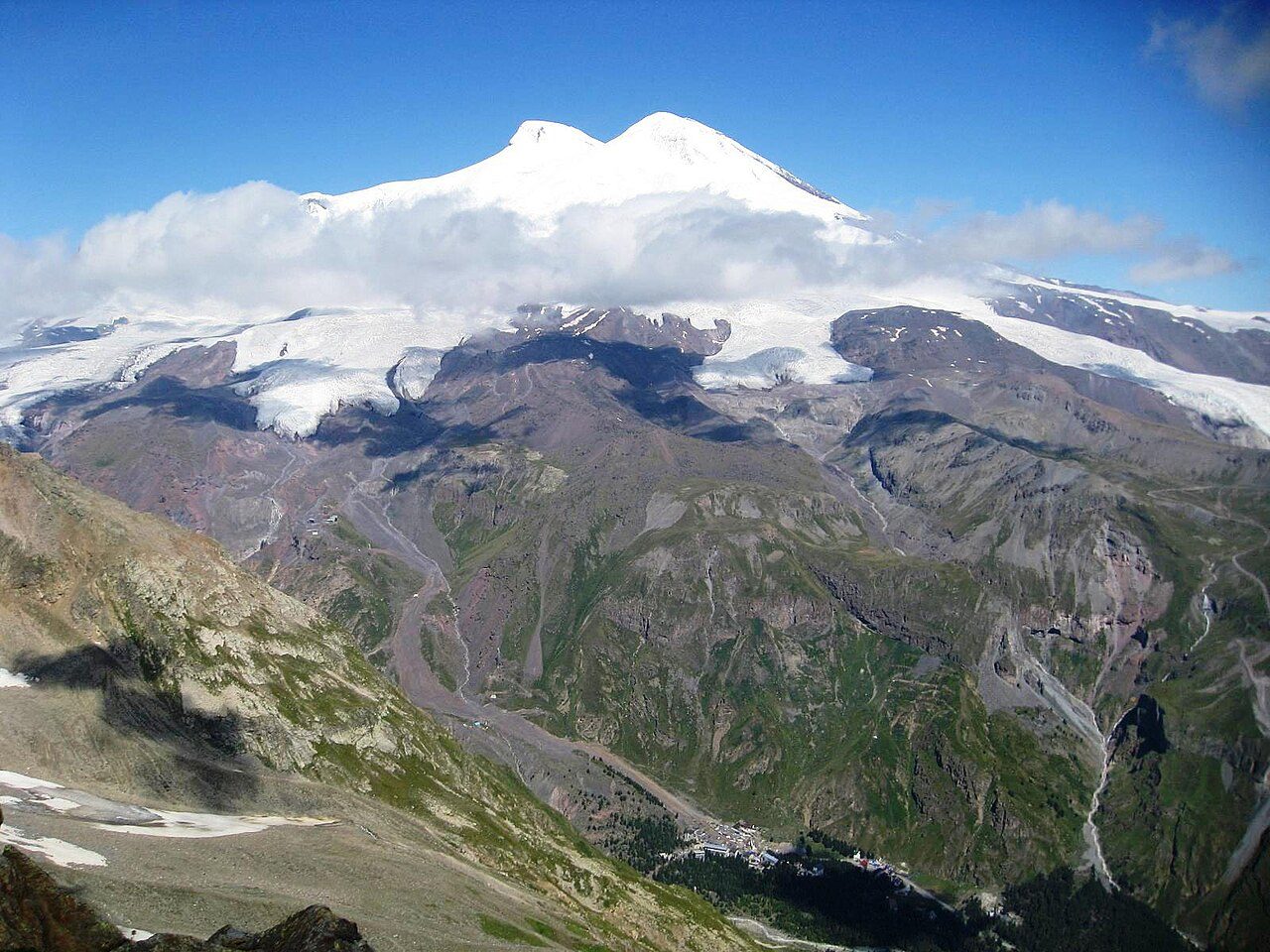
Dominating the skyline of the Greater Caucasus, this double-coned dormant stratovolcano—known to the indigenous Balkars as *Mingi-Tau* ("Resembling a Thousand Mountains")—marks the rooftop of Europe at 5,642 meters. Layered with centuries of alpine lore, its lower eastern peak was first conquered in 1829 by Kabardian guide Killar Khashirov during a Russian military expedition, while British explorer Florence Craufurd Grove claimed the taller western summit in 1874. Decades later, Elbrus became a bizarre theater of high-altitude warfare during World War II when German *Gebirgsjäger* troops seized the famed Priyut 11 refuge in August 1942, an ideological stunt neutralized six months later when Soviet military alpinists cleared the slopes and raised the red banner through sub-zero blizzards. Ascending past the sci-fi silhouette of the cylindrical Garabashi "Barrel" refuges and the basalt rib of the Pastukhov Rocks, climbers traverse a stark, monochrome expanse carved by twenty-two major glaciers. At the 5,416-meter windswept col between the twin peaks, the air turns painfully thin, occasionally carrying the faint, sulfurous breath of latent volcanic vents buried under centuries of ice. The tactile journey demands vigilance: crampons scrape through sun-crusted firn and wind-glazed blue ice under a blinding high-altitude glare. Standing on the summit rim, the physical ordeal dissolves into a vast, silent panorama, where the serrated, snow-tipped ridges of the Caucasus range stretch toward Georgia and the Black Sea beneath an ink-dark alpine sky.
More in Elbrus
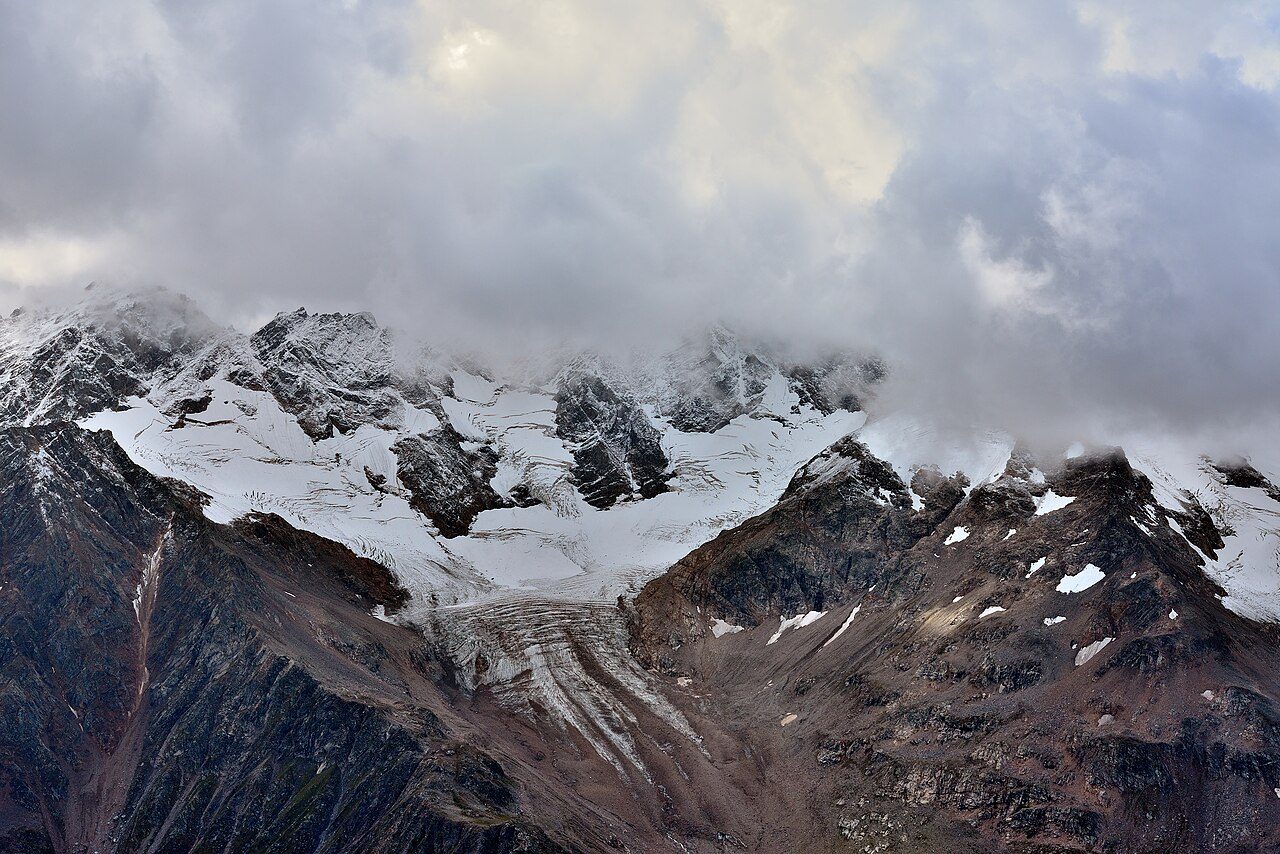
Photo credits (3)
- Dmitry A. Mottl, CC BY-SA 4.0, via Wikimedia Commons
- Jason Blue-Smith, CC BY-SA 2.0, via Wikimedia Commons
- Александр Байдуков, CC BY-SA 4.0, via Wikimedia Commons