
Elbrus
In the North Caucasus republic of Kabardino-Balkaria, the village of Elbrus rests along the rushing Baksan River, deep inside a gorge flanked by granite crags and dense pine woods. Walking through the valley feels rugged and purposeful. Mountain boots crunch on gravel alongside the hum of the river, while pack horses graze past weathered wooden dachas and mountaineering hostels. The cold mountain wind consistently carries the scent of pine needles and woodsmoke. Climbers have gathered here since 1829, when local guide Killar Khashirov made the first recorded ascent of the eastern summit. Today, the continent-topping twin peaks anchor the region. A modern gondola system runs from Polyana Azau past Mir Station to Garabashi at 3,847 meters, where red steel barrel huts serve as high-altitude base camps. Across the valley, a vintage chairlift on Mount Cheget provides views of the massive hanging glacier of Donguz-Orun, while the natural mineral springs at Polyana Narzanov bubble rusty red with iron directly into the riverbed. Balkar culinary traditions fuel days on the trails, especially hot khychiny, paper-thin pan-fried flatbreads filled with salted curd cheese and potatoes, paired with tart fermented ayran. Open-air stalls around Cheget glade trade in raw mountain honey, sea buckthorn preserves, and thick sheep-wool socks knitted by village elders. For hiking, July and August provide the most stable conditions, and travelers can easily navigate the valley floor using shared marshrutka minibuses that cruise the solitary Baksan highway.
Read more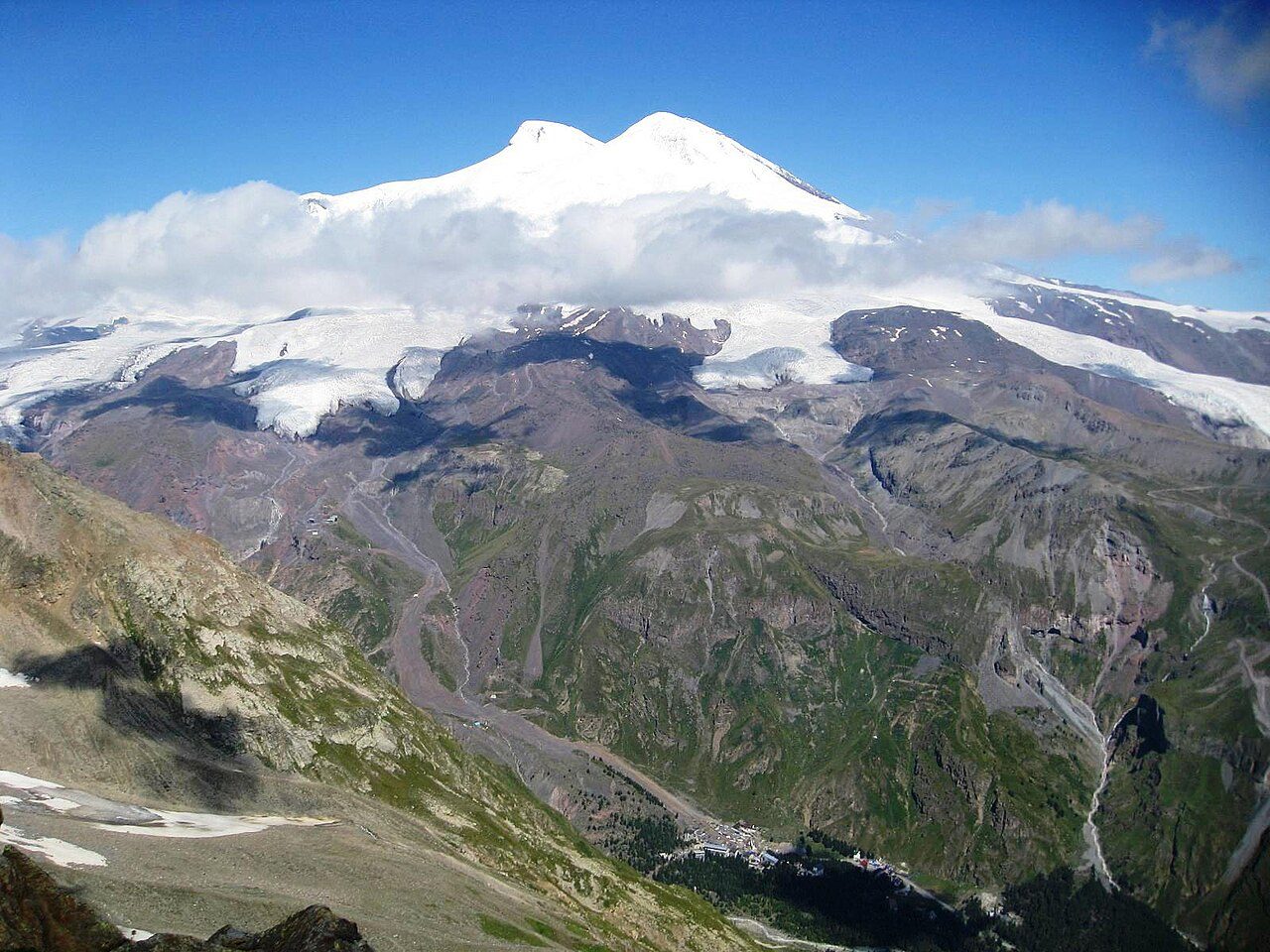
What to see in Elbrus
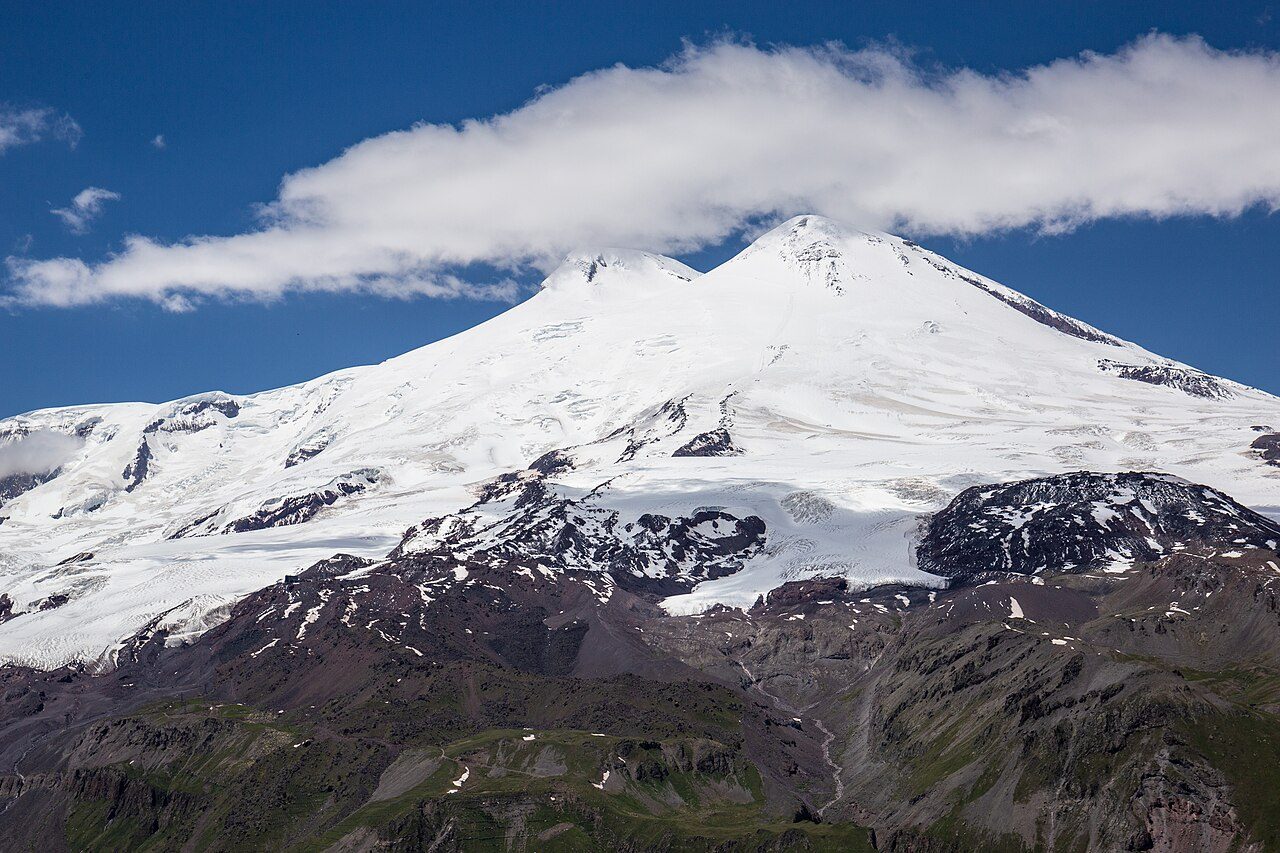
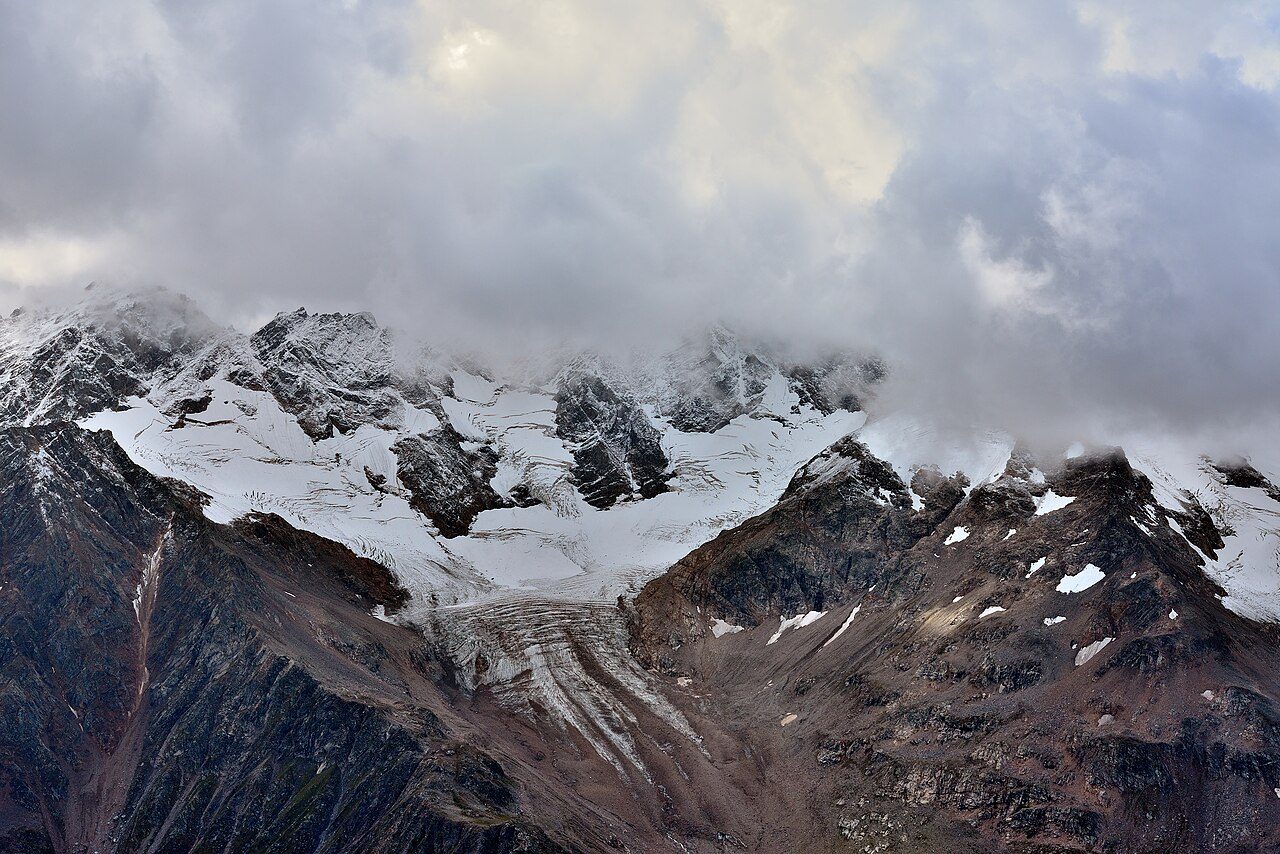
Photo credits (3)
- Jason Blue-Smith, CC BY-SA 2.0, via Wikimedia Commons
- Dmitry A. Mottl, CC BY-SA 4.0, via Wikimedia Commons
- Александр Байдуков, CC BY-SA 4.0, via Wikimedia Commons