
 New added
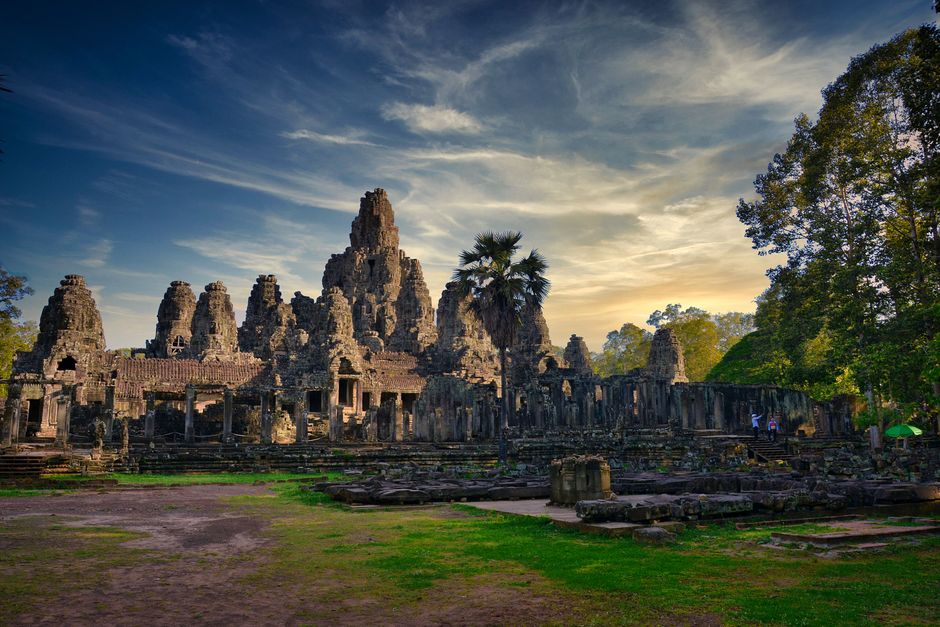
Bayon Temple
Commissioned in the late 12th century by the Mahayana Buddhist King Jayavarman VII, the Bayon stands at the exact spiritual and geopolitical epicenter of the fortified city of Angkor Thom. Departing from the rigid, classical symmetry of earlier Hindu monuments, this sandstone masterwork was constructed over decades, resulting in an eccentric, layered mountain of towers and galleries. Around the outer perimeter, more than 1,200 meters of extraordinarily detailed bas-reliefs preserve 12th-century Khmer history in bas-relief: vivid glimpses of everyday life, such as marketplace bartering and cockfights, set alongside brutal naval clashes against the rival Cham empire on the waters of the Tonle Sap. Navigating the temple requires moving through dark, claustrophobic corridors and scaling steep, uneven stone stairwells before abruptly emerging onto the sun-drenched upper terrace. Here, visitors are enveloped by an uncanny forest of 37 surviving stone towers, each carved with multiple four-meter-high smiling faces depicting the Bodhisattva Avalokiteshvara, widely believed to incorporate Jayavarman VII’s own likeness. Standing amid the heat and the scent of moss-covered rock, travelers encounter an overwhelming sense of omnipresent surveillance. No matter where you pivot along the narrow terrace, at least one serene, heavy-lidded countenance stares back through the tropical haze, its enigmatic smile shifting subtly as the morning light angles across the weathered stone.
More in Siem Reap
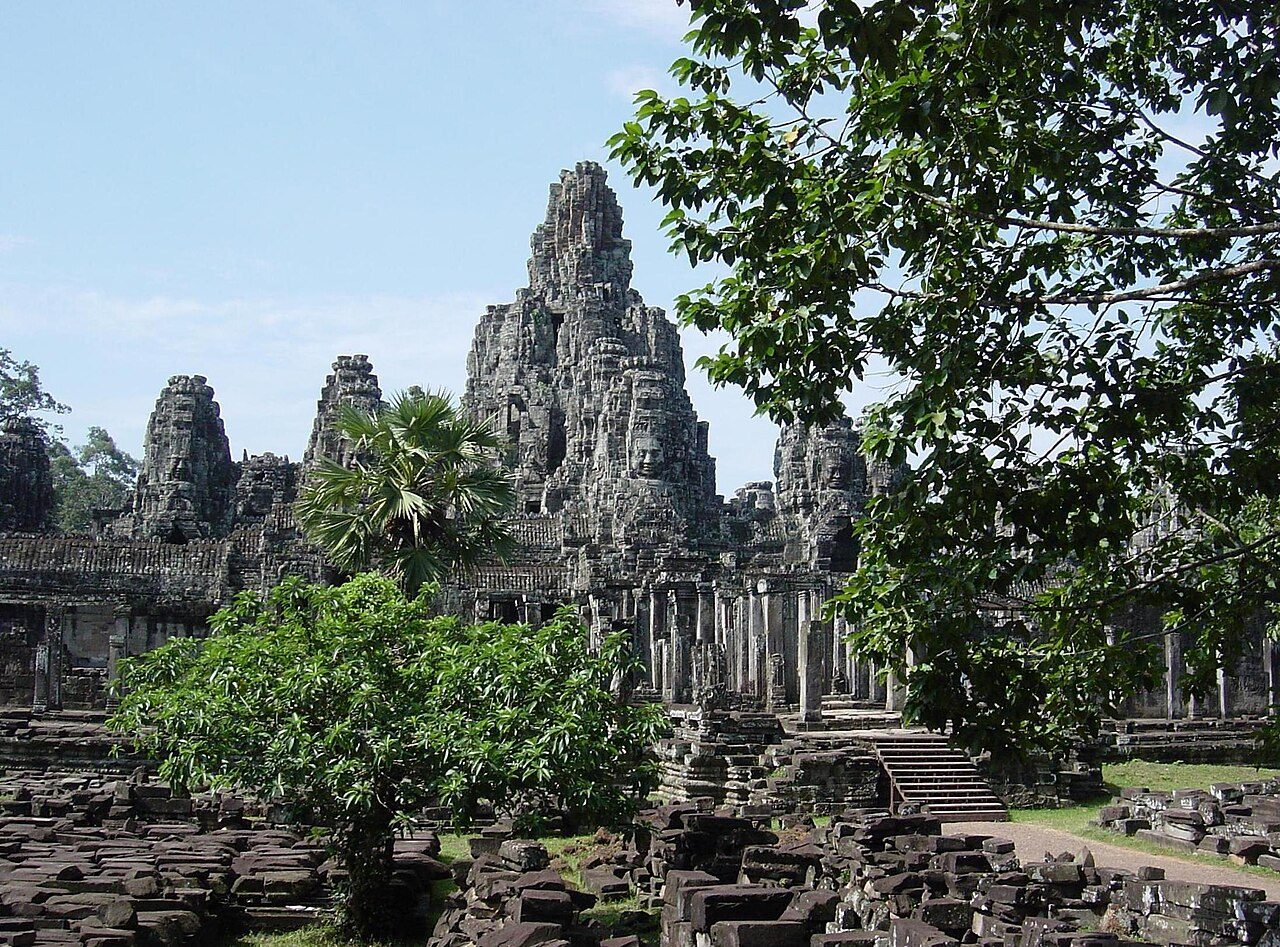
Photo credits (2)
- Charles J Sharp, CC BY 2.5, via Wikimedia Commons
- Tsui, CC BY-SA 3.0, via Wikimedia Commons