
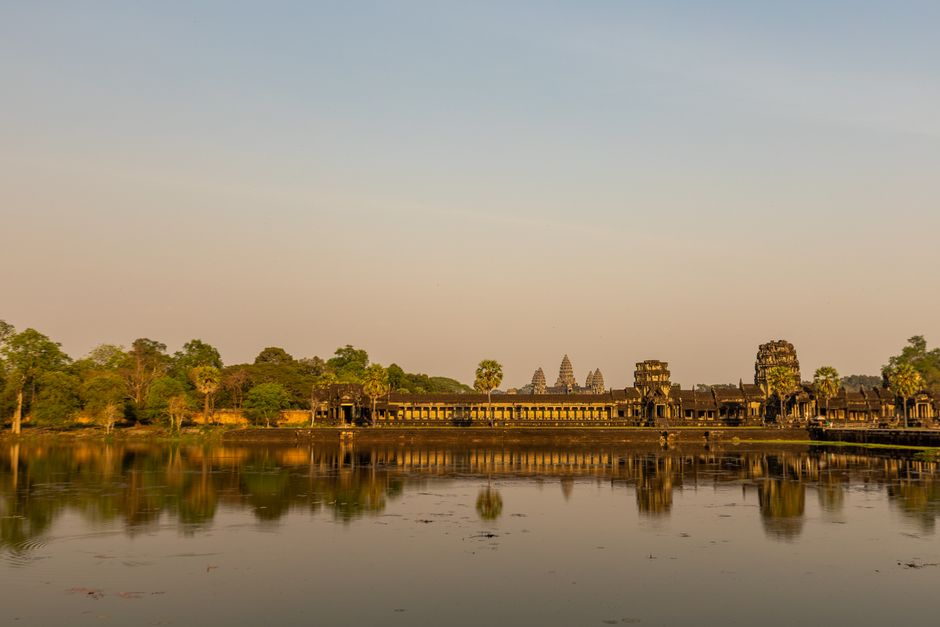
 New added
Angkor Wat
Commissioned in the early 12th century by King Suryavarman II, Angkor Wat was engineered as both a state temple dedicated to the Hindu preserver deity Vishnu and the monarch’s eventual mausoleum. Embodying the zenith of classical Khmer architecture, the complex serves as a stone microcosm of the Hindu universe: a vast 190-meter-wide moat symbolizes the cosmic ocean, enclosing concentric galleries that ascend to a central quincunx of soaring, lotus-bud towers representing the peaks of Mount Meru. Constructed from millions of sandstone blocks transported from the sacred Phnom Kulen hills, the monument smoothly transitioned into an active Theravada Buddhist sanctuary by the 14th century, preserving its spiritual resonance across centuries of dynastic upheaval. Crossing the ancient sandstone causeway, visitors step into cool, colonnaded corridors where more than 1,800 uniquely adorned *apsaras* (celestial dancers) gaze outward from weathered walls. The sensory impact culminates in the third enclosure’s outer galleries, where nearly a kilometer of continuous, shallow bas-reliefs draws travelers alongside depictions of the Battle of Kurukshetra and the kinetic *Churning of the Ocean of Milk*, where 88 gods and 92 demons pull the serpent Vasuki. At dawn, as the humid air stirs and the fragrance of joss sticks drifts from active shrines, the five dark towers mirror perfectly across the northern reflecting pond, shifting from deep indigo silhouettes into blazing gold against the Cambodian sky.
More in Siem Reap
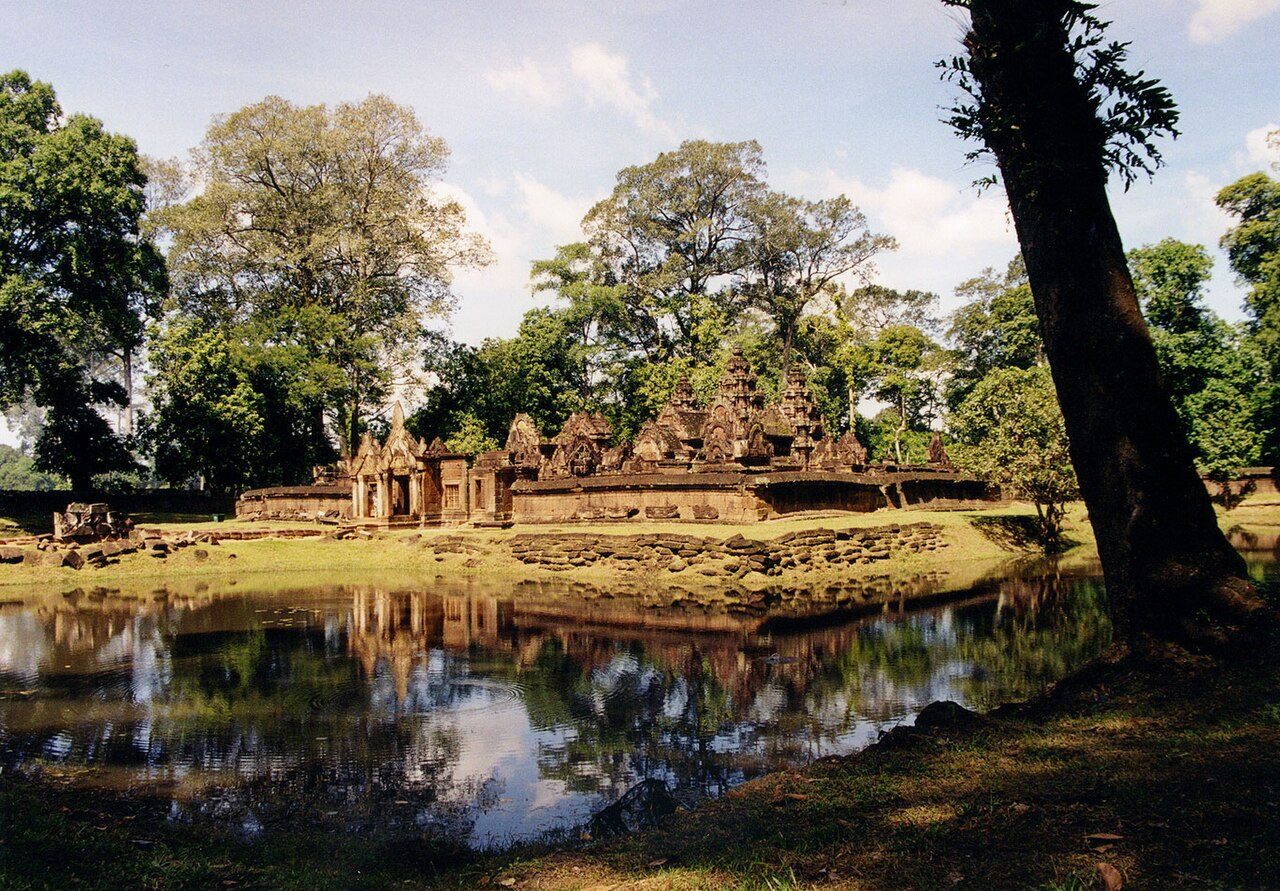
Photo credits (2)
- Charles J Sharp, CC BY 2.5, via Wikimedia Commons
- Tsui, CC BY-SA 3.0, via Wikimedia Commons