
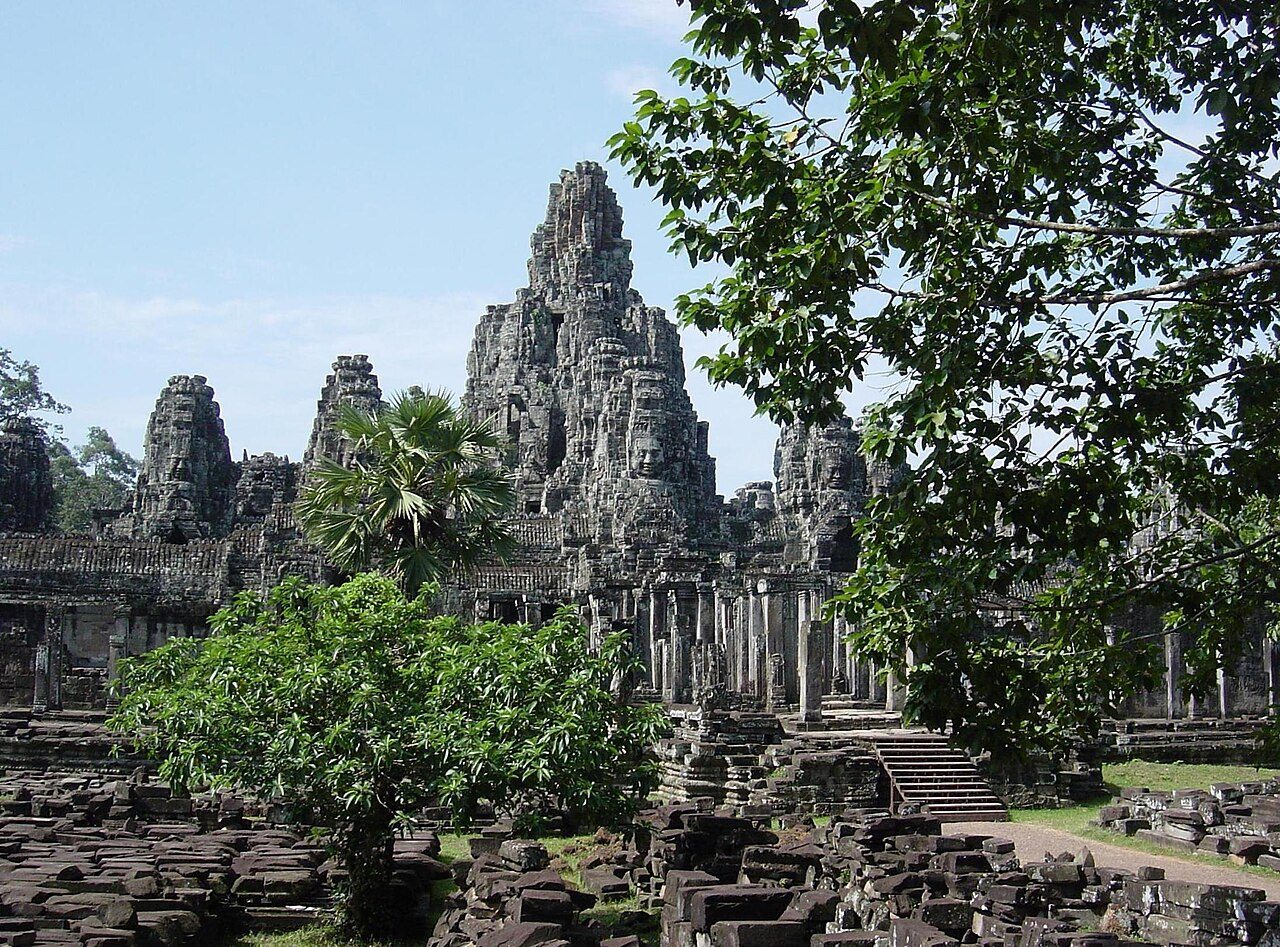
Angkor Thom
Consecrated in the late twelfth century by King Jayavarman VII following the Cham sack of 1177, Angkor Thom emerged as a nine-square-kilometer fortified capital engineered in the Mahayana-influenced Bayon architectural style. Arrival begins across a broad moat via a stone causeway flanked by 108 monumental figures—fifty-four gods and fifty-four demons locked in an eternal tug-of-war with the mythical serpent Vasuki. Passing beneath the corbel-vaulted South Gate, where three-headed stone elephants pluck lotus flowers beneath colossal smiling visages, travelers cross into a tranquil woodland enclosed by eight-meter-high laterite ramparts that once shielded the sacred heart of the Khmer Empire. At the city's exact epicenter looms the state temple of Bayon, where fifty-four sandstone spires bear 216 giant, serenely smiling faces carved in the likeness of the Bodhisattva Lokeshvara. Walking through the narrow, maze-like upper galleries, visitors experience the uncanny sensation of omniscient stone gazes shifting across damp, lichen-crusted surfaces as the tropical light moves overhead. Just north, along the Royal Square, the 350-meter-long Terrace of the Elephants displays deep-relief friezes of life-sized pachyderms and winged garudas, their textured stone surfaces radiating humid heat amid the surrounding jungle canopy.
More in Siem Reap
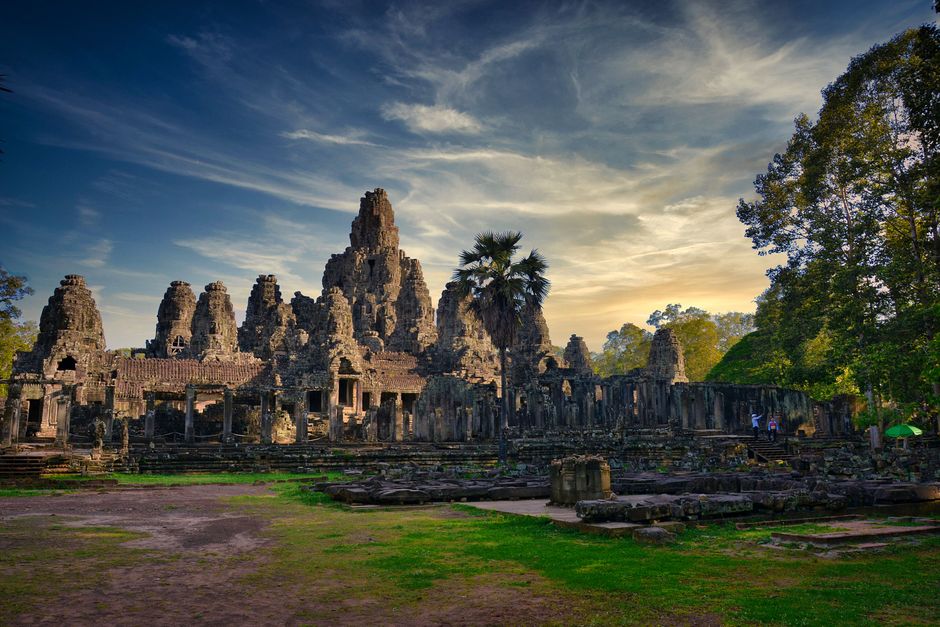

Photo credits (2)
- Charles J Sharp, CC BY 2.5, via Wikimedia Commons
- Tsui, CC BY-SA 3.0, via Wikimedia Commons