
 New added
1 / 2
Ahsan Manzil
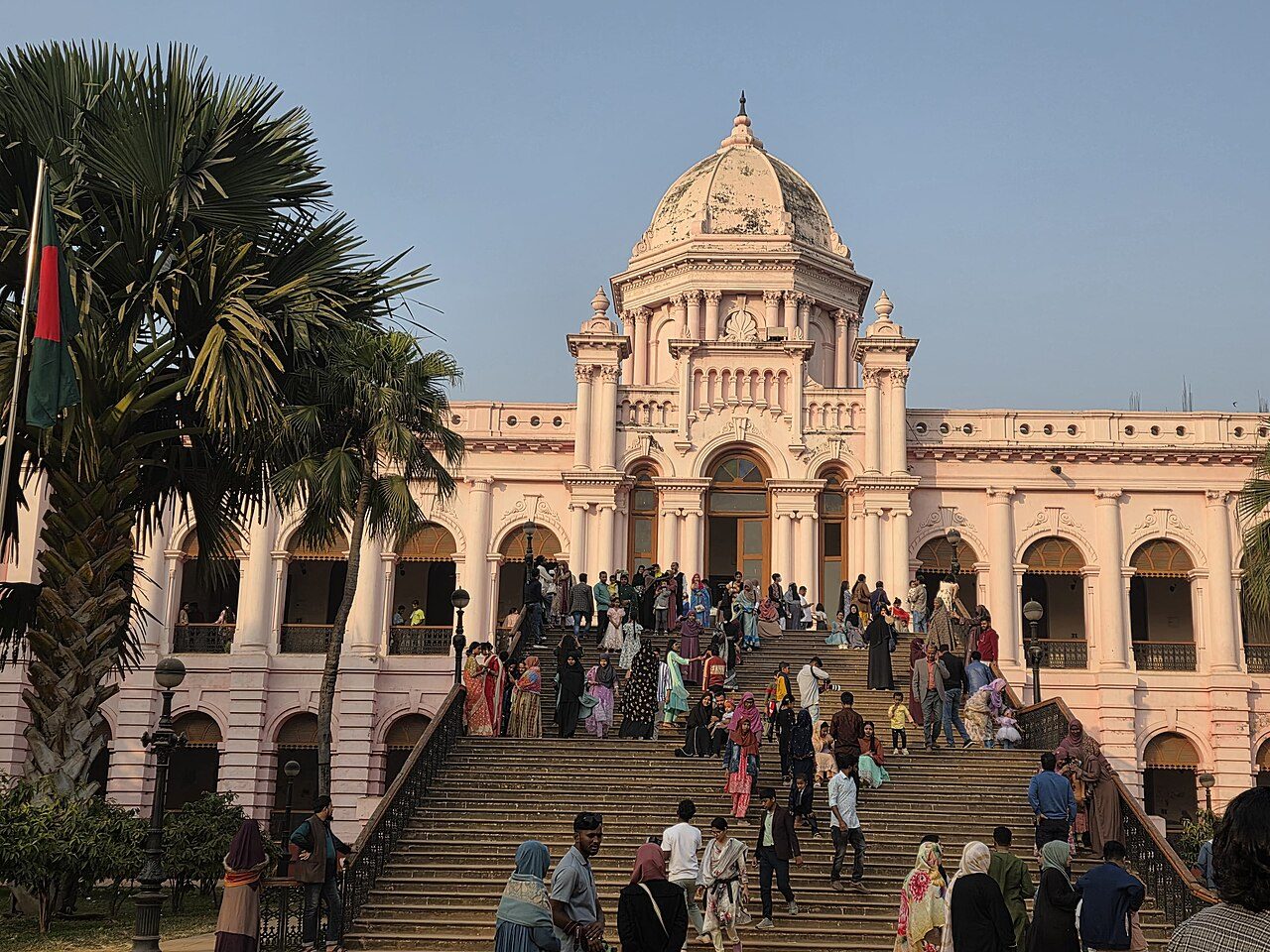
Rising like a rose-hued mirage above the frenzied banks of the Buriganga River, Ahsan Manzil exemplifies the aristocratic grandeur of late-nineteenth-century Bengal. Initiated in 1859 by Nawab Abdul Ghani and named after his son Khwaja Ahsanullah, this official seat of the Dhaka Nawab family was erected over the remnants of an 18th-century French trading factory. Following catastrophic tornado damage in 1888, the estate was dramatically rebuilt in the Indo-Saracenic style. Its defining glory is the central Rangmahal, crowned by a monumental octagonal dome resting atop a drum of fluted pillars, balanced by symmetrical triple-arched verandas and an immense grand staircase that once welcomed British viceroys arriving by river barge. Passing from the roaring rickshaw congestion of Old Dhaka’s Kumartoli neighborhood into the palace grounds, visitors are met by manicured lawns sloping gently toward the water. Ascending the elevated flight of steps, you enter twenty-three restored galleries showcasing thousands of artifacts from the Nawabs' golden age. Sunlight filters through high louvered windows onto polished teak floorboards, glinting across ivory-inlaid furniture, silver thrones, crystal chandeliers, and sepia-toned portraits of the dynasty that hosted the early meetings of the All-India Muslim League. Standing on the southern balustrade, the contrast is stark and mesmerizing: the quiet, gilded legacy of an empire framed against the modern river below, where wooden skiffs and overloaded ferries churn through the dark currents.
More in Dhaka
Photo credits (3)
- Nafiz6167, CC BY-SA 4.0, via Wikimedia Commons
- Alok Majumdar, CC BY-SA 4.0, via Wikimedia Commons
- No machine-readable author provided. Shmunmun assumed (based on copyright claims)., Public domain, via Wikimedia Commons