
 New added
1 / 2
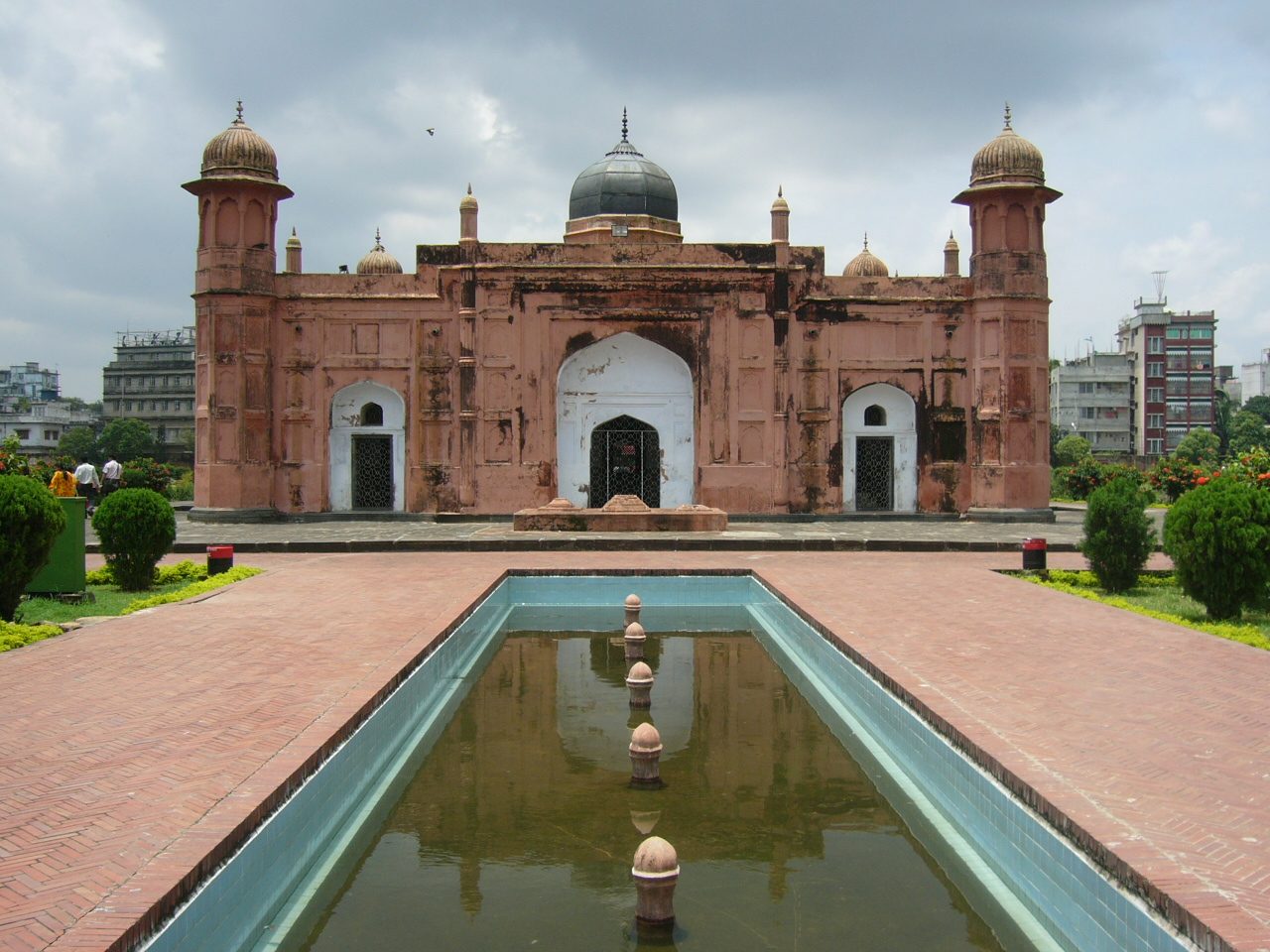
Lalbagh Fort
Commissioned in 1678 by Mughal Prince Muhammad Azam and left deliberately unfinished following the sudden death of his niece, Iran Dukht (known as Pari Bibi), this redoubt encapsulates imperial ambition halted by grief. Enclosed by crenelated terracotta-brick ramparts punctuated by slender octagonal corner bastions, the complex follows a classical Persian *charbagh* quadripartite garden plan. Sunken pathways and geometric water channels guide the eye toward the central Tomb of Pari Bibi. Within this central mausoleum, nine interconnected chambers feature white Rajasthani marble, black basalt flooring, and intricate floral plasterwork, crowned by a distinct copper-sheathed dome that has oxidized into a muted green patina over centuries. Stepping through the imposing three-storied southern gateway, travelers trade the relentless roar of Old Dhaka’s rickshaw traffic for an uncanny, wind-brushed quiet. To the east sits the Diwan-i-Aam, where visitors can peer into the preserved subterranean chambers of a traditional Turkish hammam, tracing the terra-cotta conduits that once circulated steam beneath royal feet. Across the emerald lawns stands the three-domed Lalbagh Mosque, its whitewashed ribbed cupolas reflecting the tropical sun. Pausing beside the central reflecting pool as the evening call to prayer drifts over the battlements, one encounters a poignant stillness, where the monumental aspirations of the Mughal Empire remain frozen in time amidst a pulsating modern metropolis.
More in Dhaka
Photo credits (3)
- No machine-readable author provided. Shmunmun assumed (based on copyright claims)., Public domain, via Wikimedia Commons
- Alok Majumdar, CC BY-SA 4.0, via Wikimedia Commons
- Nafiz6167, CC BY-SA 4.0, via Wikimedia Commons