
Shaki
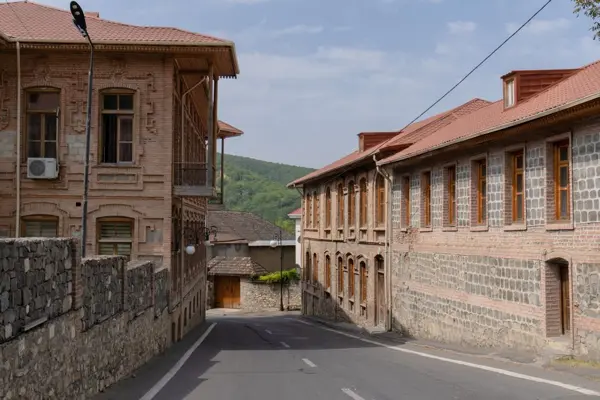
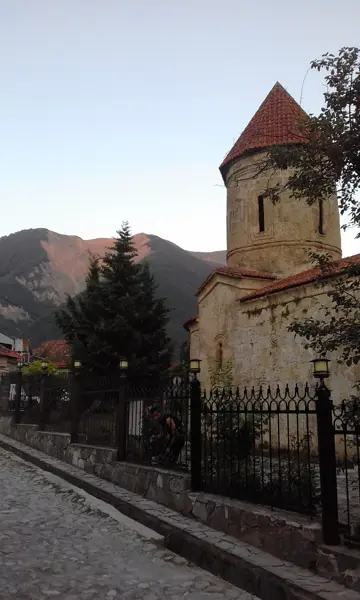
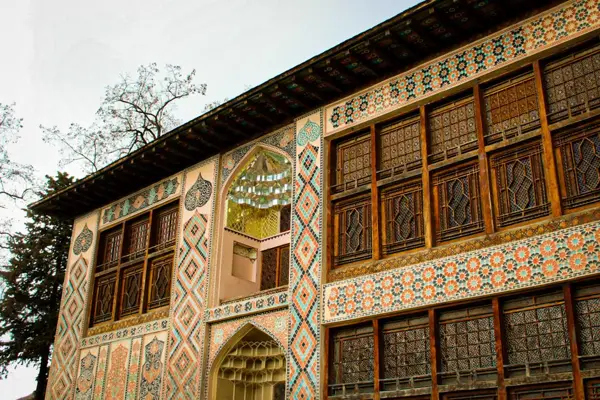
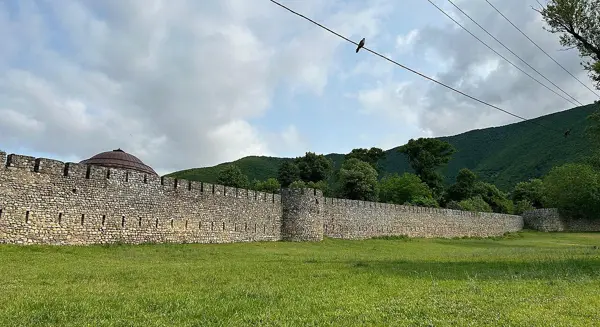
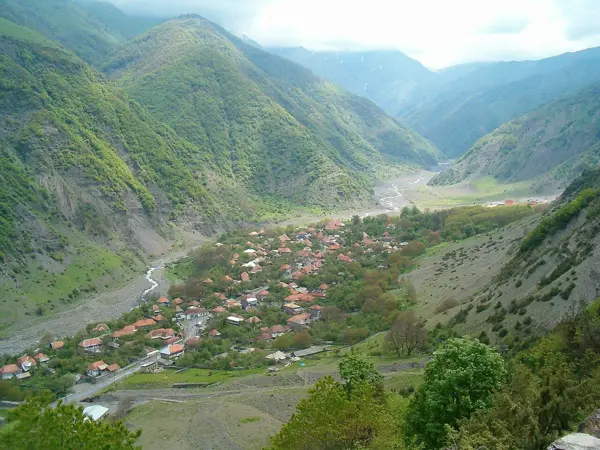
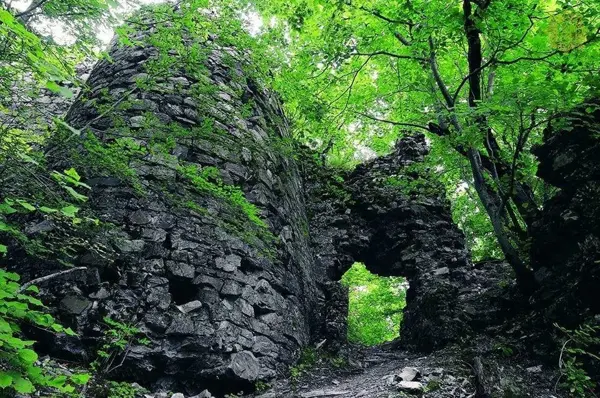
Nestled against the forested southern slopes of the Greater Caucasus, Shaki descends along the banks of the Gurjanachay River into northwestern Azerbaijan. Walking through the upper historic quarter of Yukhari Bash means navigating steep, winding cobblestone lanes bordered by river-stone walls, red-tiled gables, and shading plane trees. Mountain breezes cool the alleys, carrying the faint scent of woodsmoke and walnut groves. After a devastating mudslide destroyed old Shaki in 1772, Muhammad Husayn Khan Mushtaq rebuilt the town here as the capital of the Shaki Khanate. At the crest of the stone fortress stands the 1797 Palace of Shaki Khans, renowned for its intricate shebeke stained-glass windows assembled entirely without nails or glue. Downhill sits the eighteenth-century Upper Caravanserai, an immense vaulted stone inn built to house Silk Road merchants, while in the adjacent village of Kish, a round-towered Caucasian Albanian church dates back to the twelfth century on foundations far older. Evenings center on shaded teahouses serving Shaki halva, a sticky confection of layered rice flour, syrup, and walnuts, accompanied by piti, the regional lamb and chickpea stew slow-baked in earthenware pots. Local craftsmen still produce printed silk kelaghayi scarves and beaten-copper goods in small workshops along Mirza Fatali Akhundov Street. Late spring offers comfortable temperatures before the July humidity arrives, and while the historic center is compact enough to explore on foot, inexpensive Soviet-era Lada taxis easily manage the steeper climbs to Kish and the palace gates.
Read more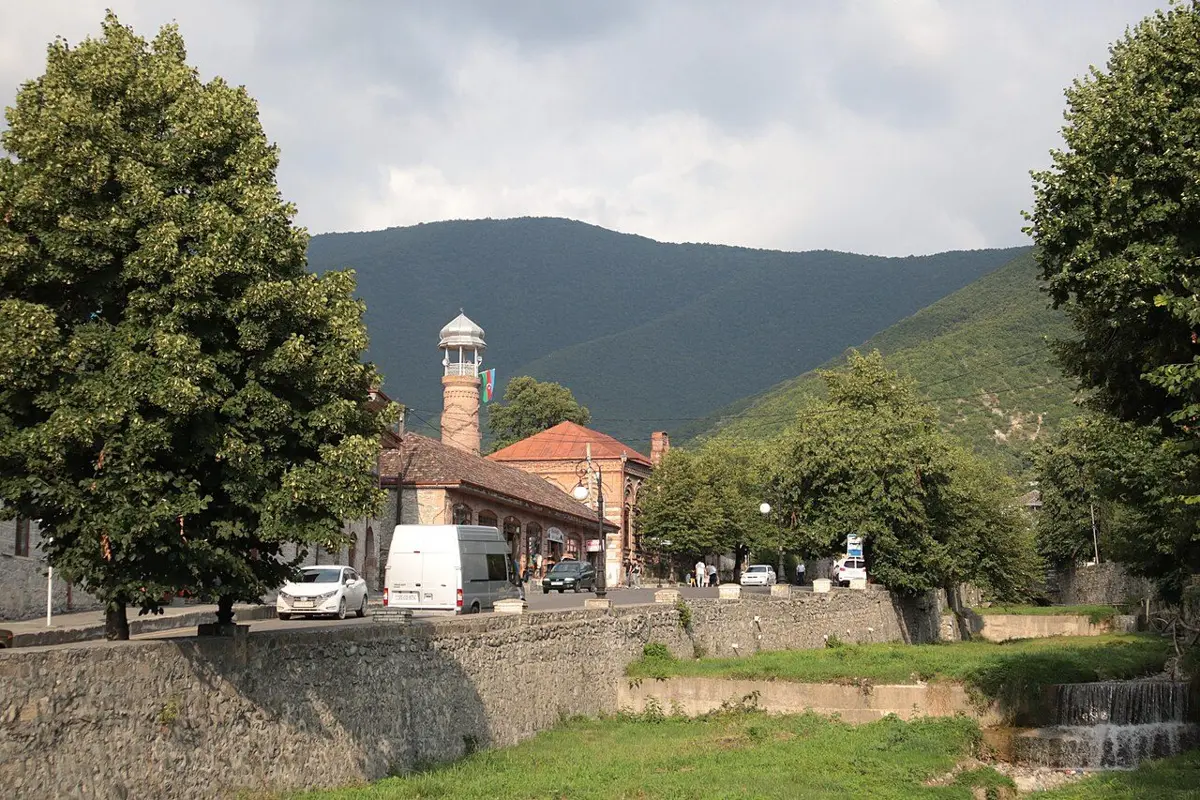
What to see in Shaki
Guides & drivers nearby


Travel guides for Shaki
Photo credits (4)
- Rüfət Həsənli, CC BY 4.0, via Wikimedia Commons
- Rəcəb Yaxşı, CC BY-SA 4.0, via Wikimedia Commons
- Azerman, CC BY-SA 4.0, via Wikimedia Commons
- Sefer azeri, CC BY-SA 4.0, via Wikimedia Commons