
 New added
Sataplia Cave
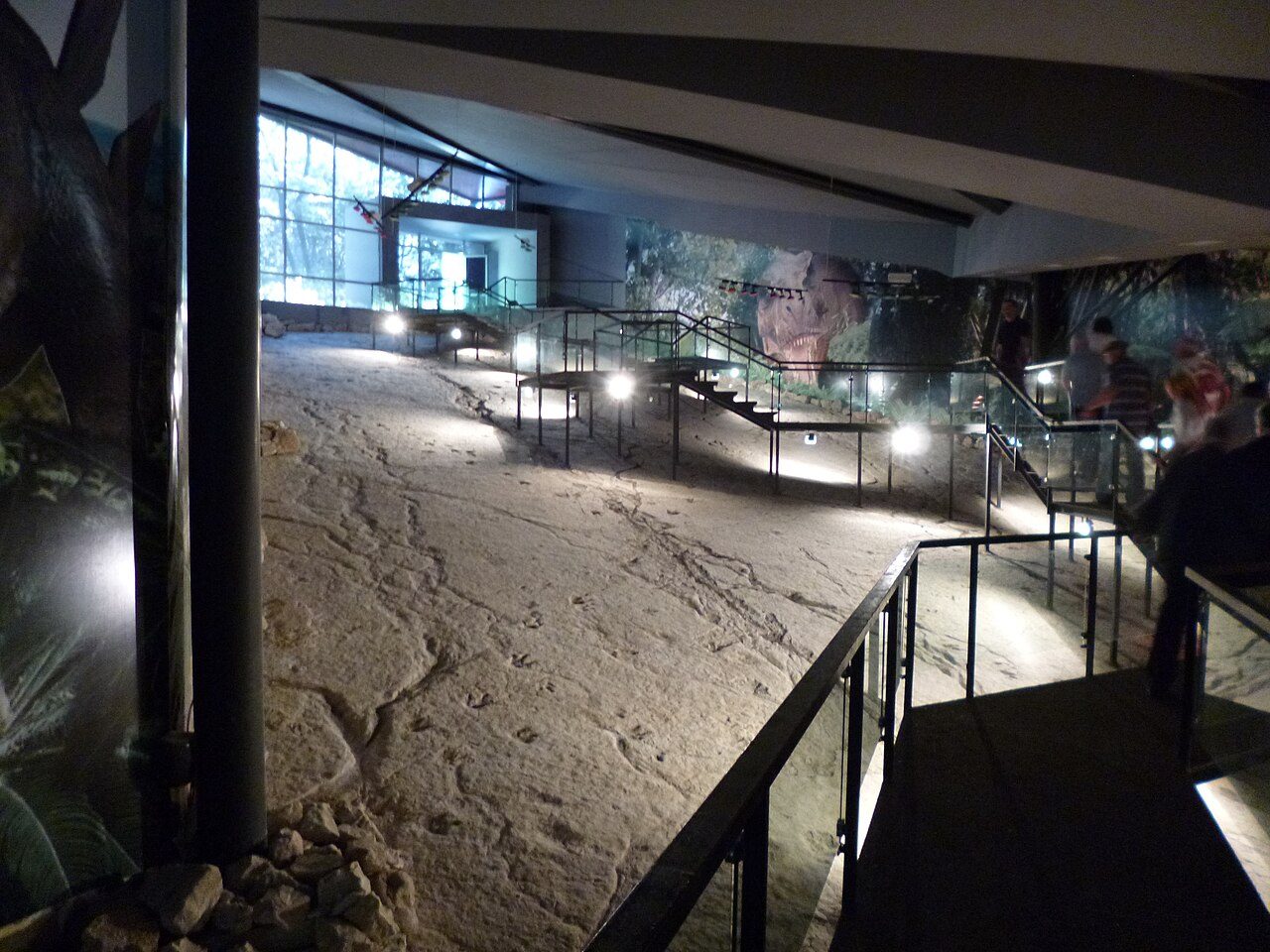
In 1925, local naturalist Petre Chabukiani scrambled along the limestone ravines northwest of Kutaisi and uncovered a prehistoric sanctuary frozen in deep time. Named Sataplia—meaning "the place of honey" in Georgian after the wild bees that long nested in its porous crags—the reserve holds rare paleontological proof of the Earth’s distant past. Before descending underground, travelers encounter two distinct strata of petrified trackways preserved beneath a dedicated pavilion: dozens of fossilized footprints pressed into limestone slabs, left by both predatory theropods and herbivorous ornithopods during the Lower Cretaceous period some 120 million years ago. Leaving the subtropical Colchic forest behind, visitors plunge into the cool, 14°C (57°F) damp of the subterranean karst gallery. A 300-meter tourist trail threads past damp stone walls, where neon amber and purple lighting sets the chamber's mineral architecture aglow. Towering draperies of flowstone, needle-thin stalactites, and rippled mineral curtains frame the cavern's centerpiece: a colossal stalagmite sculpted by millennia of calcified water droplets into the uncanny contours of a human heart. The trail culminates above the tree canopy, where travelers step onto a glass-bottomed observation deck thrust outward from Mount Sataplia’s precipice, suspended high over the rolling expanse of the Imereti lowlands.
More in Kutaisi
Photo credits (2)
- James Emery from Douglasville, United States, CC BY 2.0, via Wikimedia Commons
- Jaba1977, CC BY-SA 4.0, via Wikimedia Commons